NICU Graduates’ First Pool Days: A Gentle, Safe Swimming Guide for Families
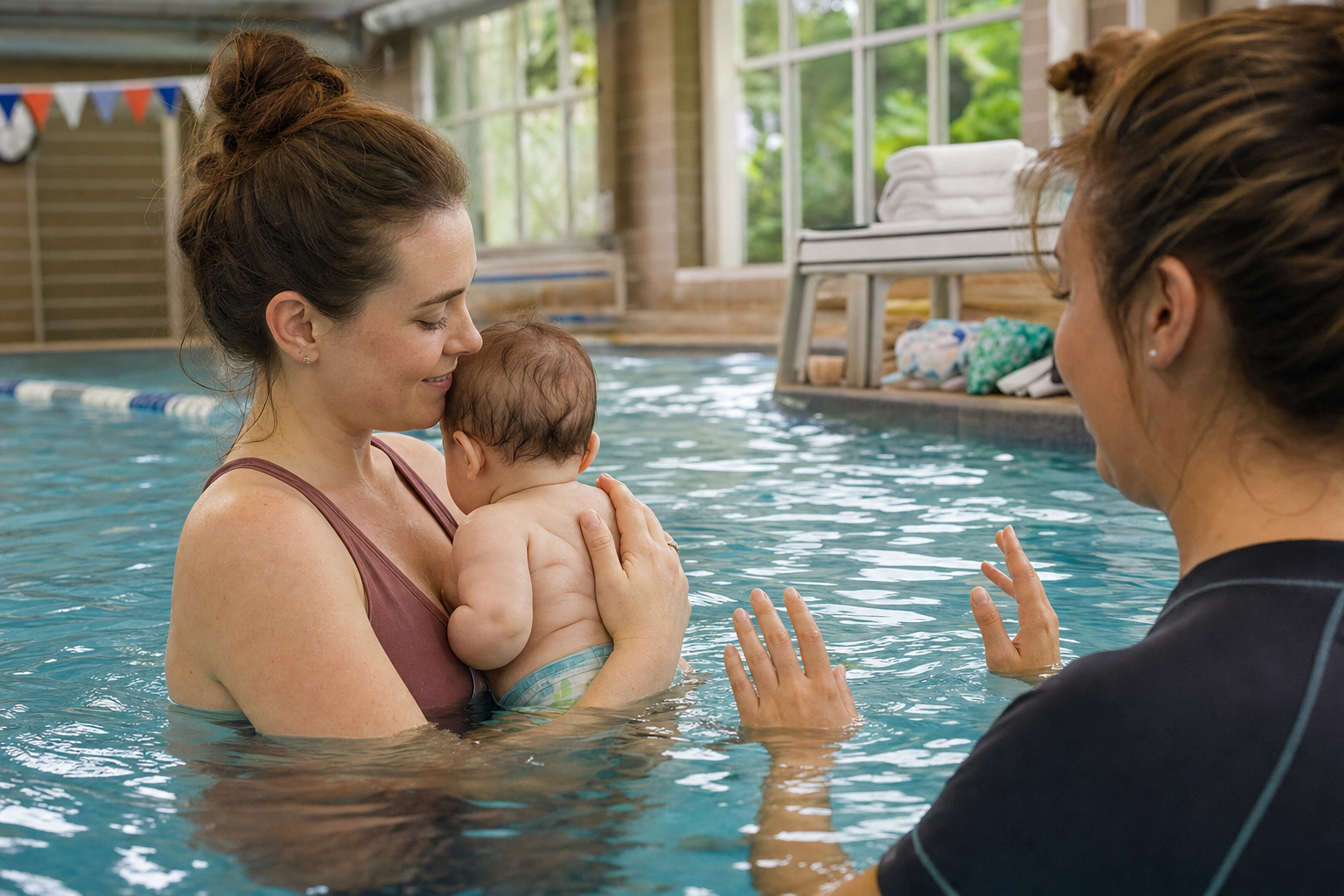
Getting home from the NICU marks a huge milestone. If you’re thinking about swimming—or just dipping toes in the water—for your baby who came early, was medically fragile, or needs special care, you’re asking the right questions. Here’s what matters most for NICU graduates aged corrected 0–24 months (including preterm and medically complex infants) to begin enjoying “NICU baby swimming” safely, without rushing.
When Is Your Preemie Ready for Water Play?
Start by asking your pediatrician about your baby’s corrected age, not just their birthday. If your child was born several weeks early, their developmental timeline will lag behind full-term peers. Head control, the ability to support the neck and upper body without help, is one of the clearest indicators that baby is ready for more water time. Many preemies reach that milestone around 4–6 months corrected age. Formal classes labeled “premature baby swim lessons” or “preemie first pool” should wait until those physical milestones are met. AAP policy supports swim lessons starting around age 1, but emphasizes individual readiness rather than strict age thresholds.(publications.aap.org)
Medical Factors to Check First: Lungs, Feeding Tubes, Infection Risk, Temperature Regulation
Before your baby’s first pool days, several medical concerns deserve attention:
Lung Health
Textbook NICU conditions like bronchopulmonary dysplasia (BPD), prolonged oxygen need, or recent ventilator use mean the lungs might still be healing. Ask your doctor: Is breathing stable without oxygen? Are lung examinations clear? Are respiratory rate and heart rate in the normal range for corrected age? Former NICU infants are at higher risk for long-term lung issues and respiratory infection, so water-exposed environments need careful timing.(publications.aap.org)
Feeding Tubes and G-Tubes
If your baby has a feeding tube, like a g-tube, special care is needed. The tube site must have healed, ideally 2 weeks after placement. Pools should be clean and chlorinated; natural bodies of water carry more bacterial risks. After swimming, clean and dry the tube site gently. Always confirm with your infant’s medical team.(healthychildren.org)
Infection Risk and Immune Status
NICU graduates often have weaker immune systems, especially while feeding tubes are present or after respiratory support. Avoid the pool during respiratory virus peaks like RSV or influenza season. Make sure your baby is up to date on vaccines. Always check pool cleanliness and whether instructors enforce hygienic practices. Technically “swimming can be fun” but medically, it's conditional.(publications.aap.org)
If you want a structured way to build water confidence at home, the 10-Week Plan guides you step by step.
Temperature Regulation
Preterm infants often have less fat, thinner skin, and underdeveloped ability to regulate body temperature. Cool water—even room air—can be stressful. Ask pool operators about water temperature (ideally 87–94°F for kids under age 3). Sessions should start very short (5–10 minutes), with immediate drying and warm clothes afterward. Gradual exposure helps baby's tolerance grow.(healthychildren.org)
[[ctababy]]
What to Do Before Signing Up for “Premature Baby Swim Lessons”
Around 30–60% through getting comfortable in water, here are questions you can ask swim schools and pediatricians to make sure every step is safe:
- Do you ever work with preterm or medically fragile infants—NICU grads?
- Will you require medical clearance (lungs, feeding tubes, oxygen)—if yes, what documentation?
- What is the water temperature, and how warm is the air around the pool?
- What does a typical session look like—length, instructor-to-baby ratio, parent in water?
- How do you handle overstimulation (e.g. loud echoes, bright lights)?
You might also come across the 10-Week Plan for building water confidence gradually—moves from parent-led splash time to gentle guided lessons; it’s a structured way to ease into “premature baby swim lessons” without pressure or risk. Always mention this plan if your swim school has heard of it, and see whether its stages align with your baby’s corrected age and medical status. (This blog happens to follow how families often pace progress similar to the 10-Week Plan in real life.)
Common Pitfalls to Avoid
Some traps are easy to fall into. One is relying only on calendar age—comparing your baby to term infants can lead to feeling like you're “behind” when really, the baby is developing just as expected for corrected age. Another mistake is signing up during respiratory virus peaks, which dramatically increases risks for babies with delicate lungs. Also, ignore “standard baby-swim timelines” pushed by friends or culture; these may not consider NICU history, lung disease, or special medical needs. The AAP stresses lessons should be individualized—not copied from full-term baby models.(publications.aap.org)
Striking the Balance: Safety Meets Joy
After talking with pediatricians, getting medical clearance, and ensuring readiness, swimming can become part of your baby’s joyful routine. Parent-child play in warm, shallow, clean pool water offers bonding, sensory experience, and gentle physical development. These “first pool days” don’t have to be formal—but they set a foundation for emotional confidence, water awareness, and motion in safe support. Celebrate even small wins: head control, relaxation in water, or tolerating pool air without discomfort.
Final Thoughts
For NICU graduates aged corrected 0–24 months, there’s no single age for “first swim.” The keys are developmental signals, medical stability, healed feeding sites, infection risk under control, and warm, supervised settings. Use corrected age, not calendar age. Ask your pediatrician pointed questions. Find a swim school familiar with medically complex children. Avoid virus seasons and cold water. With time and care, NICU baby swimming can become a safe, gentle, joyful part of life.
Your baby deserves to explore the water on their own terms, with your confidence backing them every step of the way.⠀⠀
120+ swimming exercises sorted by age — with video and instructions. Developed by swim instructors, completely free.

120+ swimming exercises sorted by age — with video and instructions. Developed by swim instructors, completely free.