Outdoor Pool Opening Weekend with Baby: A First-Time Plan (Ages 3–36 Months)
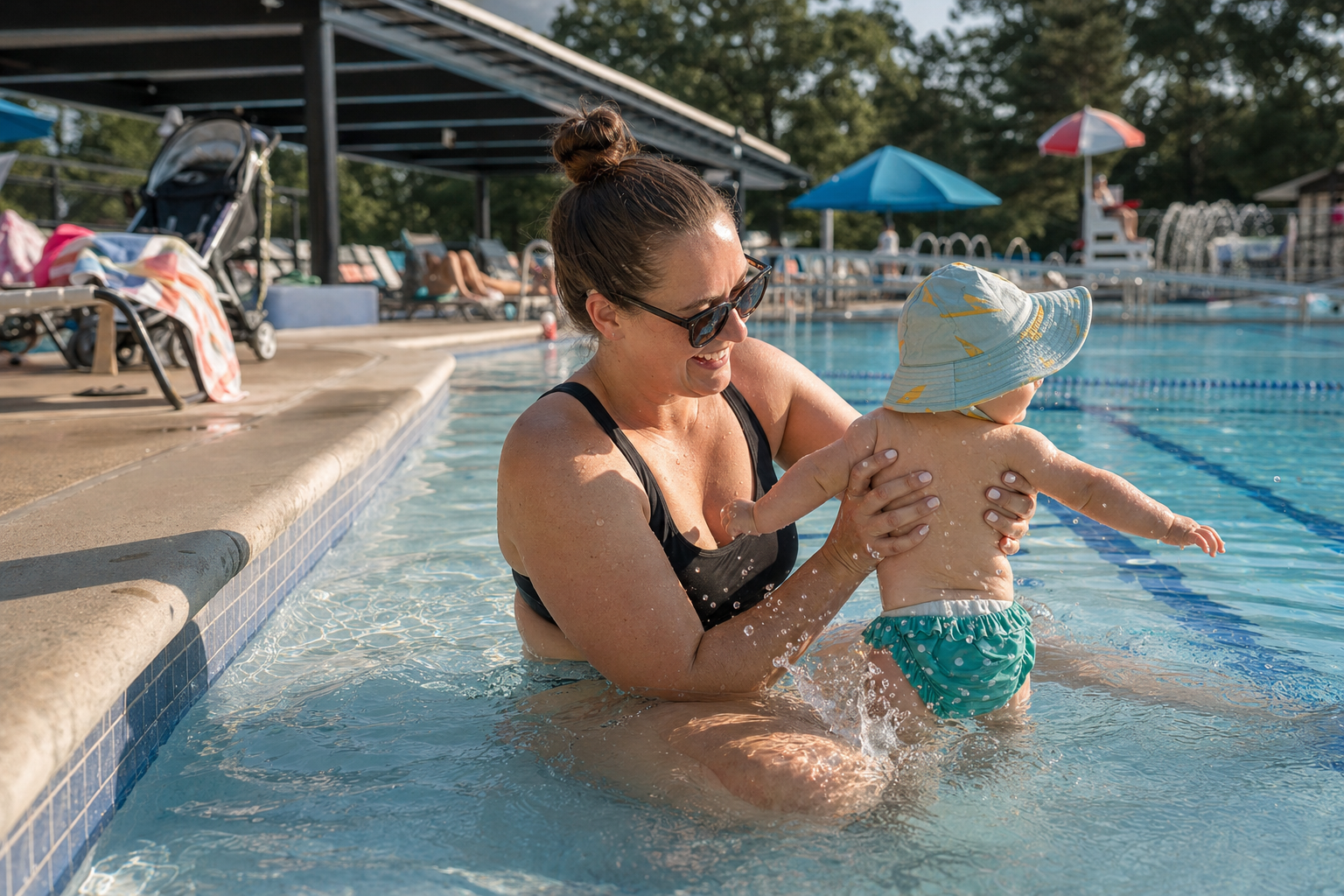
Opening weekend at the outdoor pool can be a mix of excitement and stress, especially with a baby. If yours is anywhere between three and thirty-six months, you’ll probably be wondering about swim times, crowds, water temperature, and what you need to bring. This guide gives you a solid, realistic plan so the first summer pool experience feels safe, fun, and stress-free.
Start with timing: Choose quieter sessions up front
Pool opening weekends often attract early birds and families trying to make the most of good weather. For a peaceful start, aim for mid-morning sessions rather than the very first time the pool opens. That way, most of the excitement has calmed down, the deck and chairs are less crowded, and staff are more settled.
Check the schedule in advance: many public pools publish baby swim or early hours for little kids. You can call ahead or visit your local pool website. Portland, Oregon’s parks, for example, keep rules and hours very clear when pools reopen each year. (portland.gov)
Water temperature matters
For the age range 3 to 36 months, water that’s too cold can be uncomfortable and unsafe. Infant-toddler programs generally aim for pools around 87 to 93°F (30-34°C) to support comfort and safety. (usswimschools.org) If the water hasn’t been heated yet at your outdoor facility, it might be chilly. For babies under six months, especially, doctors recommend waiting until you’re sure water feels warm and pleasant. (boystownhospital.org)
Know the rules in advance
Every pool has its own rules: some require infants to wear swim diapers, others may limit deck use until lifeguards are on duty. Some outdoor pools enforce tight rules about adult supervision: babies should always be in arm’s reach of a caregiver. Read the posted safety rules or call ahead. Pools in Louisville for example enforce regular water quality checks and require certified lifeguards. (louisvilleky.gov)
The “10-Week Plan” of swimy.org offers helpful structure once you’re comfortable, but for that first weekend you’ll focus on observing rules, staying close to staff areas, and limiting your time. (babyguides.co.uk)
If you want a structured way to build water confidence at home, the 10-Week Plan guides you step by step.
Pool opening weekend safety caveats
Opening weekends often mean cooler decks, new staff still learning routines, crowded change rooms, and lots of sun glare. Be ready for distractions. Studies show many pool accidents involving young children happen when adults are nearby but momentarily distracted—on phones, chatting, or watching other children.(pmc.ncbi.nlm.nih.gov) Always assign one caregiver to be “water watcher”—no phone, no multitasking, eyes on baby.(seattlechildrens.org)
[[ctababy]]
Also, even if there are lifeguards, caregivers are the primary safety layer for infants and toddlers. You may see rules that require you to stay within arm’s reach or in shallow water. Make sure to know facility policies.(portland.gov)
What to bring to stay comfortable and prepared
A well-packed bag makes all the difference. Wear your swimsuit underneath your clothes, to minimize changing room hassle. Bring swim diapers or neoprene pants, a warm suit or swim wrap, hooded towels or ponchos, and a hat. For sun protection: babies under six months should be kept mostly in shade; for older babies use SPF 30+ sunscreen, reapply often.(babyguides.co.uk) Have a full change of clothes, plenty of water or breast/formula feeds, and healthy snacks. Don’t forget plastic bags for wet clothes.(babyguides.co.uk)
Plan for a short, smooth swim
With ages 3-36 months, shorter sessions are much better. Start with 10-15 minutes in the water, then get out for 10 minutes to warm up or eat. Extend gradually as you both feel more comfortable. If baby starts shivering, has bluish lips or fingertips, or becomes fussy, it’s time to leave.(babyguides.co.uk)
Sample weekend schedule
Get to the pool mid-morning, after the opening rush. Arrive about 30 minutes into the first baby-friendly session. Spend time getting settled in shade and checking the water temperature with your hand. Enter when you feel confident it feels warm. Hold your baby close, enjoy gentle dips or splashes. Avoid floats or toys that may distract from supervision. Plan to leave before noon hours when crowd and heat increase, maybe before baby shows signs of overstimulation.
Final check before you go
Call ahead to confirm pool hours, rules, and whether any areas are closed. Think about whether the pool is heated yet (many outdoor pools wait until late spring). Is staff fully on duty? Are safety features like fencing, non-slip deck surfaces working? Ensure your baby has eaten recently, is well rested, and you’re ready for everything to go slower than you expect.
Bottom line: make the first weekend count
You want your baby’s first outdoor pool experience to be about joy, touch and trust, not stress or cold teeth. Going on opening weekend with a plan—choosing quieter sessions, checking water temperature, bringing the right gear, limiting swim time, supervising fully—shifts your experience from overwhelmed to empowered. By keeping the focus on your baby’s comfort and safety, you turn a chaotic weekend into a memorable first splash that starts the summer off right.
120+ swimming exercises sorted by age — with video and instructions. Developed by swim instructors, completely free.

120+ swimming exercises sorted by age — with video and instructions. Developed by swim instructors, completely free.