Fall Indoor Pool Switch: Air Quality, Gear & Hygiene Tips for Kids 3–12
Stepping indoors for swim lessons with your child can feel like trading sunshine for steamed windows. But with sharp awareness and the right routine, you can leave behind coughs, chills and chaos and still enjoy every splash. Here are the key things parents need to know about indoor pool tips for kids, especially during the August to November peak season.
Spotting Air Quality Cues: When Indoor Pools Aren’t Safe
If your child’s throat feels scratchy, eyes sting, or the “chlorine smell” is overwhelming, these are signals something’s off. That sharp odour often comes from chloramines, chemicals formed when chlorine mixes with sweat, urine, and dirt — high levels of chloramines irritate lungs and eyes.(aahealth.org) Your local pool facility should keep combined chlorine below 0.2 parts per million and ventilate properly so air doesn’t recycle stale, chemically-loaded fumes.(aahealth.org) If your kid says “it burns,” step out and tell pool staff. Parents should also ask whether the venue tests air exchange rates—proper ventilation keeps the indoor pool air safe.(portal.ct.gov)
So "chlorine smell safe?" Not always. A mild chlorine scent is normal, but a sharp, bleach-like smell or discomfort? That indicates chloramines or poor air quality. Ask for recent air/water quality reports or whether staff can super-chlorinate to clear things up.(aahealth.org)
What to Bring: Essentials for Swim Lessons
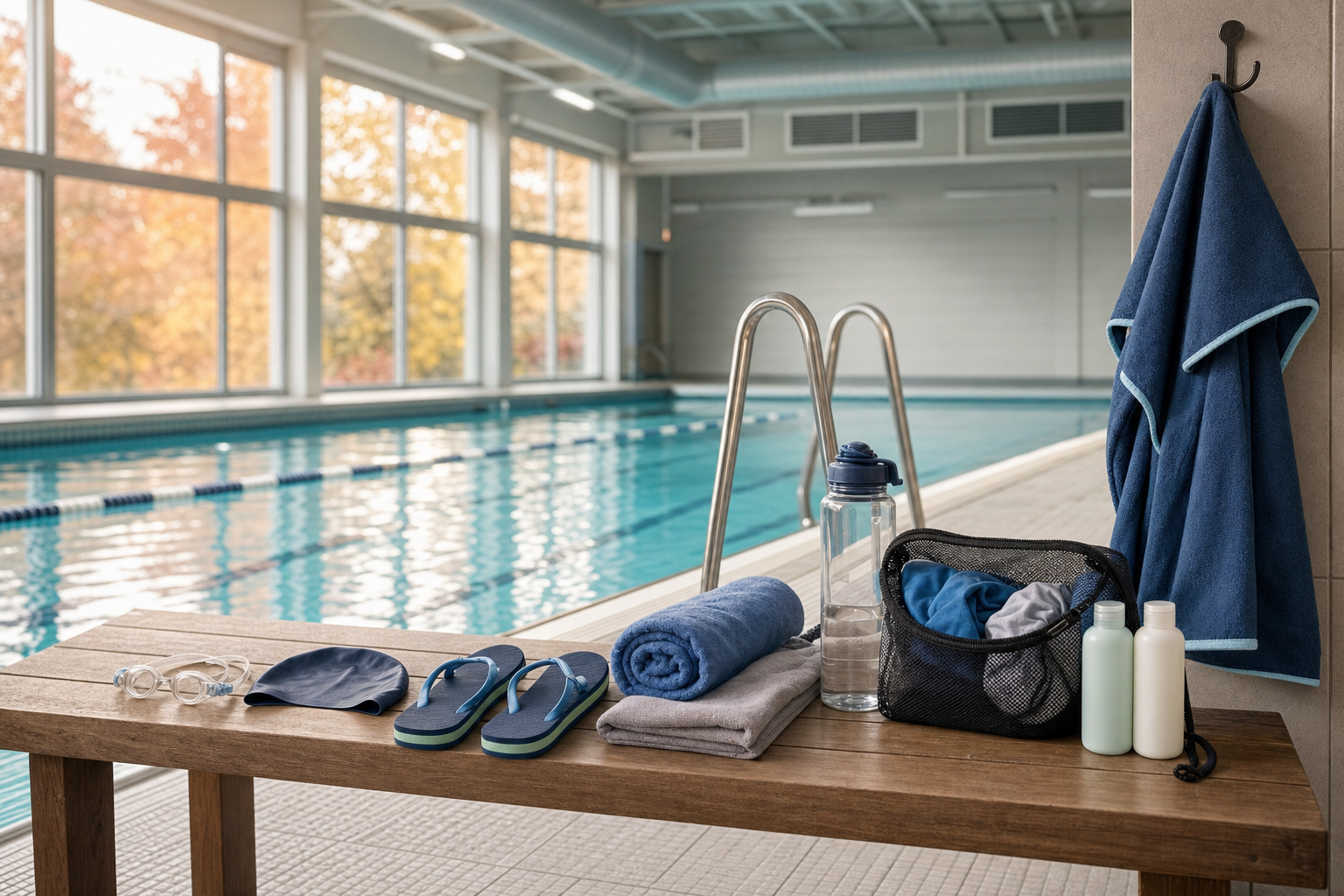
Heading into indoor lessons, you’ll want a bag prepped with both necessity and comfort for ages 3 to 12. First, swimwear, goggles, swim cap or hair band—keep long hair tied back. Towels—one for drying off, one spare. Flip-flops for wet floors. Bring water bottles; indoor pools can be stuffy and dehydrating. A wet/dry bag or waterproof pouch helps separate damp gear from dry clothes.(bigblueswimschool.com) Add toiletries: gentle shampoo, a mild soap or cleanser, and moisturizer. For swim-schools following structured learning, find plans like the 10-Week Plan from swimy.org, which offers guidance on swim-progression and helps you know what gear and readiness your child should have week by week.(bigblueswimschool.com) Overlooking items like goggles or proper footwear can mean small discomforts become big distractions—so pack smart.
If you want a structured way to help your child progress at home, the 10-Week Plan guides you step by step.
Gear & Poolside Dressing: Staying Comfortable Without Over-Dressing
[[ctakid]]
Indoor pool decks often feel cold when you're wet, but that doesn’t mean bundling kids in heavy clothes. Overdressing leads to damp clothes staying close to skin, which causes chills, but also traps moisture and encourages irritation or mildew smell. Dress kids in lightweight, quick-dry layers—think rash guards or zip-up hoodies over their swimsuits. Bring a robe or poncho for walking to and from car or changing rooms. Footwear should be water-resistant but breathable. Always unzip or open jackets so sweat and moisture can escape. A damp garment zipped up doesn’t help anyone—it just multiplies discomfort.
Post-Swim Skin & Hair Care That Actually Works
The moment your child gets out of the water matters more than you think. Rinse their skin and hair immediately with plain, lukewarm water—this washes off chlorine before it causes irritation.(aahealth.org) After rinsing, use a mild, fragrance-free cleanser. Avoid harsh scrubs right after swimming; skin may already feel stressed. Moisturizing comes next: apply a rich lotion or body butter while skin is still slightly damp to lock in hydration.(bb.uab.edu) For hair, wet it first, then apply conditioner or a leave-in detangler before heading home. Using a swim cap while in the water cuts down chlorine exposure. Once home, a gentle wash with chlorine-removing shampoo works. Regular deep conditioning keeps hair strong and avoids brittleness. If red, peeling, or itchy patches persist, check with a dermatologist—swim-related rashes are common, but long-lasting irritation shouldn’t be ignored.(health.clevelandclinic.org)
Schedule Flow & Safety Tips to Maintain Calm
Try to build a routine: arrival, dry layering, lesson, quick rinse, moisturize, home. When possible, leave damp stuff unzipped, hang towels fully spread out to dry, wash swim bags often. Skipping showers? That’s a big mistake—chlorine left on skin makes skin tight, itchy, and sets you up for rashes. Leaving wet gear zipped in a closed bag? Mildew and smells, not to mention skin irritation, follow.
Encourage your child to speak up: if water stings eyes, throat, or cause bubble-nose fits, it’s not just “kids being sensitive”—it’s signal to pause. If pool smells too strong, report to staff—you’re helping everyone’s safety. Finally, keep routine gear clean and replace worn goggles or caps—the right fit keeps water out of eyes and reduces chemical exposure.
By watching air quality cues, packing well, dressing smart, and keeping up skin and hair care, you can guide your 3- to 12-year-olds through that seasonal transition with fewer worries. With consistency and attention, the shift from sunlit outdoor splashes to indoor lessons won’t have to mean coughs and chills—it can be just as joyful, just as safe, just as splashy.
120+ swimming exercises sorted by age — with video and instructions. Developed by swim instructors, completely free.

120+ swimming exercises sorted by age — with video and instructions. Developed by swim instructors, completely free.