Micro-Breaks for Cold, Tired Babies: Tiny Pauses That Keep Swim Lessons Warm and Happy
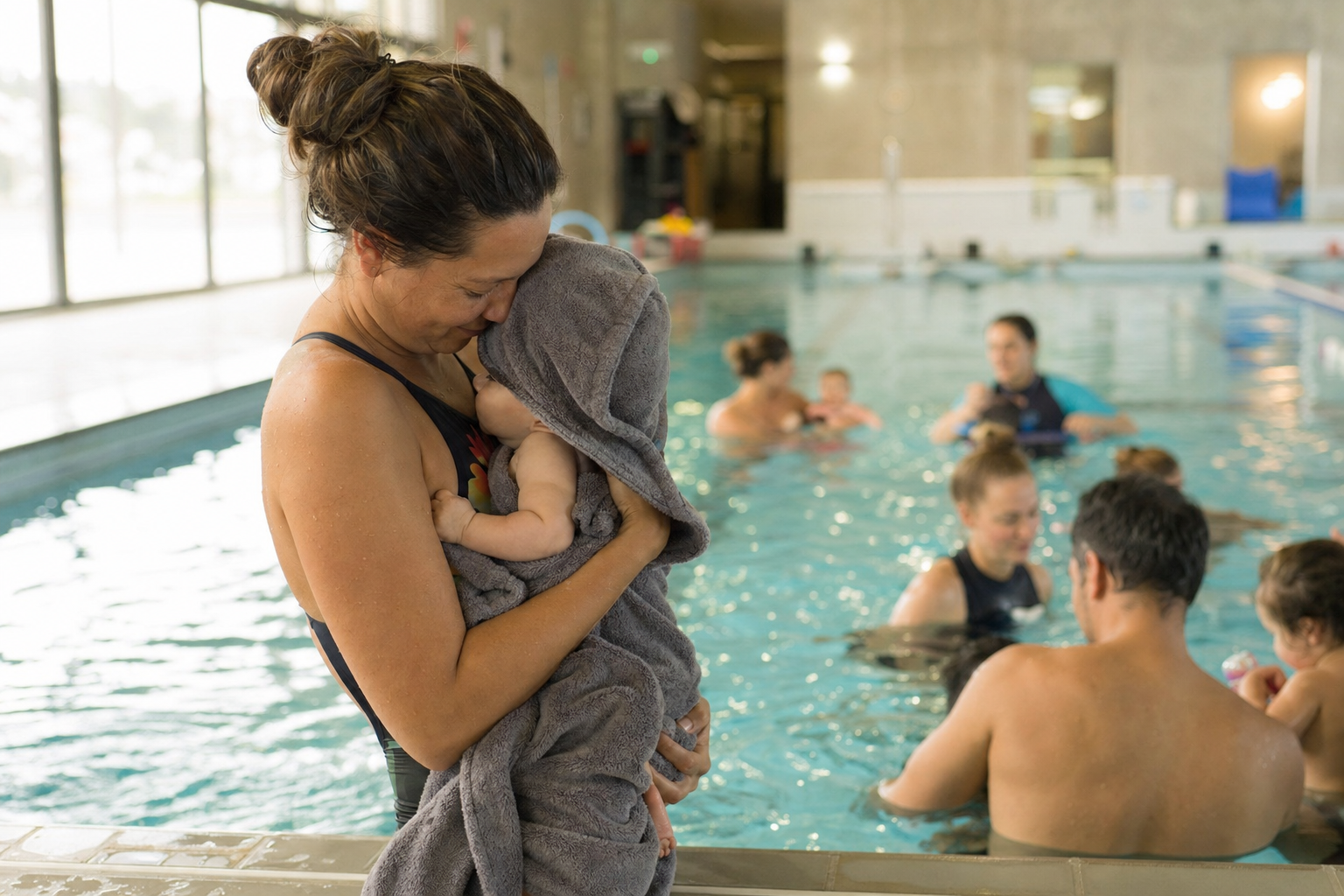
Hard as it might be to snip the lesson short, those little breaks during swimming can keep your baby warm, happy, and learning. If your baby is cold during swim lessonor tired after swimming, chest-to-chest cuddles, sitting out for just one activity, towel warm-ups, or ending early aren’t signs of failure—they’re smart parenting and successful teaching.
Why Take Micro-Breaks?
Babies under 12 months regulate their temperature poorly. As noted by HealthyChildren.org, for infants and toddlers under age 3, swim water should be 87-94°F (30.5-34.5°C) to avoid hypothermia. If water or even pool room air dips below this, tiny bodies get cold fast. (healthychildren.org)
When babies are overwhelmed—shivering, lips turning blue, arms limp, constant crying—it’s not just discomfort. It’s a warning. “Cold stress” includes pale or blotchy skin, faded or bluish colouring around lips, distress that won’t calm, shivering, or decreasing activity. These are signs to pause or exit. (waterwisekids.com)
Limiting how long your baby stays in the pool is crucial. Under one year? Keep it to around 10-15 minutes at first. Even for older infants and toddlers, sessions under 30 minutes are safer—especially in indoor winter lessons where heat loss off-session takes toll. (swimy.org)
Best Tiny Break Strategies
Here are four micro-break ideas you can use during or at the end of a swim lesson to protect your baby’s warmth and mood.
Chest-to-Chest Cuddles
Wrap your baby against your skin (with dry clothes over yours). That warmth from your body calms them, shut off heat loss from wet skin, and gives emotional safety during moments of overwhelm.
Sitting Out for One Activity
When scheduled exercises feel too long, ask the teacher if your baby can skip one and warm up on the side. Even just stepping out and observing keeps them safer, less tired, and helps you learn how they respond.
Towel Warm-Ups
Right after pool time—or better, before you even leave the water’s edge—wrap your baby in a big, hooded towel or poncho. Use thick cotton terry rather than lightweight microfiber, so heat is trapped better. Focus on covering head, chest, back. Dry hair and stay wrapped until fully dressed. (waterwisekids.com)
If you want a structured way to build water confidence at home, the 10-Week Plan guides you step by step.
Ending Early When Needed
If signs like blue lips, shivering, or limpness appear—or your baby simply stops responding with interest—it’s time to halt the lesson. These aren’t failures. Lessons with consistent love and safe choices count just as much.
How Much Pool Time Is Too Much?
If you keep asking yourself “how long baby in pool is safe?”, here’s what research and safety bodies suggest:
For first swims, limit time to 10-15 minutes, especially under age 12 months. As your baby grows and is comfortable, lessons may extend toward 20-30 minutes, but always stay alert for cold cues. Under 3 years, water temp should stay in the 87-94°F window recommended by the AAP. (healthychildren.org)
[[ctababy]]
What Parents Learn from Micro-Breaks
Micro-breaks do more than keep a baby warm—they teach you both:
- You learn to read your baby’s signs of fatigue and cold: crying, blue lips, limp posture, disinterest.
- The baby learns trust: that swimming lessons are safe because mommy or daddy are responsive.
- Every short, cozy lesson still builds swim confidence and water skills.
Even in structured programs (like the 10-Week Plan from swimy.org, which guides you week by week through building water comfort and noticing strengths), planning these tiny pauses is part of progress. Use small wins and rest to give momentum. (swimy.org)
Common Pitfalls to Avoid
Don’t push through:
- Shivering, blue lips, limpness, or a baby who cries nonstop. These are clear signals, not just fussiness.
- Being in water that’s too cold—even if pool looks heated, the air or walk-to the car might chill them.
- Over-packing pool time before baby is ready, especially in colder months. First priority: safety and warmth.
According to the AAP, even adults can misjudge cold. Babies are more vulnerable, and cold can lead to hypothermia quicker than you think. Stay in warm water, exit at signs, dress warmly right away. (healthychildren.org)
Winter Indoor Lessons: Extra Care
In winter, indoor pools might have the right water temperature, but pool deck air and changing rooms are chilly. Layering helps—onesie over swim diaper, wind-blocker jacket to and from class. Always have towels, a dry change of clothes, and warm blanket or hat ready. Wrap baby immediately after exiting. Use a routine so your baby knows what comes next and feels secure. (shop.waterbabiesusa.com)
Micro-breaks are your secret weapon. They don’t mean a lesson was a failure—they mean you made it safe, positive, and sustainable. Warm arms, small pauses, sharp observation: that’s how babies stay smiling in cold water lessons, and how parents feel confident lesson after lesson.
120+ swimming exercises sorted by age — with video and instructions. Developed by swim instructors, completely free.

120+ swimming exercises sorted by age — with video and instructions. Developed by swim instructors, completely free.