Hotel & Vacation Rental Pools: Your No-Lifeguard Safety Game Plan
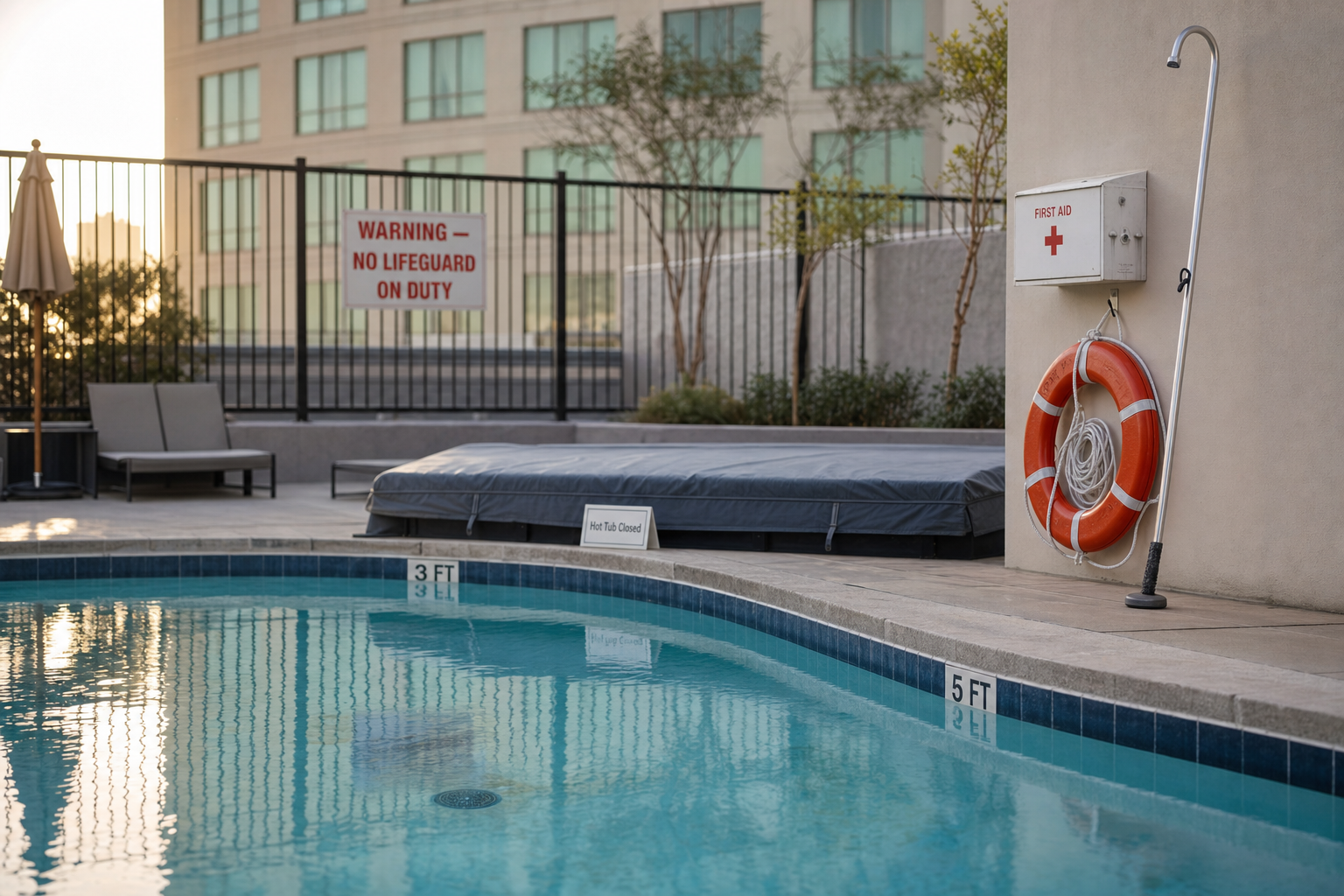
When your kids aged 3 to 12 are heading into an unfamiliar hotel or vacation rental pool with no lifeguard, you’ve got to move fast and smart. This isn’t about scaring your child—it’s about knowing exactly what to immediately check and when to call “no swim.” In the heat of spring break, holiday travel, or any getaway with pool time, this plan keeps them safe.
What to Inspect First — Fast
Check Drain Visibility & Water Clarity
Within seconds of arriving, you need to peer down: can you see every part of the pool bottom clearly, even in the deep end? Poor visibility hides hazards—someone could be submerged, an object may be just out of sight, or the bottom could slope steeply. If you can’t see the drain covers or corners, treat that as a red flag. “Water’s not clear? No go,” is your mantra.
Mark Shallow vs. Deep Zones Clearly
Look for depth markers stamped into the pool edge, painted on walls, or on tile. If they’re missing or fading, find where the shallow ends are—your 3- to 6-year-olds should stay where they can touch the bottom with both feet. Children over 8 or 9 who swim confidently can gradually test deeper areas—only after you observe them safely in shallow zones.
Locate Rescue Gear Immediately
Search along the pool deck for essentials: life rings, rescue hooks, and a first aid kit. They should be easy to reach, not locked away. Even tools as simple as a shepherd’s hook or throwable device make a serious difference. If there’s no rescue gear visible, or it looks broken or stored far away, that’s a serious danger.
Scan Signs & Rules — especially “No Lifeguard on Duty”
Legally and practically, if there isn’t a lifeguard, there must be signs saying so under many U.S. state codes. For example, Indiana requires warning signage in plain view stating “Warning – No Lifeguard on Duty” and rules about adult supervision for young swimmers. Idaho law similarly demands signs and adult presence when kids under 13 swim. The same applies in most places. If you don’t see it posted, that’s a red flag that safety standards may be lax.
Duties You Must Take On
If you want a structured way to help your child progress at home, the 10-Week Plan guides you step by step.
Set Up a Water-Watcher Shift
Assign one responsible adult to be the designated watcher—no phone, no book, no errands—just eyes on the pool. Rotate every 15–30 minutes so fatigue doesn’t creep in. If multiple adults are around, agree on turns. Even strong swimmers can slip up under pressure or distraction.
Follow Lightning & Storm Rules Now
Hear thunder? See lightning? Everyone out. The CDC’s advice: "When thunder roars, go indoors.” Stay out of water for at least 30 minutes after the last thunderclap or flash. Indoor pools aren’t much safer because plumbing and wiring can conduct electricity. (cdc.gov)
[[ctakid]]
Steer Clear of Hot Tubs for Young Kids
The CDC says children under age 5 should avoid hot tubs entirely. Even older kids can overheat quickly, risk skin or respiratory issues, or suffer from strong jets and suction drains. If you allow children in, limit use to just a few minutes and ensure water temperature stays well below the maximum safe heat. (cdc.gov)
What Means “No Swim”
If any of these are true, it’s time to say no—swim tomorrow, or at another pool, but not now:
- You can’t see the bottom because water’s cloudy or the pool lights are dim.
- No rescue gear is visible, or what is there seems broken or impossible to reach.
- Depth markers are missing, unclear, or misleading.
- Hot tub is open and includes children under 5.
- Thunder or lightning in the area, or storm “just passed” but no 30-minute wait yet.
Avoid Common Pitfalls
Alcohol use by supervising adults dulls judgment fast. Even two drinks may slow response enough for a child in trouble to go unnoticed. Dim lighting at dusk or evening hides depth drops and makes visibility poor. Unlocked doors from your property straight into the pool area? That’s a serious hazard—kids can wander into water without warning.
Also, don’t assume swim lessons alone are enough. That 10-week swim self-teaching plan from SwimY’s “10-Week Plan” can help build confidence, but it works with supervision, visibility checks, rescue gear, and safety rules—never instead of them. (webmd.com)
Final Checklist Before You Let the Fun Begin
Take a deep breath. Before letting kids in, run through this checklist out loud:
You can see the entire bottom everywhere. Shallow and deep zones are clearly marked or understood. Rescue gear—life rings, hooks—is present and accessible. No hot tub if young kids; everyone knows lightning rules. One person is on full watch, no distractions allowed. No swimming if any of the above are off.
If you run through all that and give yourself the green light, go ahead and enjoy. Swim games, family laughter, splashes—all good. But always stay alert. Without a lifeguard, you are the lifeguard.
With these steps, vacation rental pool safety and hotel pool safety kids can be much more than rules on a sign—they become your family’s own reliable guardrails. Safe travels, strong swimmers, and water-happy days ahead.
120+ swimming exercises sorted by age — with video and instructions. Developed by swim instructors, completely free.

120+ swimming exercises sorted by age — with video and instructions. Developed by swim instructors, completely free.