Kicking Games for Babies Who Won’t Kick: Gentle Ways to Encourage Leg Movement in Water
Milestone alert: between 6-36 months, babies begin to develop body awareness, rhythm, and the foundation for propulsion in water. If your little one isn't kicking yet, you’re not alone—and there are playful, safe paths forward without pushing their hips, knees or feet. Here’s how to support leg movement naturally, especially if you’re striving to teach baby to kick swimming or searching for toddler kicking swim games.
What’s Normal—and When Not Kicking Is Okay
Most infants kick regularly when on their back or stomach, or during tummy time, mainly to explore their bodies and gain strength in hips, knees and ankles. Big coordinated swim-style kicks, however, don’t typically show up until toddlers develop more core control and leg strength. Pediatric physical therapists emphasize that forcing kicking too early—when legs are limp or muscles still learning their jobs—can lead to bent knees or dropping feet instead of fluid propulsion. Stretchy, floppy legs in water early on are okay; pushing for freestyle or backstroke kicks too soon often leads to frustration for both child and parent. Leg movements change over time: infants may start with alternating kicks, shift to sync movements, and only later develop the refined hip-driven kicks seen in swim lessons.
If your child isn’t kicking vigorously yet, check other signs: do they kick sometimes on land? Can they bear little weight on their legs or push against a surface? If so, water kicking will come. If not, these skills usually arrive gradually between 12-24 months, depending on physical development and comfort in water.
Supported Positions and Gentle Games to Encourage Movement
You can start today with little games that encourage kicking naturally while keeping your baby safe and comfortable. Use positions and activities that allow leg motion without stress.
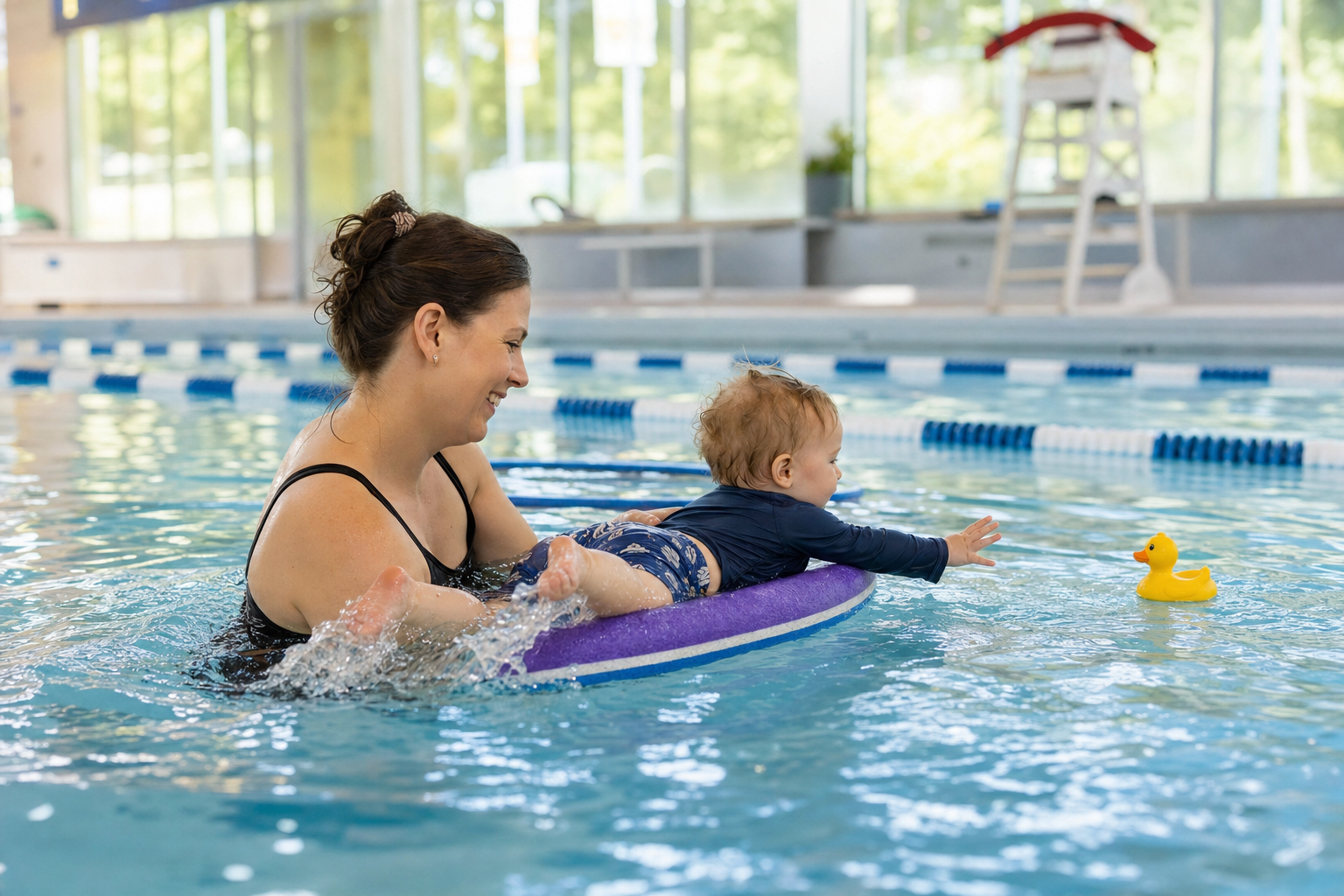
Try holding your baby under the chest (front glides) or supporting the body with a noodle under their tummy. In these supported floating positions, let their legs hang loose and nudge gentle movement by encouraging “splash-splash” with toes. When teaching toddlers, have them sit on the pool’s edge with feet in the water—make ripples, count kicks together, or imagine fish swimming under their feet.
At home, use floor play: lie your baby on their back, play “feet-to-mouth” games, gently moving their legs like frogs opening and closing or in a slow butterfly motion. These mimic hip-safe positions and encourage flexible joints without extension or compression.
If you want a structured way to build water confidence at home, the 10-Week Plan guides you step by step.
Water Games & Songs That Make Kicking Fun
Rhythm and repetition help build leg strength and coordination—without drills. Use songs and stories: sing “Kick-kick-kick the waves,” or adapt familiar songs (“Twinkle, Twinkle” as a floating back-kick lullaby). When children feel music or a rhyme, their bodies often respond with rhythmic movement.
[[ctababy]]
In the pool, playful games such as kicking toward floating toys, chasing bubbles, or wall push‐offs (holding hands at the wall, pushing off gently and gliding) provide motivational cues. Using a small kickboard or noodle once your toddler has some buoyancy encourages flutter kicks (front or back) and body length. Make it a game: who can blow bubbles and kick back to the wall, or who can kick to “rescue” a floating duck.
Avoiding Common Pitfalls
Don’t move their legs for them—drawing bicycle pedals with baby’s legs can force joints in unhealthy ways and deprive them of the chance to learn through their own muscle control. Avoid comparing siblings: some babies learn kicking at 10 months, others at 18—variation is normal.
Also, don’t expect swim kicks to be coordinated before toddlers have sufficient core strength. Bent knees, droopy feet, or slow kicks are normal early on. What matters is gradual improvement in extension, pointed toes, and relaxed ankles. Forcing perfect form too soon often causes tension or poor movement patterns.
Expert Advice & When to Seek Guidance
For children 6-36 months, experts suggest giving lots of floor time, varying positions, and safe, supported standing or walking from knees (rather than lifting to feet) to build hip stability. Equipment or carriers that force straightened legs or bring knees tightly together should be avoided to protect hip development and avoid risks like hip dysplasia. These guidelines align with hip safety research and recommendations from pediatric orthopedists.
Also, if your baby never kicks in water at all, or displays pain, one leg much weaker than the other, or isn’t showing other gross motor signs (rolling, crawling, standing), it may help to talk with a pediatric physical therapist. But in most cases, gentle encouragement and fun games are plenty.
Putting It Into Practice: A Sample Routine
Start simple: three times a week, spend 10-15 minutes in the pool doing river-edge or wall games, plus short supported glides or float practices. On land, incorporate floor play like “feet to mouth,” butterfly movements, and free leg motion daily.
You might also follow a structured resource for guiding your routine over time. For example, the swimy.org 10-Week Plan lays out progressive exercises and supported positions that build kicking confidence while respecting hip and joint development.
With time, rhythm, and playful repetition, many toddlers go from barely moving in water to kicking strong and proud—on their front, their back, in float time, in water play and swim lessons. It’s a journey, not a sprint.
Keep it joyful. Celebrate every splash, every kick, every push off the wall. Before long, those natural leg movements become confident, coordinated kicks—and you’ll know you supported that journey with wisdom and care.
120+ swimming exercises sorted by age — with video and instructions. Developed by swim instructors, completely free.

120+ swimming exercises sorted by age — with video and instructions. Developed by swim instructors, completely free.