Pool Noise Without Meltdowns: Spot, Prevent, and Help Your Baby Enjoy Swim Class
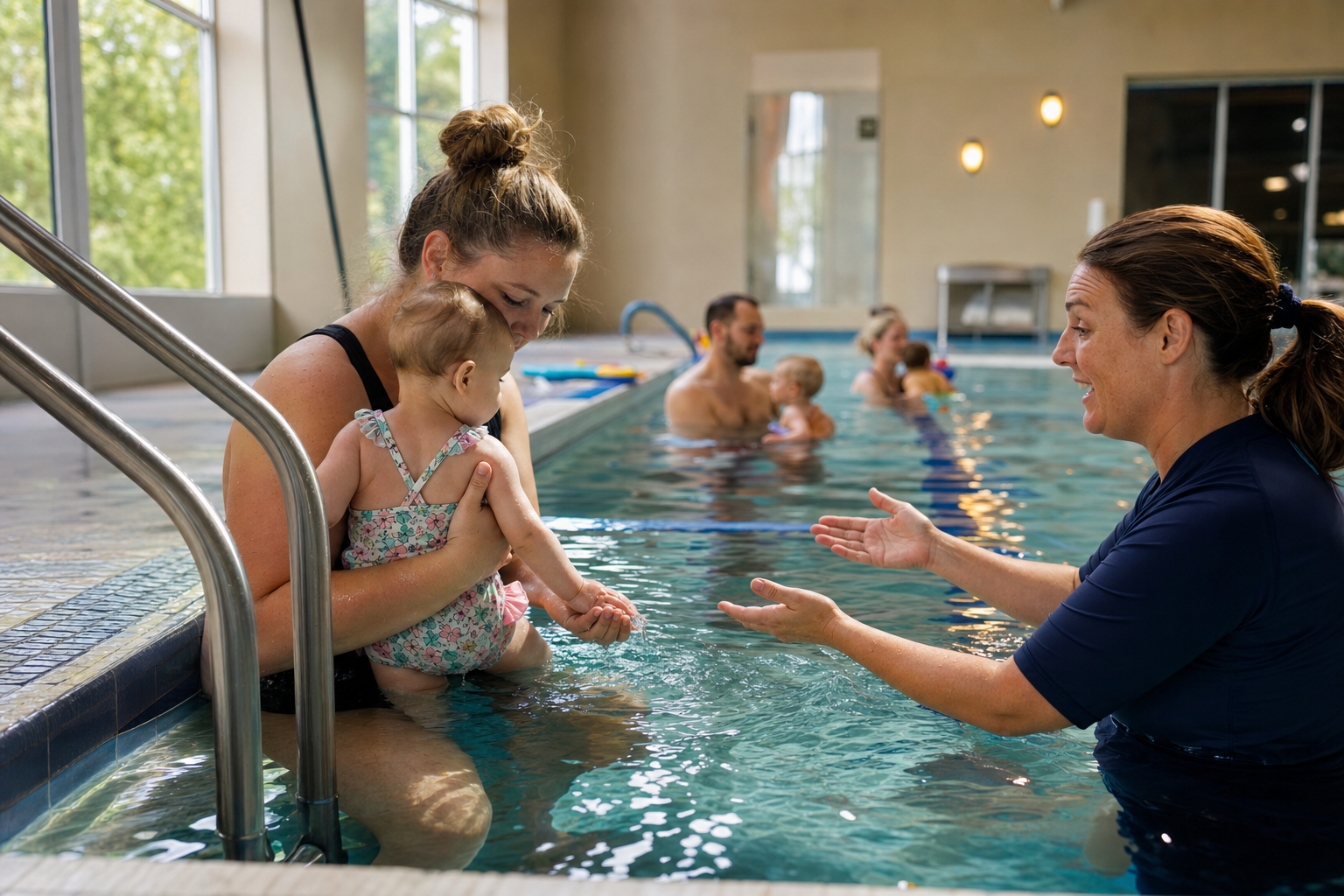
If your baby or toddler is overwhelmed at swim class by echoes, whistles, splashes, or crowds, you’re not alone—and it’s not your parenting. Babies aged 3–36 months often face sensory overload in busy pools. The good news is you can build positive water associations early by spotting cues early, adjusting routines, and giving gentle support so that “baby swim class crying” doesn’t become the norm.
Recognize Overwhelm Signals Early
Babies can’t use words yet, so they use behaviors. Look for signs that your child is being overstimulated: turning their head away, clenching fists, going quiet, or suddenly stiffening when someone yells or when water splashes unexpectedly. According to Healthline, crying, clinginess, being irritable, withdrawing from touch, and rapid body movements are clear warning signs.(healthline.com) When toddlers or babies freeze at the edge of the water or refuse face-wetting—these aren’t defiance, they’re stress.(aqzog.com) Notice if your child’s tone drops, looks glazed over, or seems disconnected during class—this is a signal to step back.(swimy.org)
Arrival Routines and Calming Holds
How you start before stepping into the pool often sets the tone. Aim for consistency: arrive early so you're not rushing, go through your usual diaper or changing routine without hurry, and keep the atmosphere calm. Pick a time of day when your baby is well-rested and well-fed. An article from Swimy outlines that swim slots after the first nap or snack tend to work best for 3–36 month olds because late afternoon often pushes them past their wake-window.(swimy.org)
Before joining the group, use calming holds. Carry them close, speak in soft tones, gently rock or sway. Let them feel the pool’s edge or steps first. Wetting hands, arms, then shoulders—small stages rather than dunking all at once. Experts recommend letting babies feel water gradually and holding their body securely so they trust the water.(swimmerliving.com)
Short Lessons Can Be Big Wins
Long class time doesn’t always mean more progress. For sensitive children, shorter lessons with frequent breaks often lead to fewer tears and more confidence.(swimmerliving.com) Instead of pushing through a full session, have a plan to exit early and re-enter when the child feels ready. Private lessons or classes with smaller groups help because instructors can move at your baby’s pace.(swimmerliving.com)
If you want a structured way to build water confidence at home, the 10-Week Plan guides you step by step.
About halfway through your swim class journey, consider trying the Swimy 10-Week Plan for better alignment. It helps you schedule swim sessions around nap windows, feeding routines, and post-class downtime so that overstimulation is minimized and positive memories are built.(swimy.org)
[[ctababy]]
Why “Just Tough It Out” Backfires
You might be tempted to think crying means your baby is being defiant or stubborn, or that you need to force participation. In truth, treating crying as misbehavior ignores what your child is communicating. Experts agree that over-forcing group participation can deepen fears instead of resolving them.(swimmerliving.com) If your baby gets water up the face too soon, or is dunked without proper preparation, they may associate water with something unsafe rather than something fun.(inspiredswim.com)
For older babies and toddlers, around 12–24 months, cognitive development causes them to become more aware of threats. A single splash, loud whistle, or moment without control can shift how they view water. That awareness makes gentle pacing, predictability, and communication especially important.(inspiredswim.com)
Actions You Can Take Right Now
Make a pre-swim checklist: check when your baby’s last nap was, feed them 20–45 minutes before the pool, arrive early so there’s no rush. Choose swim classes in quieter pools during non-peak hours. Dress warmly afterward and plan a calm ride home.(swimy.org) During class, use soothing holds whenever the baby stiffens or clings. If a loud crash or splash triggers fear, respond with calm touch and neutral language (“That splash surprised you. I’m here. Let’s take a moment”) instead of saying “Don’t be scared.”(hubbardswim.com)
After class, do a wind-down: towel, warm clothes, quiet songs, or reading. Praise even small wins, like stepping in, tolerating a splash, or blowing bubbles. Let them experience mastery so they begin to expect positive outcomes.(swimlpb.com)
When Shorter Lessons & Low-Stimulus Pools Help the Most
Sensitive babies—those with noise sensitivity or strong sensory processing traits—often need slower pacing. Quiet pools with fewer students, calmer lighting, and less echo can make a huge difference.(swimmerliving.com) Instructors who read cues—yawning, gaze drift, tension—and adjust accordingly prevent overstimulation before it starts. Knowing when to pause, skip an activity, or shorten the lesson is not about giving in—it’s about setting the foundation for lifelong positive feelings about water.(swimy.org)
Final Word: Building Trust With Water
When your baby associates swim class with dread, progress stalls. But by recognizing early signs, having arrival routines and calming holds, allowing shorter sessions when needed, and avoiding common pitfalls—like forcing participation or rushing—you're helping your child learn trust. A child who feels understood and safe in the first 3-36 months is more likely to grow into a strong swimmer and water lover. It takes patience. It takes listening. And it takes telling your child, with every splash and every comfort touch, that the water is theirs to explore—at their pace.
120+ swimming exercises sorted by age — with video and instructions. Developed by swim instructors, completely free.

120+ swimming exercises sorted by age — with video and instructions. Developed by swim instructors, completely free.