Poolside Prams: Brake, Heat and Theft Checks for Swim Class Safety
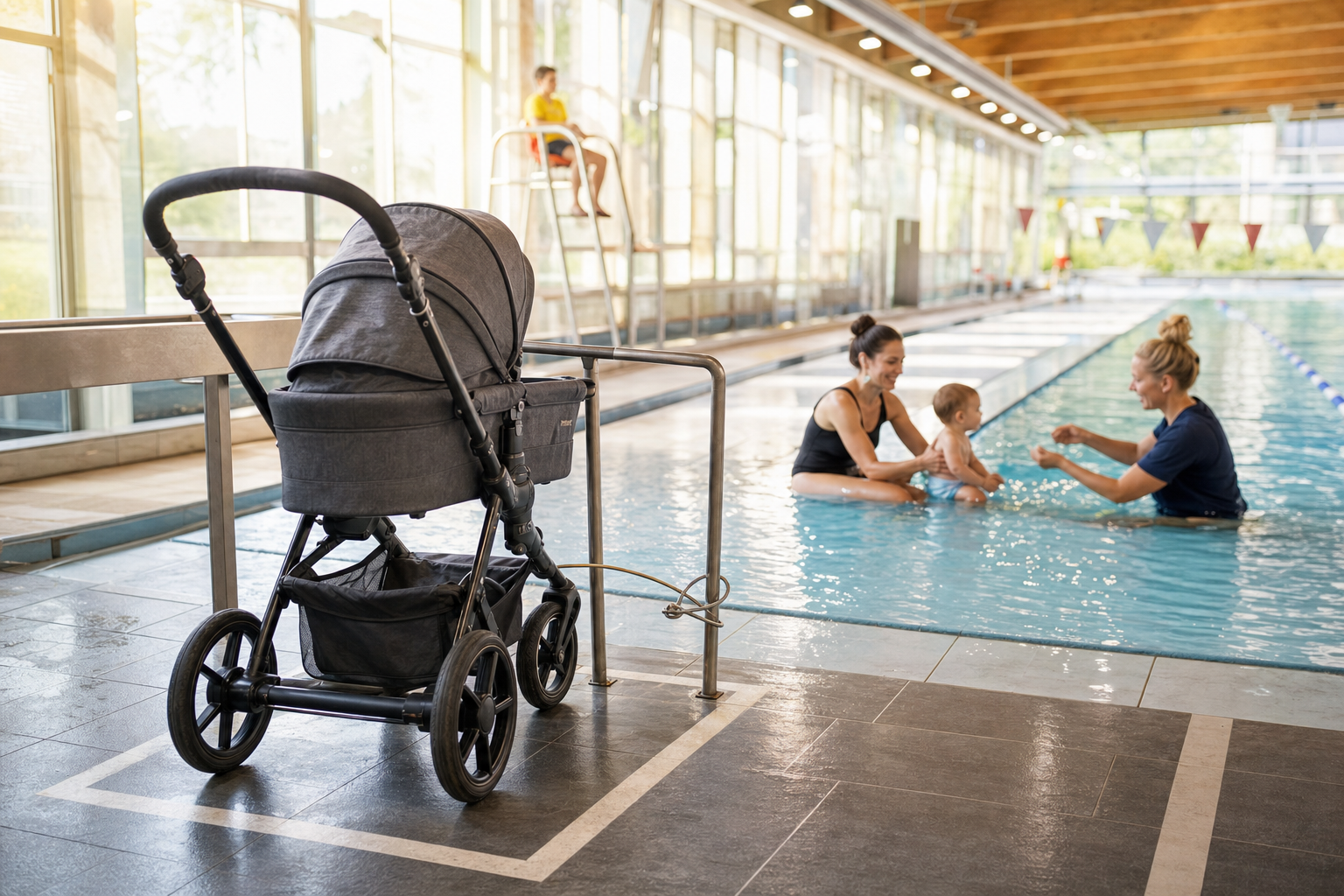
When you bring a pram or buggy to baby swim class, the first questions that should cross your mind are: “Is it parked safely?” “Is the frame too hot for baby’s hands?” and “Have I protected valuables?” Getting familiar with safe parking, heat hazards, and keeping essentials secure lets you focus on what matters—baby in the water and safe supervision. Let’s dive into what you need to look for when leaving a baby swim class buggy or stroller at swimming lessons.
Brake Your Pram Fully, Always
Never assume the pram’s brakes will hold without your care. On slick pool decks, wet walkways or sloping floors, brakes must be locked every time. Make sure at least two wheels are immobilised to prevent rolling toward wet grates, steps, or water edges. Use the brake lever properly before entering the pool hall or changing room. Also, avoid parking prams near emergency exits or doors that swing open into walkways—that puts everyone at risk. Exits must stay clear at all times. If the pool facility offers a dedicated buggy or stroller zone, use it. These are usually safer and less trafficked.
Frame Heat & Sun Safety
Poolside areas often get hot, and a pram’s frame, straps, and metal parts can skyrocket in temperature under direct sun. Before putting baby’s hand, arm, or foot on any exposed metal, touch it with your bare hand. If it burns you, it’ll burn them. Use the pram canopy or a purpose-designed sunshade. According to recent UK findings from an ergonomics study, the best low-cost way to cool a stroller was with a battery-operated fan and a damp light-coloured cloth draped over the pram, reducing internal temperature by about 4.7°C.(ergonomics.org.uk) Don’t use blankets or thick fabrics which block airflow—those only trap heat and risk overheating. NHS guidance also warns against covering prams with muslin or blankets that limit ventilation.(nhs.uk)
Theft Prevention Without Losing Focus
While you’re supervising baby in the water, prams can be tempting targets for opportunists. Always bring essentials—wallet, phone, keys—with you or keep them locked in facility lockers. Attach a basic stroller lock through a wheel to secure the pram to railings or fixed objects when possible. If you’re at a swim school, check if there is a dedicated buggy parking zone; many parents have noticed pools offer such zones for safety and theft prevention.(reddit.com) Also, personalise your buggy—bright ribbons, stickers, or unique covers help you spot it quickly and discourage misplacement or theft by mistake.
If you want a structured way to build water confidence at home, the 10-Week Plan guides you step by step.
[[ctababy]]
Anticipate Pool Layouts & Park Smart
No two pools are the same. Some have tight border zones, some have wide deck space; some have direct sun exposure, others are in shade. When arriving, walk around first. Find shaded areas away from windows or big skylights for parking shady prams. Avoid leaving your pram with wheels on wet walkways where pool users flood out. Emergency doors should be completely unobstructed. Even in busy classes, tiny gaps exist along edges of courts or benches that aren’t helpful in a rush. Position prams several feet back from water edges—premature hand reaching or sudden slips can send prams tipping forward.
Prioritising Baby and Supervision Over Convenience
Keeping baby’s safety front and centre means never using pram brakes or restraints as substitutes for supervision. Even if baby is strapped in, danger remains if the entire unit tips toward water or if baby leans or drops something and tries to reach. Set up consistent pre-pool routines: remove wet gear before baby climbs back into pram, dry feet, wipe off metal buckles, etc. Parents following structured guides, such as the 10-Week Plan from swimy.org, find it helps build swim skills and safety habits so that pram parking and transfers feel natural.
Why This Matters for Ages 0-36 Months
Babies and toddlers under three are especially vulnerable. Their limbs are small, their skin sensitive, and their understanding of risk is zero. ASTM standards in the U.S. classify strollers by age range up to about 36 months and mandate safety features like reliable restraints, stable design, and functional brakes.(cpsc.gov) Prams without functional brakes risk rolling, and trapping between tray and seat openings can cause injuries if kids are not properly harnessed.(cpsc.gov) Frames heating up can burn thin skin, and sun exposure can lead to dehydration or sunburn.
Quick Checklist Before You Walk Away
Pause for these safety checks. Are brakes locked? Is frame in shade? Is pram away from emergency exits and water edges? Are your valuables secured? Is baby supervised or within sight? Answer “yes” to each before you turn your attention elsewhere.
Safety Caveat: Never leave baby in a pram as a substitute for supervision near water. Even with every safety measure in place, a moment’s distraction can lead to danger. Always keep baby within reach or fully attended when near pools.
Staying mindful about pram positioning, heat protection, and theft defenses means you can enjoy swim classes with your little one more relaxed and confident. Safe lessons, secure buggy, sunny pool days done right!
120+ swimming exercises sorted by age — with video and instructions. Developed by swim instructors, completely free.

120+ swimming exercises sorted by age — with video and instructions. Developed by swim instructors, completely free.