Bicycle Kicks vs Real Baby Kicks: What Parents Need to Know for Ages 6–30 Months
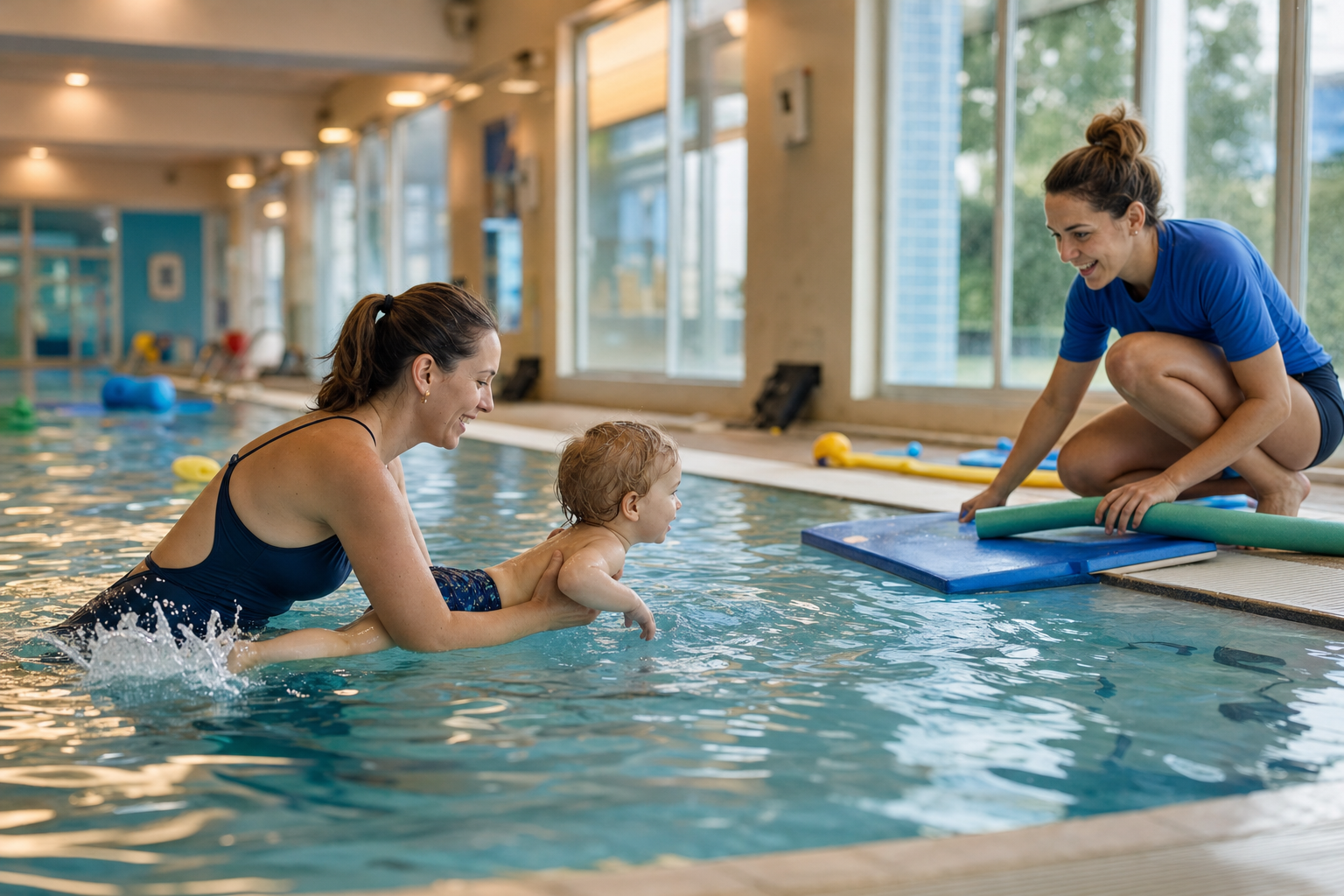
You might see instructors or parents moving your baby’s legs in a “bicycle” motion during swim lessons and wonder: is this good, or could it be harmful? Real baby-led whole-leg kicking—from the hip, relaxed knees—is very different. Learning the difference and using the right techniques will help your toddler swim confidently without overcorrecting tiny hips or knees.
Why Forced Bicycle Kicks Can Cause Issues
Forced bicycle-style kicking usually means someone manually moving a baby’s legs in a cyclical, pedaling motion. While well-intentioned, this can stretch or strain delicate joints. Babies between 6 and 30 months are growing fast—their hip socket, knee ligaments, and ankle joints aren't strong yet. Forcing straight-legged pedals risks creating stiffness, bent knees, or even encouraging unnatural movement patterns over time.
Beyond physical risks, forcing legs to kick symmetrically too early can interfere with natural development. Babies often kick alternately, then in sync, then develop stronger hip-driven kicks as they mature. If parents expect those perfect flutter kicks too soon, babies can get frustrated or discouraged, which disrupts swim confidence and joy. Positive early swim lesson programs include age-appropriate prop use, warm water, short sessions, and emotional support for struggling learners. HealthyChildren.org advises keeping water warm (about 87-94°F) and ensuring children under four feel safe and emotionally supported during lessons. (healthychildren.org)
What Real Baby-Led Kicking Looks Like
Genuine kicking driven by the child means movement starts at the hip with relaxed knees, flowing ankles, feet that point but don’t stiffen. Parents should see splashes, wiggles, oscillation—not rigid pedaling. This kind of kicking builds propulsion gently and encourages body awareness.
In supported positions—like front holds where you support the chest or tummy floats—allow legs to hang naturally. Babies will experiment with waves, alternating kicks, or light flutter motions. Toddlers will begin to use wall-pushes, lightly kicking while floating on their back, then exploring reaching arms as they grow. Movement should feel fun, spontaneous, and paced to the child’s comfort. Experts show that forced movements often reduce desire to swim, whereas baby-led motions promote joy and strength. (swimy.org)
If you want a structured way to build water confidence at home, the 10-Week Plan guides you step by step.
Gentle Games & Techniques to Teach Baby to Kick Swimming
You can foster real “toddler swim kicks” through playful, natural ways that respect a baby’s body. One tactic is simple fun in warm, shallow water. Let the baby sit on the pool’s edge and splish their feet, or hold them under the chest so legs float and toes can splash. Use splash games, songs with a beat, toys you move just beyond reach—nothing rigid, nothing forced. These ways encourage legs to move naturally without overcorrecting or forcing symmetry. (swimy.org)
Another set of tools: free-floating props like noodles, mats, and gentle kickboards. Used correctly, they help babies practice kicking, balance, and body position. Misused, they become crutches or lead to over-reliance, which can mask weak joints or prevent full leg activation. Toddlers aged about 6–36 months particularly benefit from treats like mat-supported glide then encouraging kicks, gradually reducing support. Always use these props under close adult supervision. (swimy.org)
Around midway in many baby swim curricula, more structured plans show up. For example, the 10-Week Plan from swimy.org includes progressive games, supported floats, exposure to reflexive underwater kicking—and crucially—does not include forced bicycle legs. It’s about building awareness, not creating perfect kicks overnight. (swimy.org)
[[ctababy]]
Common Pitfalls to Avoid
It’s easy to make small mistakes that slow down progress. Forcing or chaining legs into motion teaches joints to follow cues instead of letting the baby build strength naturally. Expecting symmetrical kicks too early leads parents to compare their baby with others, which doesn’t account for developmental differences in strength, coordination, or fear responses. Also, cold water or a baby who is tired, hungry, or emotionally upset won’t kick well—but pushing anyway can lead to resistance or fear of water. Programs should always be age-appropriate, prioritizing physical and emotional safety. (swimy.org)
How to Support a Healthy Kick Journey
Start with comfort: make sure water is warm, stay close, keep sessions short and joyful. Begin with playful touch, splashing, singing to encourage spontaneous movement. When baby can support some body themselves—either under chest or with a noodle—let them feel water flow around their legs. Inflate confidence, rather than ache for technical perfection.
Encouraging words, familiar songs with a beat, reaching for a floating toy—all motivate kicking in a fun, exploratory way. Over time, you’ll see kicks become stronger, more coordinated, and more intentional. Let supporting adults give guidance without doing the work for the child—this builds not just leg strength but trust, confidence, and love for water.
Summary: What Parents Should Do Now
To help your 6–30 month old learn to kick effectively swimming, stop the bicycle kicks and let real kicking lead the way. Use water play, props, and gentle games. Avoid forcing movement, expecting perfect symmetry, or practicing when baby is unhappy or cold. Choose swim programs that follow guidelines from authorities like HealthyChildren.org, use age-appropriate teaching, and support emotional wellbeing. With patience and play—and encouraging baby-led whole-leg kicking—you’ll be building strong, confident swimmers for life, one splash at a time.
120+ swimming exercises sorted by age — with video and instructions. Developed by swim instructors, completely free.

120+ swimming exercises sorted by age — with video and instructions. Developed by swim instructors, completely free.