Gentle Fall-In Practice (No Tossing): A Parent’s Guide to Infant & Toddler Survival Swim Skills
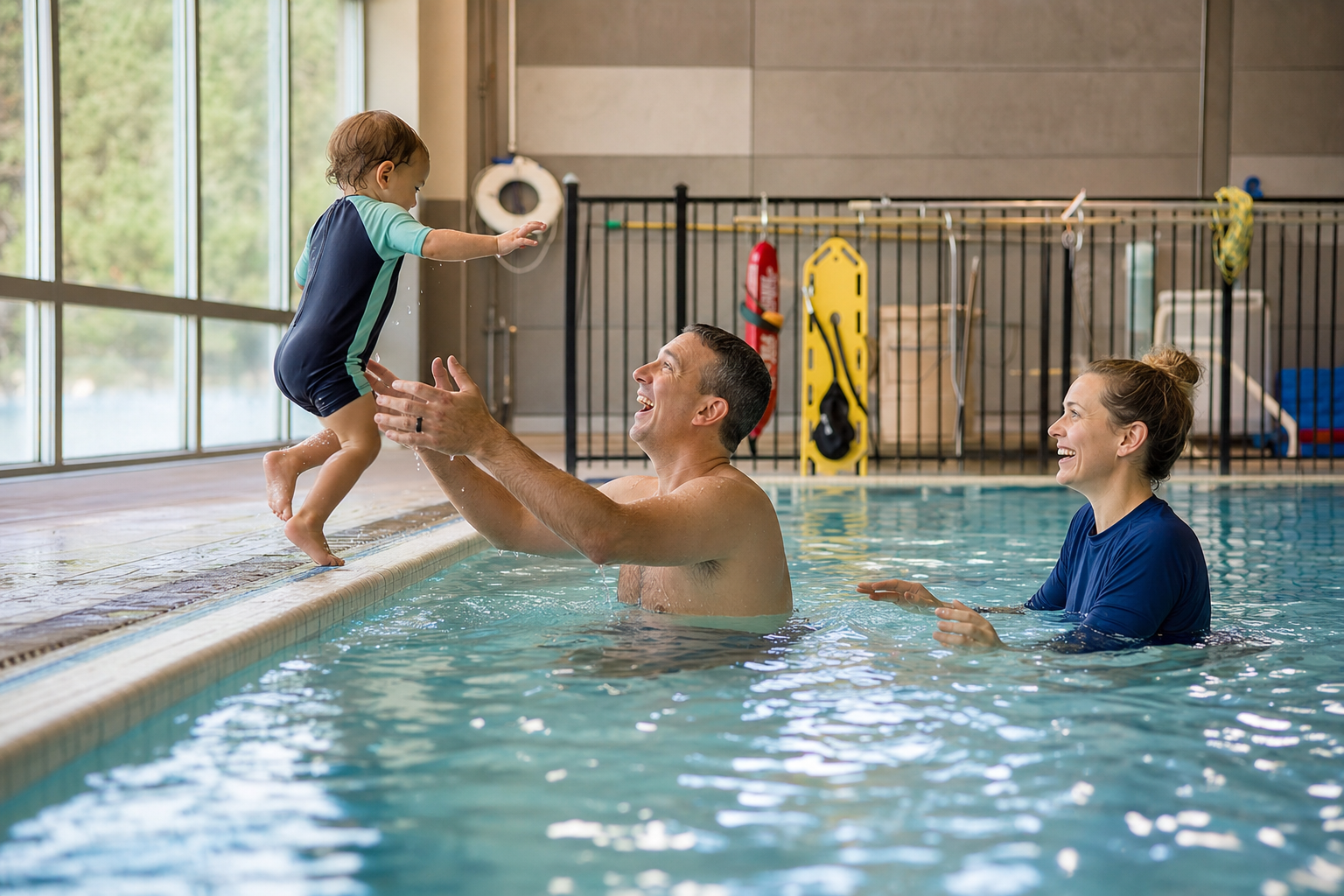
Teaching your toddler aged 12-36 months basic water survival skills doesn’t mean enforcing scary drills or throwing them into the deep end. You can use consent-based, gentle fall-in practice so they learn to respond calmly without force or fright. We’ll cover the concerns parents often have, what experts recommend, and how instructors can guide babies gently through surprise splash moments—without replacing supervision or safety barriers.
Why Gentle Fall-In Matters More Than “Survival-Style” Throw-In
Parents are rightly concerned about infant survival swim gentle approaches because many popular programs use methods that feel too strong or are misrepresented in viral videos. According to the American Academy of Pediatrics, there’s no evidence that formal infant swim lessons (under 1 year old) reduce drowning risk. Rather, infants that age benefit most from parent-child water introduction, play, and bonding—not independent rescue drills.(healthychildren.org)
From ages 1-4, swim lessons that build survival skills can help reduce drowning risk—but only when they are developmentally appropriate and emotionally supportive. The AAP now recommends that swim lessons begin after the first birthday, and that lessons include back-floating, orientation, and self-rescue skills without compromising calm or consent.(healthychildren.org)
What Gentle, Consent-Based Practice Actually Looks Like
Basic Skills Without Fear
For toddlers, gentle fall-in practice starts with small, safe simulations: stepping off the pool edge, low jumps (feet first), or being lowered into shallow water. Instead of being thrown or dunked without warning, the child is supported, given a clear choice, and reassured. Supports such as holding hands or a float helps build trust. Instructors may guide toddlers to turn around toward a wall, reach out, and orient themselves safely. One program describes “turn back toward the pool wall after stepping or jumping in” as a key toddler swim safety skill taught in a safe way.(swimy.org)
Building the Roll-Float-Play Sequence
Gentle self rescue for parents of infants (6-12 months) often includes roll-to-float techniques, breath control, submersion cues, and assisted back float. These are done under close supervision, one-on-one, with positive reinforcement, rather than pressure or forced dunking. Petal-soft transitions help infants gain comfort. For example, the Roll & Float program helps infants as young as 6 months learn to roll from face-down to safe back-float, control breathing, and conserve energy while floating until help arrives.(mybabyswims.com)
Simulating Surprise Splashes Without Shock
Toddlers may encounter an accidental water entry: slipping, falling off a dock, or a splash. Instead of throwing them in or dunking them without notice, instructors and parents can sneak in gentle surprises—like a splashing cup of water over hands or face (with consent)—followed by affirmation. Parents who practice under supportive teaching see children gradually accept small surprises and learn to respond: turning toward safety, floating, breathing, waiting for help.(suncoastswimbabies.com)
If you want a structured way to build water confidence at home, the 10-Week Plan guides you step by step.
Research Insights: What Science Shows About Toddler Self-Rescue
A recent study involving 12- to 23-month-olds found that after 20 instructor-led training sessions of 10 minutes each (spread over four weeks), 83 % of toddlers could safely recover from face-down release to back-float and stay afloat clothed for three minutes. When given a second chance, 98 % passed the full assessment. The study also noted that some toddlers experienced mild distress in early sessions; instructors stressed emotional support and gradual exposure as crucial.(pubmed.ncbi.nlm.nih.gov)
[[ctababy]]
That said, repeated full submersions (especially for infants under one year) remain controversial. AAP policy recently stated that for children under 12 months, goals should include enjoyable aquatic experiences, parental bonding, and comfortable water exposure—but not complex survival drills that must be done perfectly to work.(publications.aap.org)
How to Choose & Design Gentle Fall-In Practice
Start by verifying your instructor or program supports consent, gradual exposure, age-appropriate pacing, and consistent reinforcement. Avoid programs that focus on dramatic full submersions, throwing toddlers into deep water, or modeling fear rather than calm.
A solid example is a curriculum that offers a 10-Week Plan that gradually introduces survival skills: small slips or drop-ins, backing to float, repeated turn-tows, and calm rest periods. When skill is shown with support, progress moves gently forward. Include parents in the lessons so you know what to practice during bath time or at home.
Always maintain safety: barriers like pool fencing, proper gates, locks, life jacket use, and never letting lessons replace close, constant supervision. Even when toddlers learn self rescue, they still need an adult within arm’s reach (touch supervision). According to updated guidelines, swim lessons after age one must be paired with life jacket use near natural water, and the supervising adult must be ready to respond.(healthychildren.org)
Tips for Parents: Supporting Your Child and Managing Your Concerns
Bring your child to water classes gradually. Observe one class before enrolling. Engage with your child’s instructor: ask how they ensure consent, how they respond to distress, and how they pace submersion or surprise drills.
At home, practice lower-stakes versions: bathing together, shallow water play, games involving gentle pouring or blowing bubbles. Never push beyond what your child appears comfortable doing. Communicate calmly about what comes next, give choices (“Do you want to step in or have mommy-holding first?”), and always offer reassurance.
Balancing Water Confidence and Realistic Risks
Gentle fall-in practice helps toddlers build orientation skills—turning toward safety, floating, breathing—making them more resilient in case of sudden water entry. Coupled with foundational water skills from around age one, this reduces risk.(pubmed.ncbi.nlm.nih.gov)
That said, there’s no such thing as "drown proofing" at this age. United States pediatric policy emphasizes layered prevention: barriers, life jackets, supervision, and CPR knowledge. Swim classes are one layer, not the only or most important one.(publications.aap.org)
Gentle fall-in practice done right honors your child’s emotional safety while helping grow their capacity to respond if they end up in water unexpectedly. Focus on consent, calm progression, consistent support—and never let lessons replace supervision or safety barriers.
By choosing programs thoughtfully, practicing skills gently, and staying hands-on during water time, you give your toddler confidence without fear—and real protection without trauma.
120+ swimming exercises sorted by age — with video and instructions. Developed by swim instructors, completely free.

120+ swimming exercises sorted by age — with video and instructions. Developed by swim instructors, completely free.