Post-Lesson Swim Cool-Down: Five Minutes That Speed Progress
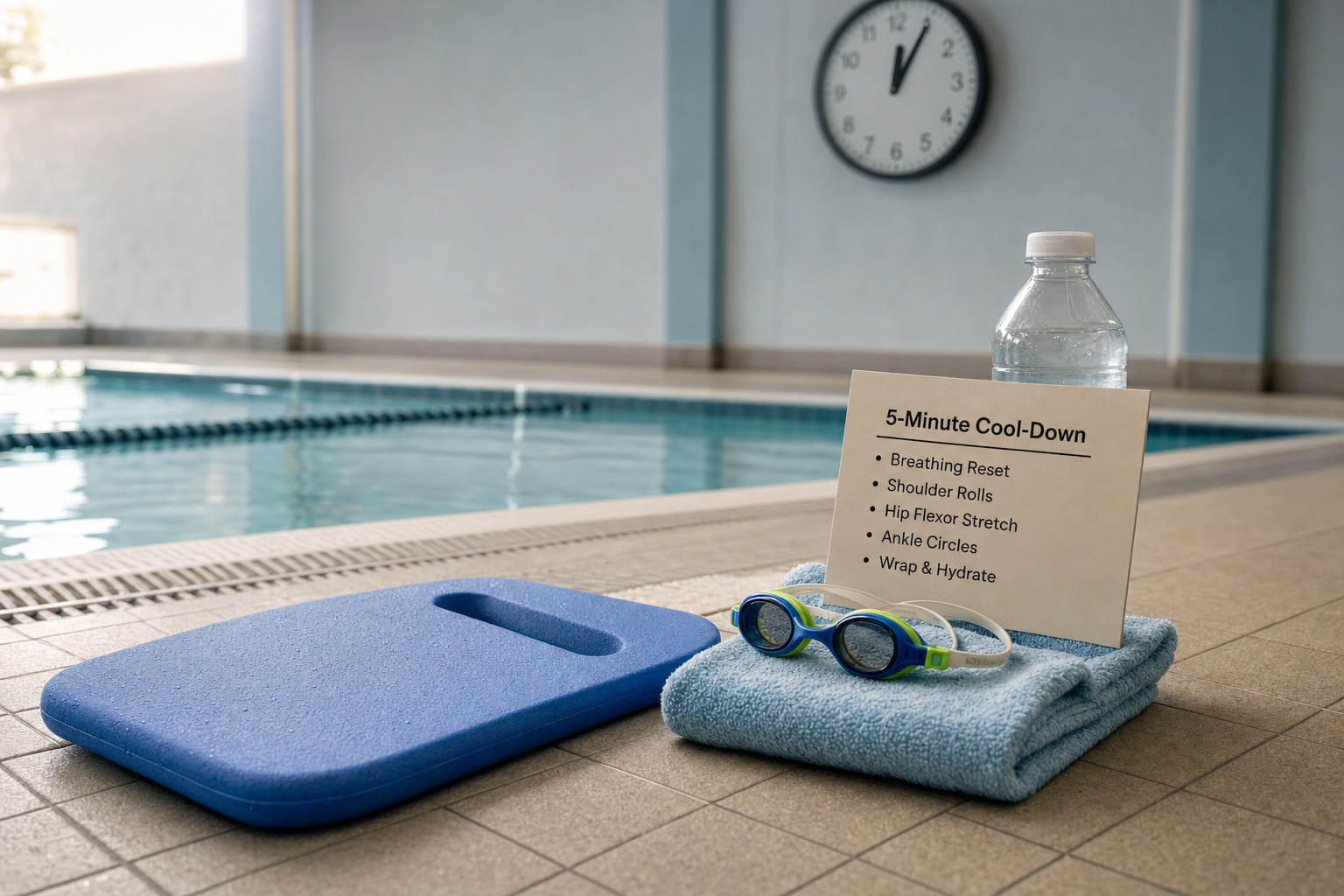
After swim lessons, the first five minutes make a massive difference in how kids feel and learn. A simple post lesson cool down helps lock in good motor patterns, lowers stiffness, and boosts recall of skills. Below is a quick deck routine parents can do poolside (or just outside the pool) that combines a breathing reset plus three gentle moves to reduce next-day soreness. Safety tips included so the routine stays fun, safe, and effective.
Why Five Minutes Is Worth It
When kids swim, their muscles work hard, especially shoulders, hips, core, and legs. Without a cooldown, muscle tension builds up, which can dull motor patterns and lead to stiffness the next day. Respiratory reset—slowing breathing and calming the heart rate—helps the body absorb what was practiced. Experts say that cooling down gradually, followed by gentle stretching when muscles are warm, reduces soreness and risk of overuse injuries.(swimmings.org)
For ages 6–12, who are still refining fundamental movement skills, immediately linking cool down with recall helps internalise posture, kick technique, stroke timing, and breath control. Research into motor‐learning methods in school-age swimmers shows that retention improves when skill acquisition is followed by recovery routines and repetition of cues.(pmc.ncbi.nlm.nih.gov)
The Five-Minute Cool-Down Deck Routine
Do this deck routine right after towels come out of the bag. Make sure the surface isn’t slippery. Keep movements gentle and controlled. Wet skin + static overstretching can increase risk of strain. Avoid overstretching while still wet.
1. Breathing Reset (1 minute)
Ask your child to stand tall, feet hip-width, shoulders relaxed. Place one hand on the belly, one on the chest. Inhale slowly through the nose for three counts, letting the belly push out. Exhale through the mouth for four counts, drawing belly in. Do five cycles of breath. This helps calm the nervous system, reduce heart rate, and anchor new skills into the brain and body.
2. Move-One: Shoulder Rolls + Chest Opener (1 minute)
Roll shoulders backwards slowly, then forward, five times each. Then clasp hands behind the back (if comfortable), gentle shoulder blades together, lifting chest slightly. Hold that for three to five deep breaths. These shoulder rolls and chest opening reverse shoulder tightness from freestyle and pull drills. Research highlights that swimmers often need specially targeted stretches for anterior shoulder and chest muscles to prevent discomfort.(reachmobility.co)
If you want a structured way to help your child progress at home, the 10-Week Plan guides you step by step.
3. Move-Two: Hip Flexor Stretch in Half-Kneel (1 minute)
[[ctakid]]
From standing, step one foot forward into a half-kneeling position, other knee resting on a soft surface. Keep upper body upright. Tilt pelvis gently forward so you feel a stretch in the front of the hip on the kneeling side. Hold for 20–30 seconds, switch sides. Kids often have tight hip flexors from kicking and sitting between lessons. Doing this helps reduce stiffness in hips and lower back.(swimmers.life)
4. Move-Three: Calf/Ankle Circles + Toe Pulses (1 minute)
Stand holding a stable surface (pool wall, chair). Lift one foot, draw ankle circles five times in each direction. Then do toe pulses for ten seconds (point toes, flex toes). Switch sides. This boosts circulation in lower legs. It keeps calves and ankles more flexible, easing into next day’s walking or standing during school.
5. Final Reset: Wrap, Warm & Hydrate (1 minute)
Parent wraps the child in a dry towel or fleece, especially if it’s winter or air is cold. Encourage drinking water. If lesson was longer/heavy effort, offer a light snack soon. Moisture loss in water plus cold air can chill a child quickly, and dehydration silently contributes to soreness.
Expert Extras & Common Pitfalls
Instead of skipping the post-swim routine, think of these extras as tools for glowing performance. Encourage kids to reflect on how their body feels right after lessons—sore spots, tightness, where breathing felt rushed. Over time, this builds body awareness and helps instructors adjust cues accordingly.
Avoid doing deep static stretches while the skin is still wet—muscles and tendons are more vulnerable. Always dry off first. Also be sure to change into warm clothing quickly in cold weather. Dehydration is easy to overlook because being in water hides sweating. A refillable water bottle poolside is a simple lifesaver.
The routine seamlessly complements long-term skill plans too. For instance, the 10-Week Plan from swimy.org lays out practice progressions for technique and consistency; a reliable cool down becomes part of that flow, helping prevent drop-offs in motor skills between weeks.
Putting It All Together & When To Skip
Do this routine after every swim lesson—anywhere lessons happen, year-round. It takes just five minutes but wins big. On hectic days, at least do breathing reset + shoulder move + wrapping warm + water. Those are the core essentials.
Skip or scale back if the child is injured or feeling pain. If canvas decks are slippery, handheld moves like arm circles and ankle pumps are safer. If air or pool temperature is cold, shorten static holds and focus on warmth.
When done regularly, this post swim routine does more than reduce next-day soreness; it helps solidify motor patterns so kids recall skills faster in the next lesson. Parents know what to do before towels go on—and kids feel ready for more.
120+ swimming exercises sorted by age — with video and instructions. Developed by swim instructors, completely free.

120+ swimming exercises sorted by age — with video and instructions. Developed by swim instructors, completely free.