First Swim After Moving House: Help Your Toddler Rebuild Confidence
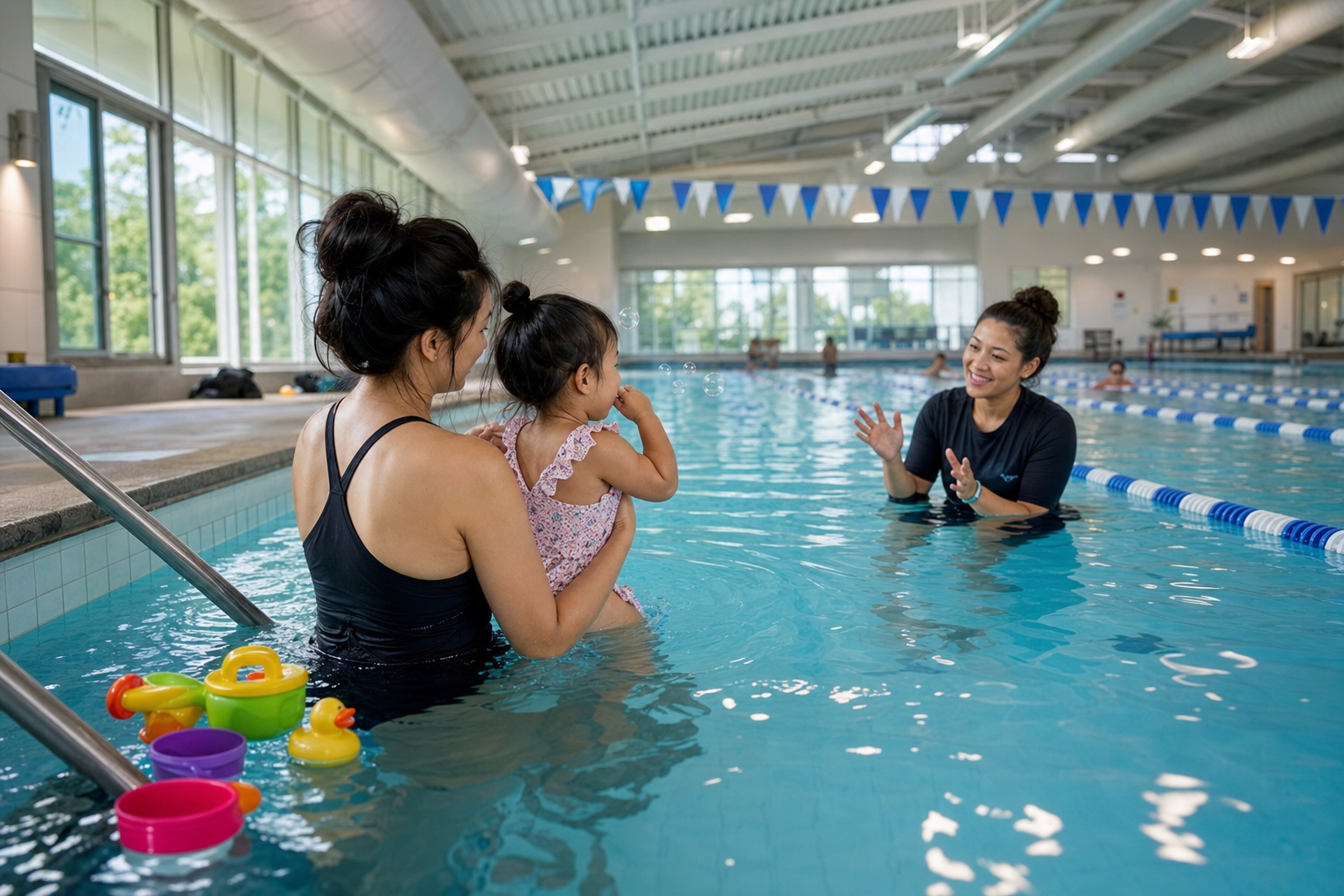
It can feel confusing when a toddler who swam happily before suddenly hesitates in a new pool or at a new swim school. Confidence doesn’t always transfer just because the water looks familiar. What changes—the depth, shape, teacher cues, or even the smell—can all be disorienting. Let’s cut right to what parents can do to help your 6-36 month old ease back in safely and with joy.
What to Check Before the First Swim
Before you dip a toe in, safety must be first. Even if you’ve inspected pools before, moving house means everything is unfamiliar. First, assess pool access: Is there a fence or barrier all around, not just on three sides so the house isn’t being used as part of the barrier? Gates should be self-closing and self-latching, with locks placed high enough that toddlers can’t reach them. According to PoolSafely, a barrier fence should be at least four feet high and fully enclose the pool, with no climbable objects nearby. (cdc.gov)
Next, check drain covers, filtration, and depth markings. Commercial swim schools often meet strict standards, but in a new home pool drain safety might be overlooked. The American Academy of Pediatrics warns that unfamiliar environments must be examined for water hazards, which include unlocked gates, exposed drains, or shallow zones without clear signage. (publications.aap.org)
Finally, understand supervision rules. A toddler always needs touch-supervision: an adult in the water within arm’s reach. Watching from the deck isn’t enough until your child is more confident and skilled. That’s the strong recommendation from safety authorities. (healthychildren.org)
Why Confidence Often Resets in a New Pool or New Swim School
It’s tempting to expect past swim comfort to show up immediately, but many toddlers view a new pool as completely novel. The pool shape, lane lines, teacher voices, or even the floor material can feel unexpected. Toddlers are used to predictability. A brand-new environment breaks their familiar cues—like the sound of running water, where the steps are, or how deep the water feels underfoot. All of this means a toddler scared of a new pool, even if they swam before, isn’t unusual.
Research and swim-school advice agree that detecting readiness involves more than age. It’s about emotional poise: can the toddler float reliably with support? Do they respond to simple cues in class and follow songs or movements? If not, pushing ahead might swamp their confidence. (This is similar to what new parents learn when transitioning from parent-baby to toddler swim classes.) (swimy.org)
If you want a structured way to build water confidence at home, the 10-Week Plan guides you step by step.
A Calm Re-Entry Plan: Step by Step
Start with small exposures. Visit the pool before swim lessons begin. Sometimes swim schools offer trial sessions or observation time so your child can explore without pressure: touch the tiles, kick the wall, see other children. Use that time to build familiarity. Swim England offers this kind of guidance, suggesting families walk through changing rooms, peek at the pool deck, and even try splash sessions. (swimming.org)
[[ctababy]]
At home, bring in cues that replicate swim school routines. Practice bubbles in the bath, warm-ups like kicking in shallow water, floating with support. Gradually build up skills with gentle play. One helpful tool many parents lean on is the 10-Week Plan from Swimy.org—it gives week-by-week guidance to build water confidence, preview skill changes, and gradually adjust to toddler swim levels. Use that plan as a bridge so that the first lesson upstairs is no longer a shock. (swimy.org) (swimy.org)
On that first real swim, schedule it for when your child is rested and fed—not right after a nap or meal. Bring along familiar items: their favorite float, a towel with a beloved character, songs they know. Start with water at shallow end, hold them close, mirror calm energy. Praise small wins: face wetting, toe touch, reaching the wall. Let them set some of the pace.
Rebuilding Familiar Cues in an Unfamiliar Setting
Teachers often rely on cues that a toddler may not recognize: bell for class, certain songs, specific holds. Help your child by previewing what those cues will look like. Teach phrases like “kick,” “blow bubbles,” or “hold the wall” at home. Sing the songs they’ll learn, practice routines. When choosing a new swim school, ask if you can meet the teacher ahead of time or walk through the facility. These small gestures help children anchor themselves with cues even when everything else feels different. (swimming.org)
Also, reinforce continuity. If your toddler already responded well to one class, try to keep at least one consistent thing: same swim-cap, same towel, even same day of week. These consistent pieces build safety anchors amid change. If your child shows fear or resistance, never force them. Offer options like staying by parent for first few minutes or picking props used in class. Every child reacclimates at their own pace.
Safety Caveat: Never Assume
Even the most experienced toddler swimmer needs safety checks anew in a new environment. Locks, gates, water clarity, depth changes, supervision norms—everything must be reassessed. Every pool has rules. Even a lovely swim school can have shallow ends deeper than you're used to, drain covers that look odd, or chemical smells that feel different. Use US, UK, or AU guidelines as checklists. Supervise within arm’s reach. Never leave them alone near water. Safety isn’t optional; it’s the foundation of confidence.
Final Thoughts: Hope, Patience, Celebration
Moving house or changing swim schools doesn’t erase what your toddler already knows. It just means they need time, consistency, safety, and familiar cues to rebuild. Your calm confidence and thoughtful approach will help them trust the water again. Celebrate each effort—because every splash, every giggle, every tentative toe dip is a step forward.
With careful prep, safety checks, and kindness, your toddler’s first swim in their new pool can become one of the happiest.
120+ swimming exercises sorted by age — with video and instructions. Developed by swim instructors, completely free.

120+ swimming exercises sorted by age — with video and instructions. Developed by swim instructors, completely free.