Submersion Consent Words Parents Can Use in Baby Swim Classes
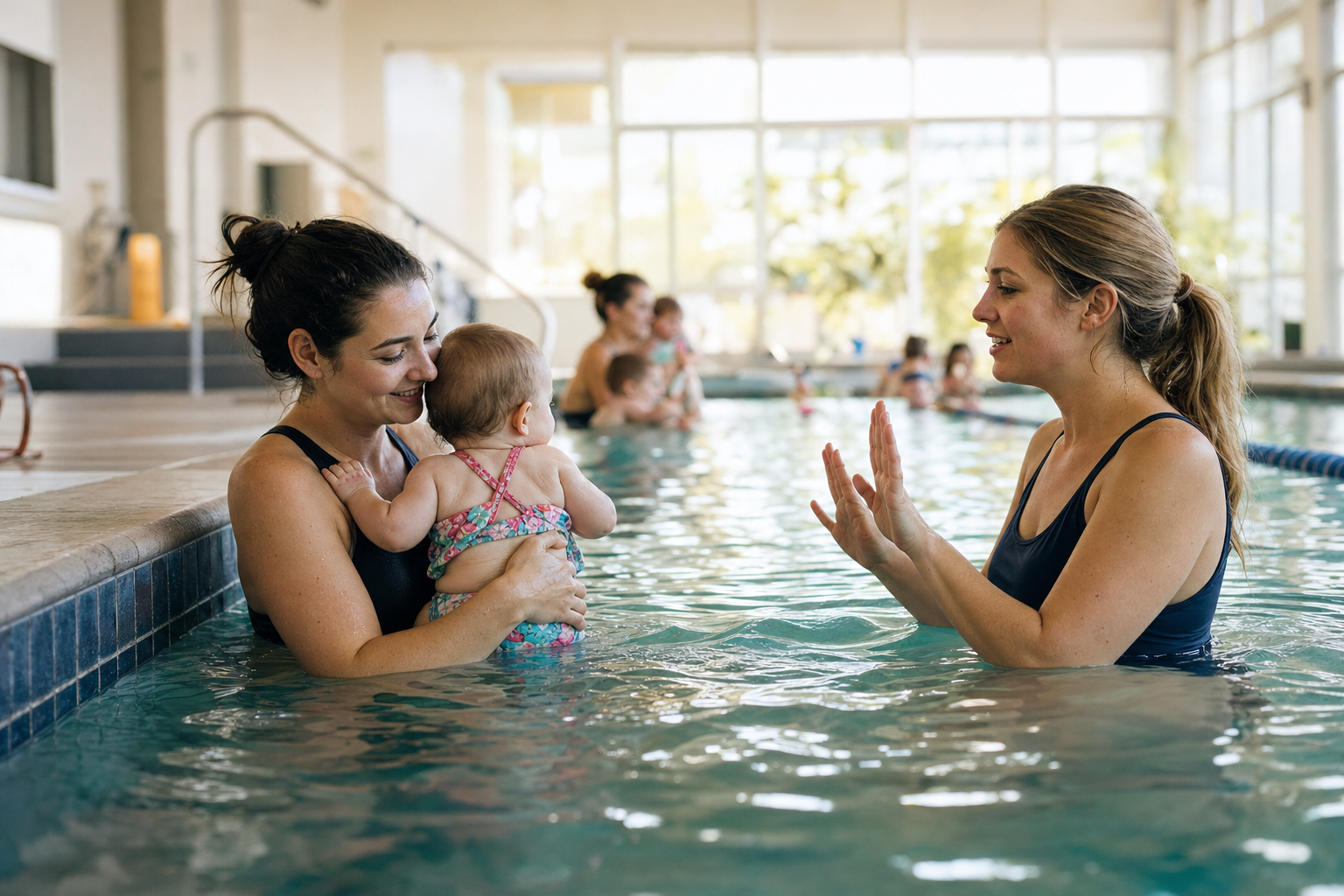
If you're about to enroll your 0-36 month old in a baby underwater swim lessons class or are already in one, it’s okay—and important—to have phrases ready to slow down or refuse dunking. These words help your child feel secure, let instructors know where you stand, and support baby swim submersion done gently and respectfully.
Why Use Consent Words Before Submersion
Trust between you, your child, and the instructor grows when you communicate clearly. The Swimming Teachers’ Association (STA) states that submersion should be done with the baby, not to the baby. Intentional dunking without obvious readiness or positive baby cues becomes forced submersion, which STA considers not ethically acceptable.(sta.co.uk)
Also, research reported by the American Academy of Pediatrics warns that repeated submersions before an infant is developmentally ready can cause negative aquatic experiences and even reduce swim competency later. For babies under one year, the priority is bonding, not proving water skills.(publications.aap.org)
When to Use These Phrases
You’ll need these phrases before class begins (during sign-ups), when the instructor suggests going further, or when you see your baby freezing or turning away. Use them whenever you feel pressured by group norms (like “all babies are doing it”). They help set your boundaries clearly.
Sample Consent Words You CAN Use
Here are simple phrases to communicate your or your baby’s limits. Using them early can reduce conflict and establish predictable, child-led practice.
- “We’ll try face wetting today, but no dunking yet.” This says you’re open to water experiences but need to stay on your baby’s terms.
- “Please pause when my baby turns away or shows discomfort.” You’re asking the instructor to watch for baby cues.
- “We don’t do underwater dives yet—just gentle dips when she is ready.” You slow down the pace politely.
- “No forced submersion in this class. My baby leads when she’s comfortable.” Asserts that consent matters.
- “If your lesson plan expects dunking, I’d like to know in advance so we can opt out.” Helps with planning.
- “We’ve practiced calm face dips—let’s build up when she’s more ready.”
If you want a structured way to build water confidence at home, the 10-Week Plan guides you step by step.
Using these phrases gives your child a chance to show readiness: splashing, letting water drip over face, blowing bubbles, relaxing limbs. These are positive signals. If baby stiffens, cries, turns head—these are signals to slow or stop.(serenityswimnetwork.com)
Before Class: Talk with Instructor
Before your first or next few classes, important discussions can prevent surprises. Ask questions like: “How many intentional submersions per lesson for babies aged 6-12 months?” or “What positive signals do you watch for before dunking or underwater swims?” These are trial questions many parents now ask to protect consent and avoid conflict.(swimy.org)
You may want to learn a structure like the 10-Week Plan offered by swimy.org, which helps parents introduce words, consent cues, and face-wetting gradually under the support of trained instructors. This gives time to build trust and readiness without rushing.(swimy.org)
[[ctababy]]
Protecting Your Baby without Conflict
When everyone’s excited, it’s easy to be swept along by group pressure. To protect your baby:
- Stay calm and firm with your consent words. It helps avoid confusion.
- Monitor baby’s responses in the moment—face turning, cries, stiff body mean stop.
- Know that doing less now (fewer dips, no underwater swims) doesn’t set them back—it supports long-term confidence and safety.
- Avoid vague statements like “it depends” if you want to set a clear boundary.
Learning breath control and face wetting gradually matters. The STA code says babies under 12 months shouldn’t be submerged deeper than about one meter, and submersions should be brief (a few seconds max), with increasing depth and duration only as baby shows readiness.(sta.co.uk)
Safety Caveats & What Your Words Enable
Submersion should always be gentle, limited, developmentally appropriate, and never used as proof your baby is “safe.” That’s dangerous thinking. According to the AAP, infant swim lessons don’t reduce drowning risk for infants quite yet but help bonding and exposure to water in safe ways.(publications.aap.org)
Your words enable instructors to shape experiences to your child’s readiness. They allow you to require clarity: how many dips, when underwater swims happen, what recovery looks like afterward (warm towel, cuddling). You deserve to understand what face wetting, dips, and recovery steps will be used in class.
Bringing It All Together
Putting it simply: pick one or two phrases you’re comfortable with and use them consistently. For example, decide you’ll say: “No underwater swims until baby allows chest level face wetting.” Use that when registering for class and at the first meeting with the teacher. Watch your baby—if they freeze or resist, use your phrase. If the class wants you to agree to something you’re not ready for, say your chosen consent words.
This supports child-led learning, reduces fear, and keeps swimming joyful. You set the pace; the instructor should follow. A few words of consent now help your child stay safe, confident, and excited for swim time.
120+ swimming exercises sorted by age — with video and instructions. Developed by swim instructors, completely free.

120+ swimming exercises sorted by age — with video and instructions. Developed by swim instructors, completely free.