Backup Caregiver Forms for Swim Class: What Parents Must Arrange Before the Substitute Arrives
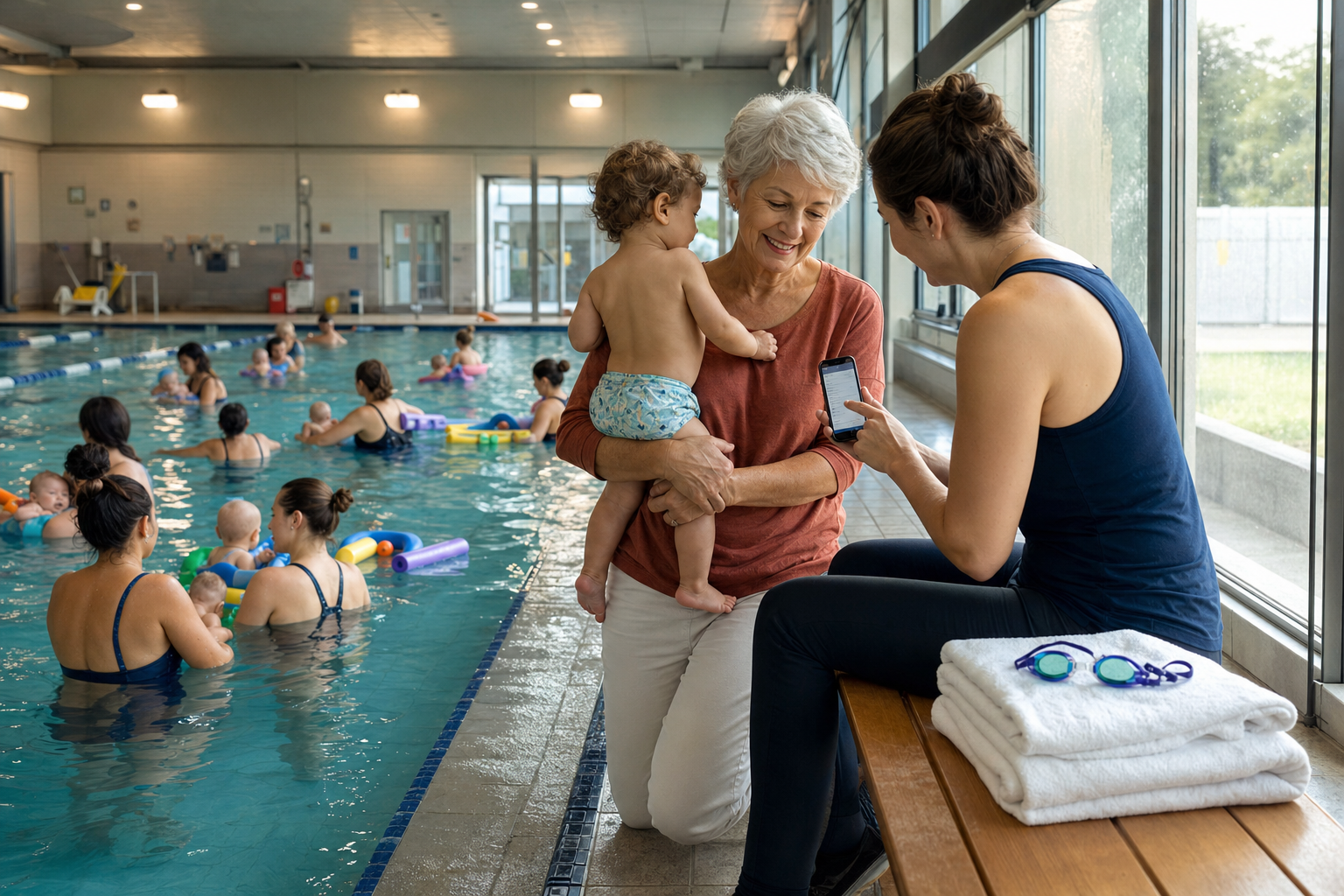
When a grandparent, nanny, co-parent, or friend steps in for swim class because the usual caregiver cannot attend, you need a backup caregiver form that ensures everything runs safely. The most essential information must be sorted before the substitute arrives: permissions, emergency contacts, changing-room policies, and expectations for in-water touch supervision. This article answers what to include in the form and how to prepare your backup caregiver so they’re fully ready—and the child remains safe.
Permissions & Authorizations You’ll Need to Pre-Authorize
First thing: written permission letting the caregiver attend and act in your place. That means more than “yes, they can go” at drop-off—it’s about giving them the authority to make decisions in your absence. Include specific language authorizing health care providers to act (e.g. in emergencies, take to hospital), permissions for water play, photography if applicable, and consent for entering the pool water with your child, especially if touch supervision is required.
Swim schools following the USSSA Infant Toddler Guidelines demand that caregivers receive a safety briefing and fully understand rules about water supervision. According to these guidelines, swim schools should collect medical and liability release forms signed by the caregiver or parent before the first lesson. (usswimschools.org) Ensure the backup caregiver has access to all those signed permissions in writing or via digital submission.
Emergency Contacts & Medical Details to Confirm
Your substitute caregiver should have access to:
- Full emergency contact list: names, phone numbers, relation to child. Always include a contact outside your household.
- Physician and preferred hospital details. List any allergies, ongoing health conditions, medications, and where to find medical records if needed.
- Whether you permit ambulance transportation in case of serious emergencies.
Most swim schools use forms like STAR Swim School’s Emergency Contact Info details or medical info sheets (e.g. Currumbin Dolphins Swim School) to gather all vital data well in advance. (gomotionapp.com) Be sure to designate that the backup caregiver has legal permission to share, if needed, that information with instructors or pool staff.
Changing Room Rules & Privacy Arrangements
Changing rooms can be chaotic, especially for young children aged 0–36 months. Beforehand, explain to the backup caregiver the pool’s changing room rules: is there a family change room? Are parents required to join children? Is same-sex supervision needed?
If you want a structured way to build water confidence at home, the 10-Week Plan guides you step by step.
In places with mixed or shared changing rooms, policies often require that only same-sex adults enter, unless in emergency or unless family facilities exist. Case in point: Georgia Coastal Aquatic Team’s policy and UK’s Swim Safe Practice Document emphasize supervision by appropriate gender staff or adult in situations where privacy and safety overlap. (gomotionapp.com) If overwhelmed, pool staff should provide family or private changing options.
[[ctababy]]
In-Water Expectations & Touch Supervision
The substitute must be capable and willing to enter the water safely. According to the new AAP 2026 "Prevention of Drowning" policy statement, one must provide touch supervision: being within arm’s reach and ready to support an infant, toddler, or non-swimmer in water to prevent submersion or loss of control. (publications.aap.org) If the backup caregiver is nervous about water, doesn’t swim well, or can’t follow instructor cues, class might not be safe for the child.
Including expectations around how to respond when the instructor cues a safety prompt (e.g. take child to side, safety float, exit the pool) builds clarity. Also spell out whether you expect the backup to mirror your role in classes—e.g. if you always participate, they should too.
Why Preparing in Advance Pays Off
Without proper forms, your backup caregiver might be cleared at reception but rejected for in-water participation at lesson time. Facilities often require documentation to grant access. Having signed waivers, medical forms, and written proof of emergency authorization laid out in advance avoids last-minute rejection at the door—something no grandparent or nanny wants to face.
Also, swim programs that follow structured plans—such as the 10-Week Plan from swimy.org—often build milestones and safety layers into progress. When your backup caregiver knows these milestones (e.g. baby-in-water comfort, back float cues, entry/exit skills), class flows better and safety stays consistent. Whether you’re following a multi-week curriculum or just attending drop-in parent-baby classes, alignment matters.
What Should a Completed Backup Caregiver Form Include?
Here’s what your finalized form should cover: caregiver’s full name and contact info; your child’s information; medical info; emergency contacts; signed authorizations for medical treatment and water activity participation; waiver or liability release; swim school or facility rules grasped (changing room, attire, diaper policy); confirmation backup is informed of in-water touch supervision and will follow instructor cues; permission to enter the water.
Before class starts, meet with your chosen caregiver and walk them through the swim facility. Show them where to change, how to check in, where to ask for help, and how instructors give cues. Talk through a few example scenarios like what happens if the baby cries, if a hazard is spotted, or if emergency medical care is needed. The more prepared they are, the safer and calmer everyone will feel.
Final Word: Safety, Clarity, Confidence
When parents prepare backup caregiver forms that cover permissions, medical details, changing-room protocol, and in-water expectations, substitute caregivers step in equipped—not just approved. For babies (0–36 months), where parent or caregiver presence in water is standard, ensuring that the person in your place knows what’s expected, has your authorization in writing, and can respond when safety cues arise can make all the difference. Do this once, keep the document updated, and let the substitute swim class be a confident, joyful experience for your child and caregiver alike.
120+ swimming exercises sorted by age — with video and instructions. Developed by swim instructors, completely free.

120+ swimming exercises sorted by age — with video and instructions. Developed by swim instructors, completely free.