Year-Round or Seasonal? Skill Retention for Ages 3–12 in Swim Lessons
Kids between ages three and twelve make exciting progress in swim lessons—but what happens when there’s a long break? When we go summer-to-summer without structure, technique slips, confidence dips, and parents often feel like they’re back at square one. Let’s cut to the chase: consistent, year-round swim lessons retain gains better than seasonal programs, but smart short breaks and “tune-ups” can work without undoing everything.
How Long Breaks Affect Technique and Confidence
When lessons stop for one to three months, children often lose fluidity in stroke mechanics, forget breath timing, or drift off with poor body position. Data shows young children in 5- to 12-year-old swim programs do fine when lessons are weekly with consistent exposure, but even a few weeks away can lead to regression in aquatic skills like breath control and water exit. One study monitoring children’s competencies observed clear regression after breaks, especially in skills that need frequent motor practice.(pmc.ncbi.nlm.nih.gov)
Beyond technique, confidence takes a hit. Kids who haven’t touched water in months often feel uneasy around new pools, deep ends, or even familiar settings. They hesitate, revert to beginner behaviors, and fear surfaces can trigger anxiety that interferes with learning. Research on motor learning in swim settings confirms that frequent, spaced practice (rather than bursts followed by gaps) builds not just skill, but resiliency.(pmc.ncbi.nlm.nih.gov)
Year-Round vs Seasonal: What the Evidence Says
Year-round swim lessons—attending at least once per week throughout the school year, with optional intensives in summer—lead to steadier progress. The Australian Swim Schools Association points out that consistent once-a-week lessons over a year yield much more retention than seasonal intensives with long gaps.(australianswimschools.org.au) A study with Latino children aged 3-14 found that total number of lessons mattered more than age or gender; those who took 10 or more lessons over 8 weeks gained far more skills versus those who did fewer.(injuryprevention.bmj.com)
Seasonal programs—lots of lessons in summer, then nothing when school starts—often force re-entry back into earlier levels. Pads and floats remember nothing if practice is paused. Uniform skill retention requires ongoing exposure.
Realistic "Minimum Touch" Plan if Breaks Are Necessary
Not everyone can afford year-round lessons. If budget, scheduling, or weather forces a pause, here’s how to keep core swim skills alive until classes start again.
Around the middle of the year, try the 10-Week Plan (linked to exactly https://www.swimy.org/10-week-plan), using simple home or local pool play to preserve the movements of stroke, float, and entry/exit. Rotate through floats, blow-bubbles, kicking, and guided swim with holding hands. This kind of guided, low pressure exposure keeps muscle memory fresh without the cost of formal classes.
Between seasons, aim for exposure every other week minimum. Even just one supervised splash session at a local pool, or backyard water play, can help. Use safe shallow water so that supervision is front and center; avoid deep-end or breath-hold challenges. Confidence often lags technical loss, so letting kids play and have fun is as critical as drills.
[[ctakid]]
How Often Should Kids Swim Lessons? Frequency Targets
What schedule really works for kids ages 3-12?
Children aged around 3 to 6 can progress with one lesson per week, as long as the rest of their contact with water isn’t zero. If you can swing twice per week, results improve significantly, especially for younger swimmers.(safesplash.com) For older children (7-12), two to three lessons weekly are even better, especially if working on new strokes or deep-water skills.(waterwisekids.com)
Here’s some frequency guidance by age:
Ages 3-6: one lesson a week year-round is solid; two during summer or when pushing ahead.
Ages 7-12: aim for two lessons per week; three if preparing for swimming meets or wanting rapid progress.
Consistency matters more than intense periods followed by long gaps. Repeated exposure spreads learning and stabilizes confidence. The American Academy of Pediatrics emphasises that water competency needs continual exposure—not just “learn to swim once”.(publications.aap.org)
Tips for Parents: Preserve Gains Between Terms
Set small, fun water goals that don't feel like “practice.” Have your child blow bubbles, kick along the wall, play floating games with supervision—ensure safety always. Use shallow water, hold-hands games or pool noodle supports. Avoid breath-holding games or unsupervised deep ends.
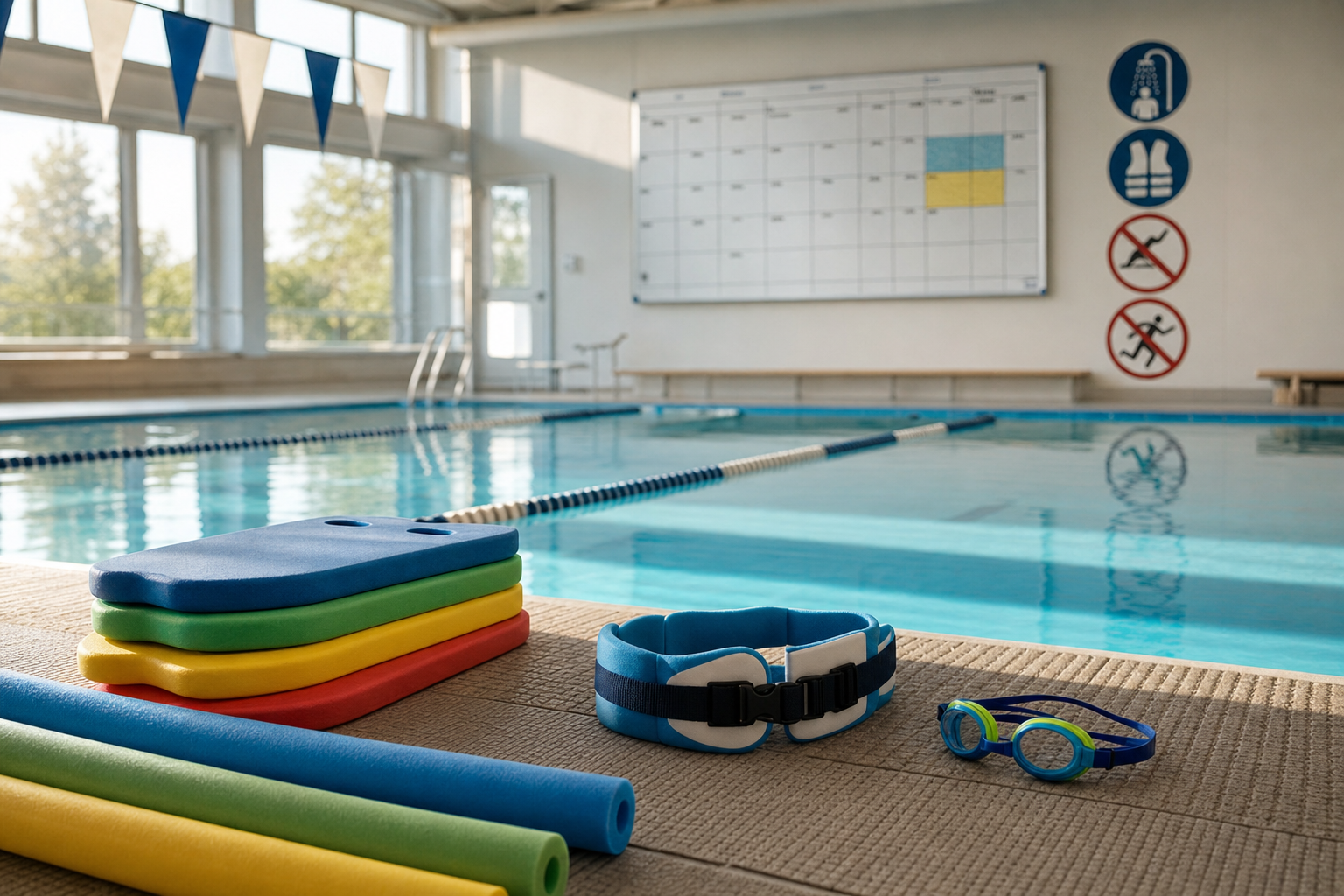
Make swim equipment cheap and available: goggles, floater belts, kickboards. Use video demonstrations—show your child what good stroke looks and feels like. Also, touch base with your swim instructor before break ends to know what skills you need to review first; that way you can jump back in smoothly.
Avoid trying to cram lots of lessons right before summer or another term. Overloading can lead to fatigue, injury, or burnout. It can also raise expectations so high that any step back seems like failure, even if progress was good overall.
What to Do If You've Had a Long Pause
Suppose your child hasn’t swum for several months. Don’t expect them to bounce back to their previous level. Plan for a review period: first lesson back should focus entirely on comfort, alignment, floating, water exit, breath timing. Let them rebuild trust in movement. Use catch-up lessons if needed, but only a few, with rest days in between.
Recognize that confidence tends to recover more slowly than technique—or sometimes vice versa. Encourage them, praise small wins. If anxiety shows, do soft re-entry options like family splash or playful water games.
Bottom Line
The comparison between year-round vs seasonal swim lessons is simple: year-round delivers steadier retention, fewer confidence dips, and smoother progress. However, seasonal or partial-year plans can still work—if there’s a “minimum touch” plan and careful scheduling. For ages 3-12, one weekly lesson year-round is far better than many during summer and nothing for the rest. Combine that with low-effort home/water play, and confidence and technique survive even through long gaps. A smart plan beats a perfect motive every time.
120+ swimming exercises sorted by age — with video and instructions. Developed by swim instructors, completely free.

120+ swimming exercises sorted by age — with video and instructions. Developed by swim instructors, completely free.