Rash Guards for Kids: UPF 50 Protection Without Slowing Them Down
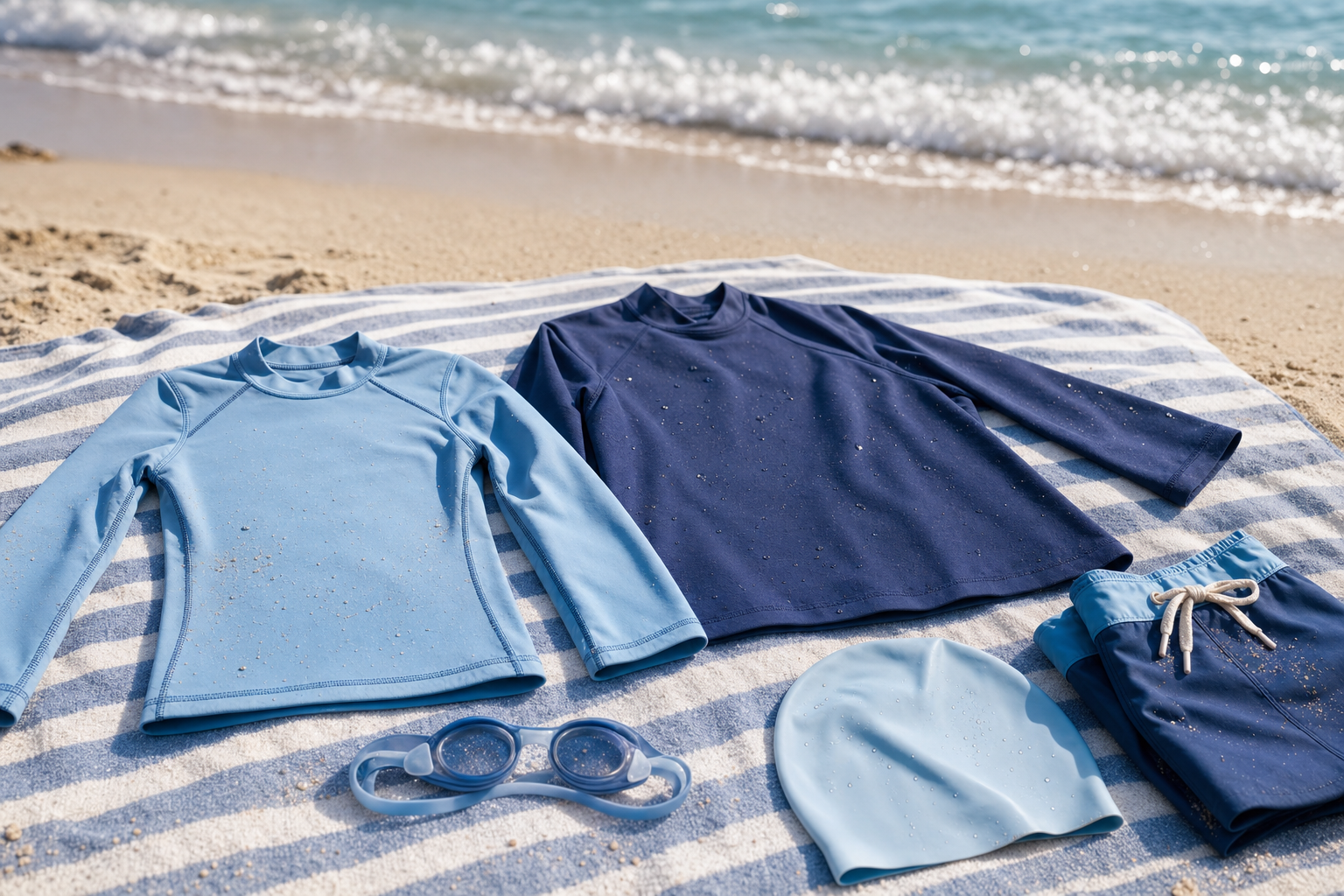
Want to make swim lessons or beach days safer and easier without constant sunscreen reapplications or tugging at shirts? Here’s your parent’s guide to choosing the best rash guards for kids (aged 3-12) with real UPF-50 protection and a fit that stays put without causing drag.
What Makes UPF 50 Fabrics the Gold Standard
A fabric rated UPF 50+ means it blocks about 98% of both UVA and UVB rays, allowing only two percent of harmful UV light through. According to the Skin Cancer Foundation, only fabrics with UPF 50 or higher qualify for their Seal of Recommendation, which helps parents easily spot high-quality sun protection. Fabric under this threshold may still provide some protection, but it’s not “excellent” like UPF 50+ material. (skincancer.org)
UPF ratings consider several key factors: fiber type (nylon, polyester blends with spandex), weave density, weight, color, stretch, and any UV-absorbing treatments. Fabrics meant for serious water use—swimming lessons, wave play—are usually 80-90% synthetic fiber with 10-20% spandex for stretch. The denser and tighter the weave, the better it will block UV even when wet. Cotton T-shirts tend to drop to a UPF around 5 or less when wet. (spandexbyyard.com)
Snug Swim-Fit vs Loose Swim Shirts: What’s Best for Serious Splashing
A “rash guard” is not the same thing as a loose “swim shirt,” and that difference can make all the difference during swim lessons or active water play. A proper rash guard fits snugly—like a second skin. It hugs the torso, sleeves stay at wrist or upper arm, and the hem covers the swimsuit bottom, so nothing rides up, snagging or exposing skin. That fit minimizes drag in the water, and keeps the UPF fabric flush so UV rays can’t sneak in between folds. (swimoutlet.com)
Loose swim shirts are more relaxed, t-shirt-like, great for beach walking or lounging, but they tend to balloon, fill with water, drag behind, ride up when arms lift. That slip-and-sag effect means more exposed skin and more headaches (or tugging). If your child is doing lessons, diving, swimming laps or surfing, a tight or compression rash guard is the go-to style. (billabong.com)
How to Pick a Kids Rash Guard That Works
Frame your choices around three main features: UPF rating, fabric blend, and fit—especially how tight without restricting movement.
To get maximum UPF protection, always check for a clear UPF 50+ label. Look for skin cancer-authority endorsements or certifications where possible. The label isn’t just advertising—it reflects lab testing including metrics like how UV protection holds up after washing and stretching. (cancer.org.au)
If you want a structured way to help your child progress at home, the 10-Week Plan guides you step by step.
Fabric blend matters a lot. Polyester-spandex or nylon-spandex blends offer stretch, durability, chlorine resistance, shape recovery. Heavier weight fabrics (around 150-200 GSM) hold up better under repeated wear, sun, salt, and chlorine; lighter materials may feel breezy at first but fade or thin fast. (spandexbyyard.com)
Fit for kids: rash guards should feel snug, but still allow full range of motion—arms raised, bending, twisting. Sleeves should reach wrist (for long sleeves) without bunching, torso should cover the swimsuit bottom even when reaching forward or stretching. Flat seams (flatlock stitching) help prevent chafing especially under arms or around swimsuit straps. If there are red marks after wearing for just minutes, it’s probably too tight. (swimoutlet.com)
[[ctakid]]
Try the hem in motion: “deep breath test” and raise arms overhead—if the shirt rides up, exposes skin, or fabric bags at the stomach, it’s too loose. If it pulls tight, restricts breathing, or seams dig in, it's too tight. And don’t forget: children grow fast, so size charts are your friend. Better to get one that fits right now well than one that won’t stay in place. (aclassblogs.com)
When Loose Swim Shirts Make Sense—and When They Don’t
If you’re doing a casual beach or pool outing, or your child hates anything tight, a loose swim shirt might be more comfortable. It still offers UV protection if it has UPF rating and durable fabric. For indoor lessons or any scenario where every second in the sun counts, though, loose shirts pose real pitfalls. Drag, chafing, constantly readjusting, exposed sunburned skin mid-session—all of this adds up. And sunscreen still has to be reapplied way more often on exposed and shifting skin.
Loose fabric also traps water, feels heavy, cold afterwards, and when kids are swimming concentric strokes or practicing the 10-Week Plan swimy.org program for structured improvement, discomfort or drag can slow progress. Using a snug rash guard helps kids stay focused on technique rather than tugging their shirt or shivering. Explore the swimy.org “10-Week Plan” if you want a framework that combines lessons with well-planned gear guidance. (tuckncharco.com)
Practical Sun Safety Tips That Complement Rash Guards
A rash guard doesn’t replace sunscreen. Any exposed skin—face, ears, neck, legs—still needs broad-spectrum SPF 30 or higher (for outdoor sessions SPF 50 water-resistant is better). Reapply every two hours, especially after swimming or towel-drying. Skin cancer authorities agree UPF clothing is powerful because it doesn’t wear off—but you still need multiple layers of protection. (skincancer.org)
For peak spring-summer outdoors: schedule swim lessons early morning or late afternoon to avoid strongest sun (10am-4pm). Dress kids in long sleeves or full-coverage panels if possible. Use wide-brim hats when not swimming and UV-blocking sunglasses. Indoors, rash guards are great for modesty or warmth, especially if the pool is cold or lessons involve retrieving equipment from the bottom. But don’t count on them for UV protection indoors. (swimzip.com)
Rinse rash guards thoroughly after pool or sea exposure; chlorine, salt, deodorants and sun creams degrade the UV-protective coatings. Wash in cool water, avoid high heat drying. Store flat or hanging—not balled up wet. Over time, even high-quality UPF fabric lowers its protection if mistreated. (swimoutlet.com)
For ages 3-12, focusing on UPF 50 fabrics, quick-dry performance blends, and a snug yet comfortable fit will make sun protection easier, safer, and far less of a distraction during swim lessons and beach days. Get these details right, and you’ll spend more time enjoying the water and less time chasing loose shirts or late reapplications.
120+ swimming exercises sorted by age — with video and instructions. Developed by swim instructors, completely free.

120+ swimming exercises sorted by age — with video and instructions. Developed by swim instructors, completely free.