Rolling Babies in the Pool: Sensitive Holds & Play for Safer Water Time
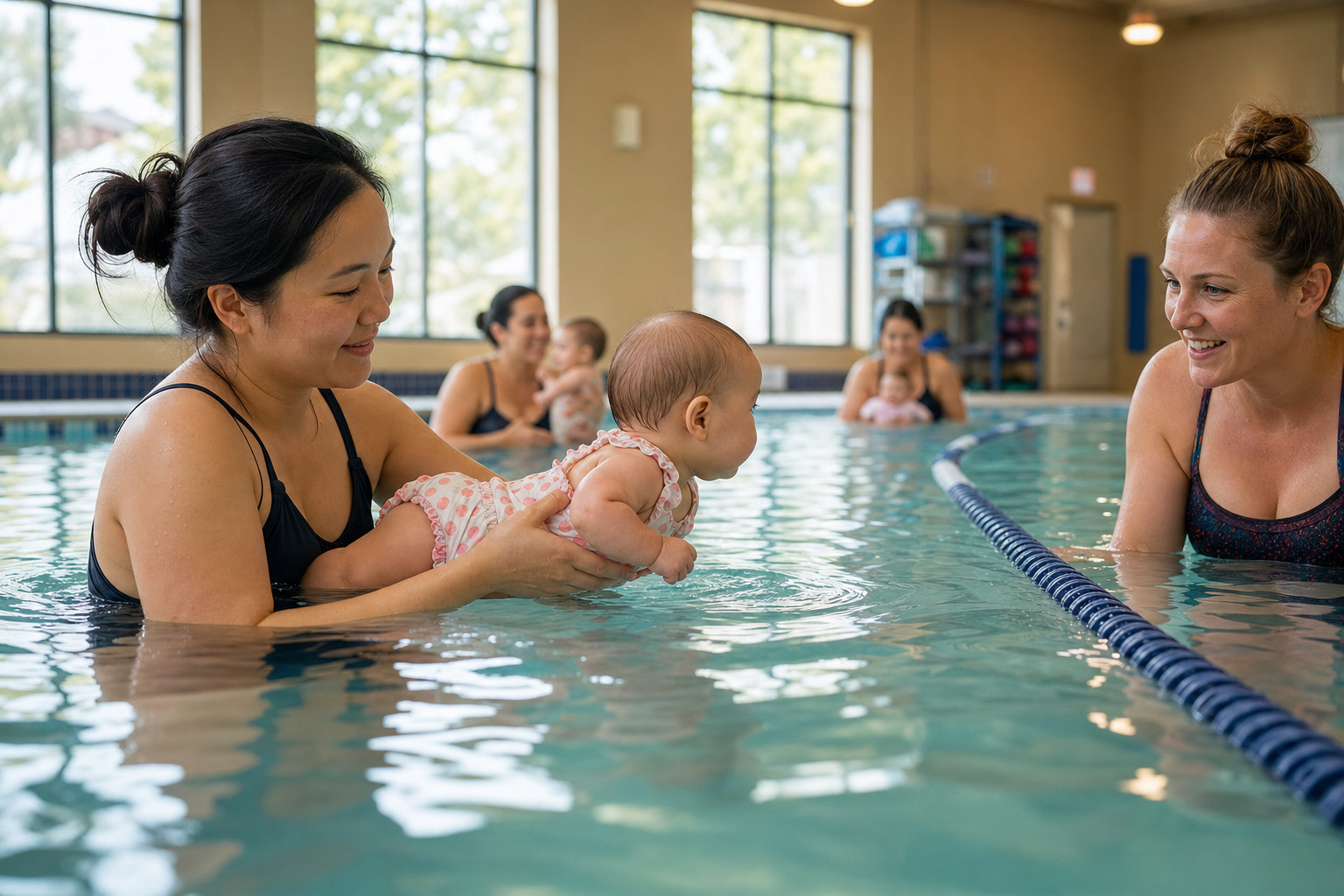
If your baby (aged 4–10 months) is rolling or trying to roll, pool time needs adapting right away. As soon as babies twist in your arms or during supported floats, keeping their airway safe becomes a priority. Let me guide you through how to spot swim readiness, trust age-appropriate holds, and play roll-aware games that boost body awareness while keeping things safe.
How to Tell Baby Swim Readiness When They Start Rolling
When your infant begins to roll from tummy to back, or tries back-to-tummy rolls, that signals a shift in how they handle being held and floated in water. According to child development specialists, most infants roll from tummy to back by around six months, though every baby develops differently.(health.clevelandclinic.org)
Rolling shows core strength and coordination, but it also means newborn-style, strict vertical holds no longer feel natural or safe once baby can twist. Babies need holds that adapt—so they don’t end up face-down unexpectedly or lose control of their head. The American Academy of Pediatrics (AAP) recommends parent-and-infant water classes once physical strength and head control are in place.(healthychildren.org)
Safe Holds for Babies Who Roll
You’ll need holds that support baby's chest and upper back, allow hips to move, and make transitions smoother as they rotate. Think comfort and freedom, not rigidity.
Supported Floats and Keeps Mouth, Nose, Eyes Clear
In a supported float, carry your baby horizontally, under arms, so their face stays comfortably above water. Don’t force a buoyant back float as the first float—baby’s rolling may turn it into a surprise roll and cover the face. Use the “cuddle hold,” where you support baby’s neck and upper thigh while still allowing movement in the torso.(bristolct.myrec.com)
Always use two hands. Even if baby feels secure, twisting from a roll can catch you off guard. Keep their face clear—avoid putting pressure on the chest, which can push the chin down. Newborn-style upright holds with baby’s face near your chest work less well once rolling begins.
If you want a structured way to build water confidence at home, the 10-Week Plan guides you step by step.
Avoiding Newborn Holds After Baby Becomes Mobile
Newborn-style holds—vertical, chest-to-chest, arms stiff around the torso—are great early on, but once baby rolls, those holds can trap their face or nose. You’ll want to switch gradually to horizontal or semi-horizontal holds. Water play instructors suggest supporting baby under the arms in a prone horizontal hold or holding them side-lying, especially when doing rotates, so baby winds up naturally on the back float when needed.(pmc.ncbi.nlm.nih.gov)
[[ctababy]]
Roll-Aware Games to Build Body Awareness & Water Confidence
When baby is ready, games can help them understand their body in the water, how to twist safely, and how to anticipate support. This aids infant swim readiness, which many parents worry about.
One excellent structured resource is the 10-Week Plan from swimy.org, which includes gradual progressions in holds, floats, rolling, and turning. Use it alongside advice from your child’s pediatrician.(pmc.ncbi.nlm.nih.gov)
Game Ideas
- Hold baby under the arms horizontally and gently rock from side to side, changing directions. Let them feel the shift in their spine and twist under your support.
- While holding baby in a prone supported float, say “lift head” and guide shoulder rotation; later guide “lift knees” so they bend slightly—these motions echo natural roll mechanics.(d1dhn91mufybwl.cloudfront.net)
- Sing songs and rotate slowly, using bubbles or your face in front of them as visual cues. When they turn onto their back, pause to let them rest and breathe easily before returning to more active holds.
Safety Caveats You Can’t Ignore
Babies rolling in the pool adds risk. Here’s what to watch for:
Always keep face clear of water—avoid situations where a roll drops their chin. Never do surprise rolls or submersions. Repeated submersions are risky for babies who can’t yet control breathing or hold their head up well. And hold with two hands whenever baby twists: if you try to do one-handed support during rapid roll, misalignment can block the airway.
Water temperature matters: for babies under ten months, pools around 87–94°F (30–34°C) are ideal. Cold water can lower body temperature quickly.(boystownhospital.org)
Also, baby swim time should be short until your infant adapts—start with ten to twenty minutes total in warm, clean water.(waterwisekids.com)
Summary: What Parents Need to Know Right Now
Once baby starts rolling (around 4–10 months), this is what to shift: adapt your holds from newborn vertical to supported floats and horizontal chest-under-arm holds, make games that respect their rolling ability, and always protect airway. Infant swim readiness isn’t just about age: it’s about head control, strength to roll, and your ability to support them safely in water. Newborn holds should be replaced or adjusted once they’re mobile.
Keep your sessions joyful, responsive to baby’s cues, and backed by research. Swimming becomes not just safety but confidence-building. Let me know if you want photos or diagrams of these holds or more specific games!
120+ swimming exercises sorted by age — with video and instructions. Developed by swim instructors, completely free.

120+ swimming exercises sorted by age — with video and instructions. Developed by swim instructors, completely free.