Sunscreen Eye Sting During Baby Swim: How to Keep Outdoor Splash Time Fun
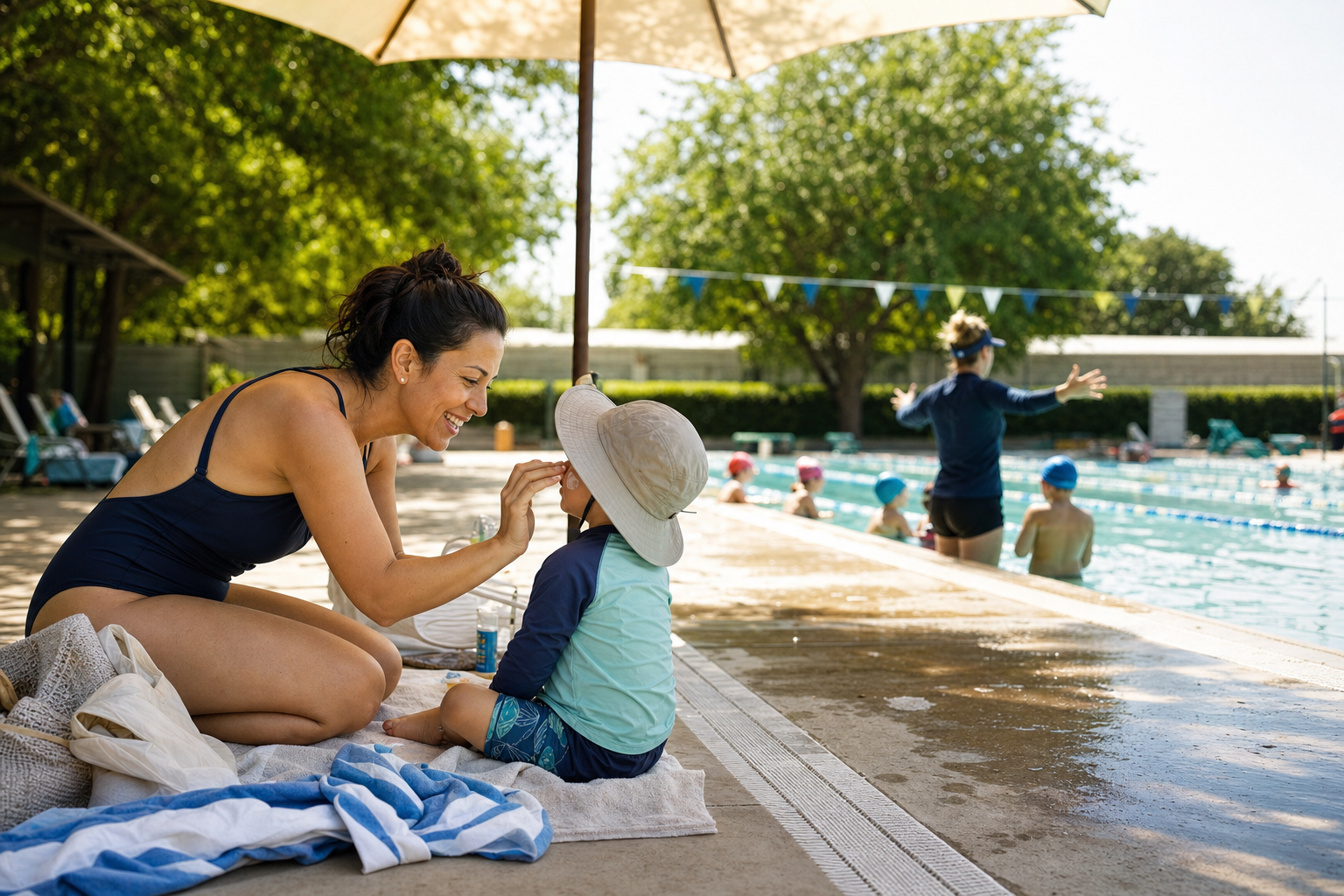
You probably know the struggle: you splash on that lotion, get into the pool, and bam—your baby’s eyes burn, swim time ends early, everyone’s upset. The good news is that with smart planning and a few simple tricks, you can protect your little one and avoid most of the sting.
Why Sunscreen Runs, and Why Eyes Feel It
Pool water, sweat, and wading all wash off or shift sunscreen, especially chemical types. When water mixes with sunscreen around the forehead or cheeks, it drips into the eyes. Babies’ skin is extra thin, and chemical filters (rather than mineral ones) are more likely to irritate eyes. Water-resistant sunscreen can cut how often you need to reapply, but “water-resistant 40 minutes” or “80 minutes” only means that it holds up for that long in water—not forever. After it lapses or gets wiped off, it can run easily. (aad.org)
Shade-First Planning: The Best Defense
Before lotion, your first line of defense is shade. If your swim lesson or beach outing can be done under a large tree, canopy, umbrella, or a covered pool area, you’ll cut direct sunlight exposure dramatically. Outdoors between peak UV hours—about 10 a.m.–2 p.m. in the U.S., 11 a.m.–3 p.m. in the UK and Australia—is when sun’s strongest. Babies under 6 months should be kept in shaded spaces; only use sunscreen on small exposed parts (like hands or cheeks) if shade and clothing aren’t enough—and always after checking with a clinician. (fda.gov)
Water-Resistant Labels: Timing and Realistic Expectations
Labels saying “water-resistant 40 minutes” or “very water-resistant 80 minutes” are helpful—but misleading if you don’t check the timing. FDA rules require sunscreen labeled water-resistant to specify one of those durations. That doesn’t mean the sunscreen stays perfect the entire swim; towel drying, splashing, and rubbing hasten the fade. Plan to apply sunscreen 15–30 minutes before swim or beach time, so it has time to bind to the skin before water hits. Reapply right after water exposure, even if label claims it holds for 80 minutes. (fda.gov)
If you want a structured way to build water confidence at home, the 10-Week Plan guides you step by step.
Hats, Rash Guards, and Protective Clothing
Clothing and accessories matter. A wide-brimmed hat that shades face, forehead, cheeks and neck helps direct water away from eyes. Rash guards or UPF-rated swimwear that covers shoulders and torso protect large skin areas so you can use less sunscreen near the face. Tight-weave fabrics and longer sleeves are your allies. In many Aussie and UK guidelines, for babies under 6 months, clothing and shade are preferred over sunscreen wherever possible. (nhs.uk)
[[ctababy]]
Babies Under 6 Months: Extreme Caution Mode
For infants under six months, medical experts in the U.S., UK, and Australia warn that skin is too sensitive for regular sunscreen use. Prioritize shade, shade, and more shade. Protective clothing, stroller canopies, and avoiding peak sun hours are top priorities. Only use sunscreen on small exposed spots if essential and only after consulting a clinician. Even then, choose mineral sunscreens with zinc oxide or titanium dioxide; those are less likely to sting skin or get dragged into the eyes. (fda.gov)
Avoiding the Slippery, Stingy Mistakes
Most eye-seconds are preventable. First, don’t apply sunscreen right before swim or lesson time—you need a window for it to dry or absorb (15–30 minutes works well). If you apply too close to water time, it’s still slippery. Use water-resistant sunscreen with an SPF of at least 30 and broad-spectrum (blocks UVA and UVB). Avoid chemical sunscreens around the face if your baby’s eyes are sensitive. Mineral-based ones tend to stay put better and irritate less. Sunscreens marketed as “sport” or “baby” usually indicate gentler formulas; check labels for active ingredients. (ama-assn.org)
If your baby is older than 6 months and enrolled in swim lessons (for example following the 10-Week Plan from swimy.org), coordinate your application so that lotion goes on well before you head poolside. That way, the early laps aren’t just about sunscreen running into lids.
What A Clinician Might Suggest
Clinicians often recommend you test sunscreen on your baby’s skin first—especially around the jawline and near ears—to catch any reaction before full use. For babies 6–36 months, they’ll likely surface mineral sunscreen formulas, SPF 30+ and water-resistant for at least 40 minutes, as safe and reliable. They might also offer specific brands suited to sensitive skin that are less runny or scented.
Final Takeaways: Keep Baby In & Out of Water Happy
Begin with shade and clothing as your strong protection tools. Use water-resistant, broad-spectrum sunscreens SPF 30 or higher for babies over 6 months, applied 15-30 minutes pre-swim. Avoid chemical sunscreens near the forehead or face if your baby already shows irritation. For under-6-month infants, stick with shade, protective clothing, and talk to your pediatrician before any sunscreen.
With the right timing and tools, you can enjoy summer holidays, beach trips, and outdoor pools without the sting. Your baby gets the protection they need—and you get more time to laugh, splash, and make memories.
120+ swimming exercises sorted by age — with video and instructions. Developed by swim instructors, completely free.

120+ swimming exercises sorted by age — with video and instructions. Developed by swim instructors, completely free.