Swim Goals Board: Simple Motivation for Ages 8–12
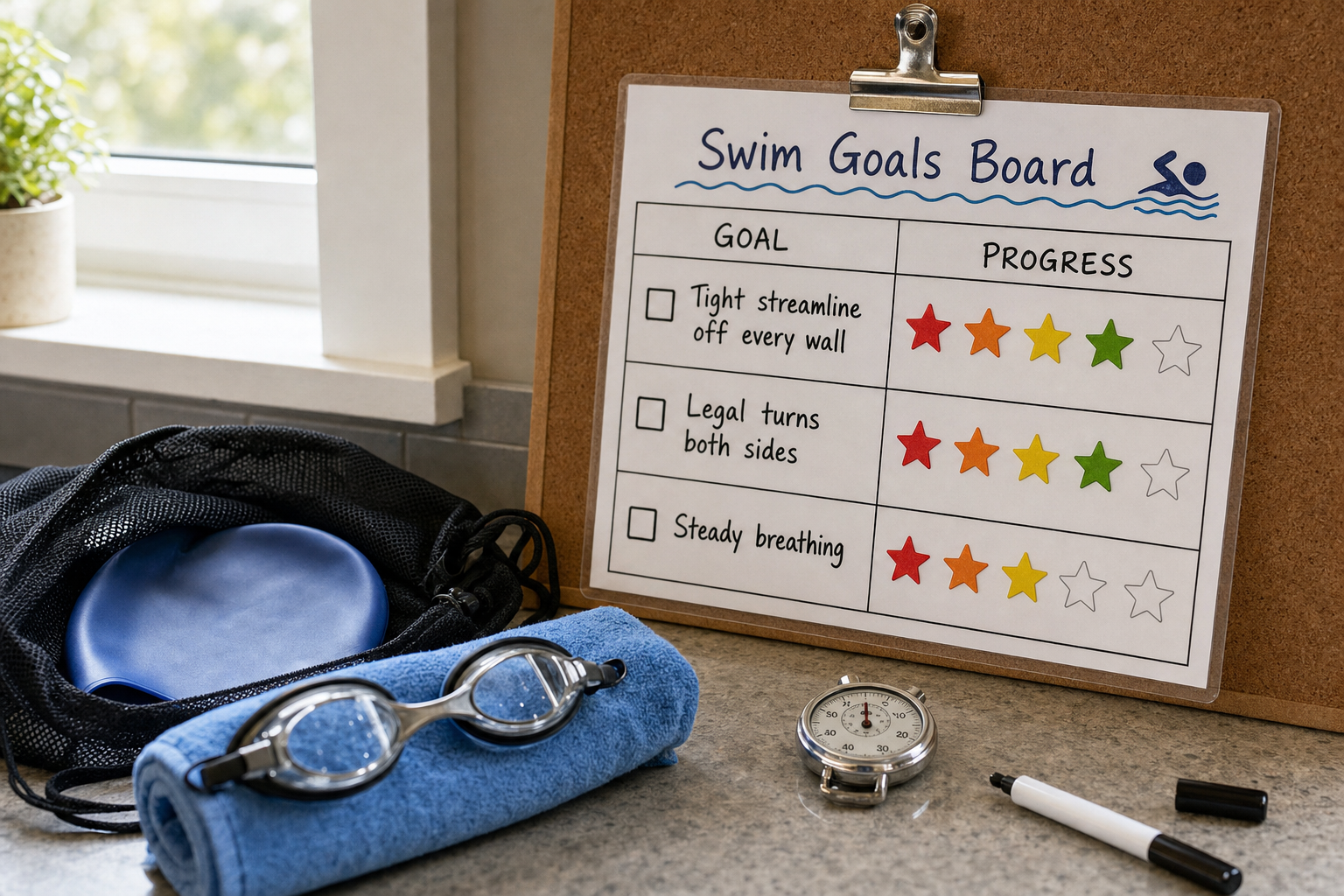
If you’ve ever watched your 9-year-old return from swim lessons with that half-smile, half-“did I improve?” look, you know the frustration. That’s where a one-page swim goals board becomes magical. It helps children see real progress between lessons, setting 2-3 skill targets they understand and track. Parents can then shift the focus from ribbons or times to the effort and technique that truly matter.
What are Process Goals and Why they Work
Kids aged 8-12 thrive when goals are things they can directly control. Swimming outcomes—like medals or race times—depend on factors beyond a young swimmer’s control. Process goals, in contrast, focus on technique: keeping a tight streamline off each wall, executing legal turns, finishing strong. Birmingham Blue Dolphins explains that setting process goals builds confidence and motivation because children succeed at things they control, even if they don’t win. (birminghambluedolphins.com)
Viewing goals through this lens doesn’t mean ignoring outcomes. TrueSport’s goal-setting framework draws a helpful map: define some long-term outcomes, but anchor them in specific process goals that a young swimmer pursues daily. (truesport.org) When it comes to swim goals for kids, this approach builds lasting motivation rather than chasing every stopwatch.
Building a One-Page Goal Board: Practical Guidelines
Let’s build something simple, strong, and focused. The goal board should include two or three process goals per term (not per lesson) and a space to tick off small wins. Examples: perfecting a legal turn, holding streamline for 5 meters, or consistent breathing patterns.
A sample board for ages 8-12 might look like this: Goal 1: legal turns on both sides; Goal 2: tight streamline off every wall; Goal 3: clean catch in freestyle. Between lessons you track small wins: when a child lands a good turn, nails the streamline, or keeps technique consistent during warm-ups. Printable trackers from sites like Mary’s Printables help you make this visible. (marysprintables.com)
About thirty to sixty percent through a swimming term is a great time to introduce a plan that rolls across weeks. For structured support, consider outside resources like the 10-Week Plan from swimy.org to guide you in aligning lessons, goal-setting, and skill builds. (You’ll see how small steps lead to real leaps in ability.)
If you want a structured way to help your child progress at home, the 10-Week Plan guides you step by step.
Encouraging Effort Without Pressure
Overloading a child with too many goals or comparing them to siblings destroys the fun. One or two process goals at a time lets them focus and experience success visibly. Birmingham Blue Dolphins notes that young swimmers should only hold one or two goals in their head; more than that becomes noise. (birminghambluedolphins.com)
Celebrate every small win: first clean turn, first time streamline stays for five meters, first session with steady breathing. Use stickers, praise, or special acknowledgments. A reward chart idea from WaterWiseKids turns small wins into moments children look forward to. (waterwisekids.com) Always watch for signs of fatigue. Goals should be age-appropriate: don’t push tired muscles or stress technique when they’re exhausted. Sometimes adjusting goals or giving rest is accomplished growth in itself.
[[ctakid]]
Tips for Parents: Choosing Age-Appropriate Goals
When choosing goals for children in this age group, pick ones that match their current skills. If they’re working on freestyle and backstroke, perhaps focus on mastering legal turns or improving streamline before adding a new stroke. Michael Phelps Swimming’s curriculum for intermediate levels ages 8+ focuses on foundational strokes and legal turns as skill targets for children before increasing endurance or adding complexity. (michaelphelpsswimming.com)
In setting goals, include children in the conversation. Ask: “What’s one thing you want to feel proud of next lesson?” Turn that into a goal around skill. Let them own it. This helps with motivation and avoids pressure; goals they don’t own often feel like chores.
Tracking Progress Between Lessons
Print a tracker that shows lessons across the top and specific skills or process goals down the side. Mary’s Printables offers a “Swim Lesson Progress Chart Printable” that lets you mark each lesson with a star or tick when something clicks. It’s a powerful way to make progress visible day to day. (marysprintables.com)
Another idea is laminated goal boards or posters in the kitchen or near the swim bag so kids see their goals every time. Stickers or wipe-off markers let them mark small wins themselves. Reviews every few weeks keep goals fresh: celebrate wins, reset or adjust if something’s been hard or lost excitement.
First and foremost, safety and well-being matter. If a child shows signs of tiredness, loss of joy, or stress about goals, pause. Swim England psychologists encourage process goals to reduce pressure rather than increase it. (swimming.org)
Bottom Line
A one-page swim goals board can transform swimming for kids ages 8–12. It turns vague improvements into clear skills, lets kids track what they do between lessons, and helps parents celebrate every step. Focus on process goals—streamlines, legal turns, breathing—not outcomes. Keep the goals small, age-appropriate, and built together. Track wins kindly, adjust when needed, avoid comparing with siblings or pushing when tired. Over time, those small wins add up far more than ribbons or times alone. Swim progress tracker printable sheets and reward charts help make it all concrete, fun, and motivating for young swimmers.
When effort becomes its own triumph, children stay passionate, confident, and excited to go back to the pool lesson after lesson.
120+ swimming exercises sorted by age — with video and instructions. Developed by swim instructors, completely free.

120+ swimming exercises sorted by age — with video and instructions. Developed by swim instructors, completely free.