Swim Lesson Snacks & Hydration That Actually Work: What to Eat, Drink, and When
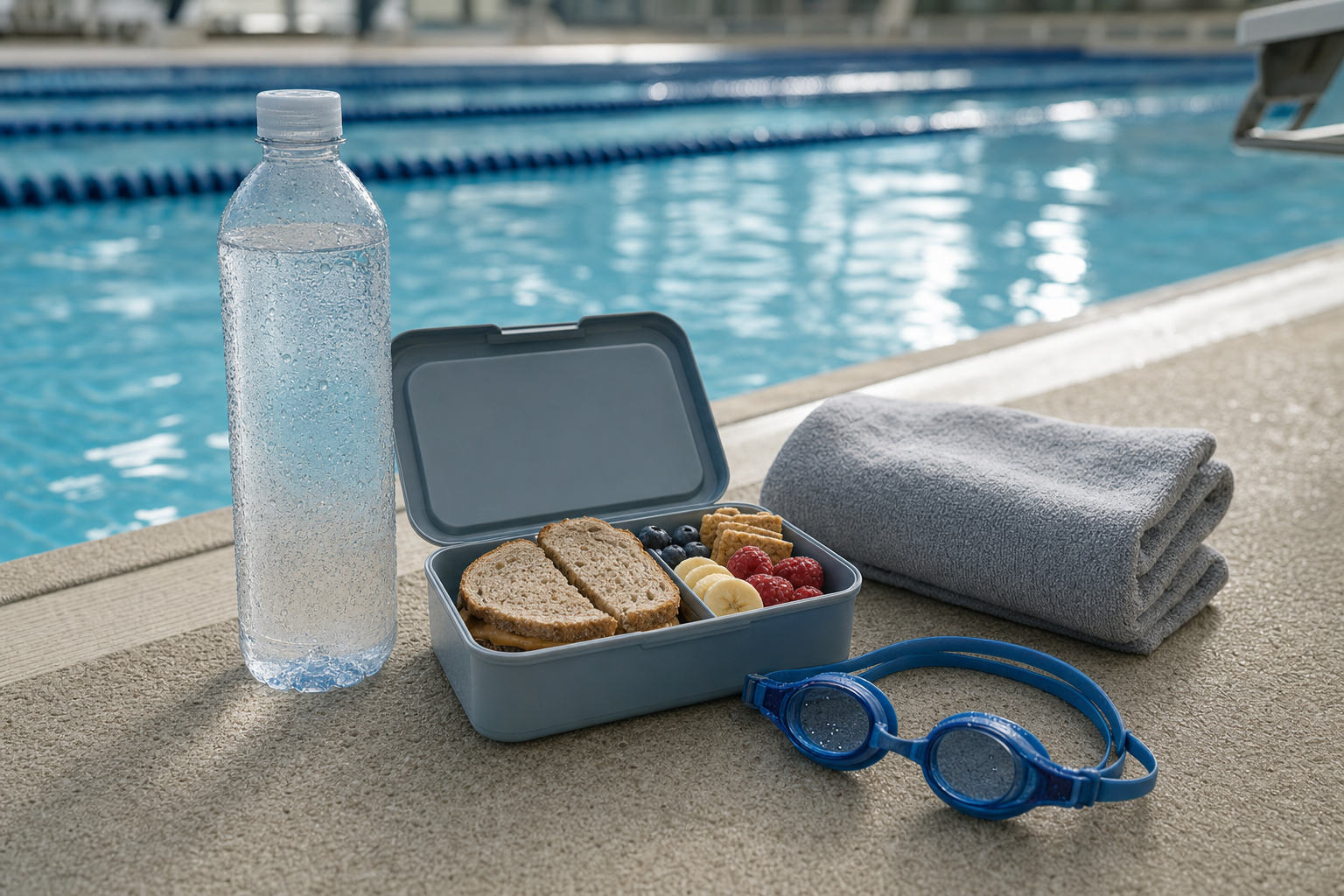
What to Eat & Drink Before the Pool: Simple Fuel Without the Pain
Right before swim lessons your child needs energy, not a heavy gut or a sugar crash. If you've got 2–3 hours before class, aim for a light meal filled with carbohydrates, some protein, and low in fat and fiber—think whole-grain pasta with chicken, brown rice with lean turkey, or oatmeal with fruit. This gives ample time for digestion and steady fuel. If you're closer—say 30–60 minutes before, a small carb-based snack like a banana, whole-grain crackers, or a smoothie is best. Heavy, greasy foods, high-fiber beans or large dairy portions can lead to bloating, stomach cramps, and discomfort in the water. These often contribute to side stitches, so avoid large portions and high sugar drinks right before class. Experts agree: the 30-minute wait-after-eating rule is mostly a myth in recreational swim lessons, and there’s no strong medical basis for waiting to swim after eating light food. (britannica.com)
Hydration Before & During Swim Lessons: How Much, When, and What
Hydration can make or break a swim lesson’s success. For school-aged children (3-12 years old), drinking water before, during, and after the lesson is essential—even if it’s indoors or overcast. A good rule: children aged 9-12 who are active should aim for 3–8 ounces of water every 20 minutes of exercise. (healthychildren.org)
About 2–3 hours before the lesson, aim for 16 ounces (about 2 cups) of water so your child starts hydrated. During the lesson, small sips matter—poolside water breaks every 15–20 minutes help avoid mild dehydration, which impacts energy, mood, and focus. Sports drinks are generally not necessary for swim lessons shorter than 60 minutes—plain water is safer. If the session lasts over an hour or involves heat and heavy sweating, a low-sugar sports drink (checked for carbs and electrolytes) can help. (uhhospitals.org)
If you want a structured way to help your child progress at home, the 10-Week Plan guides you step by step.
Side Stitches & Sugar Crashes: How to Prevent the Mid-Lesson “Oh No”
That sharp pain mid-lesson known as a side stitch (or transient abdominal pain) often happens when a child eats a large or sugary meal too close to activity, or drinks sugary beverages before swimming. (goodrx.com) Avoiding heavy meals or carbonated drinks can help. Good respiration and warm-ups also reduce risk. Sugar crashes happen when energy spikes then crashes—so always pair carbs with small protein and limit high-sugar treats pre-swim.
[[ctakid]]
After the Pool: Recover and Refuel
Once swim lessons end, your child’s body enters a recovery window (about 30–60 minutes) when muscles absorb nutrients best. Aim for a snack or light meal with both carbohydrates (to restore energy) and protein (to repair muscles). Chocolate milk, yogurt with berries, a peanut butter and banana sandwich, or lean meat with whole grains work well. If the lesson was long or intense, include fluids too—water or a diluted sports drink. (waterwisekids.com)
Putting It All Together: Pre/During/Post Plan
Here’s a simple, practical plan many families use (similar ideas appear in the 10-Week Plan from swimy.org) to build consistent fuel and hydration habits: for after-school lessons have a snack around 3-4pm (if lesson’s at 5-6pm), water regularly from afternoon through lesson, and a recovery snack on the drive home. Adjust depending on timing and how your child feels. (swimclass.sg)
When Sports Drinks Make Sense—and When They Don't
Sports drinks also carry sugar—so they’re best saved for longer sessions (over 60 minutes), when your child sweats a lot, or in hot weather when electrolytes matter. For shorter swim lessons, plain water is more appropriate. Science shows that overusing sugary sports drinks can lead to energy crashes, weight gain, and dental issues. (hopkinsmedicine.org)
Avoiding Common Pitfalls
- Heavy meals too close to class. If your child’s lesson is soon, skip greasy, fatty, or super fibrous foods.
- Forgetting to hydrate after school. Lighter snacks and water in the hours between school and swimming set them up to perform well.
- Skipping the post-swim snack. Missing that recovery window means the body might not fully restore energy or repair muscles.
Getting this right means kids feel light in the water, stay focused through class, avoid cramps or stitches, and bounce back ready for whatever comes next. With smart fueling and hydration, swim lessons aren’t just fun—they’re growth in motion.
120+ swimming exercises sorted by age — with video and instructions. Developed by swim instructors, completely free.

120+ swimming exercises sorted by age — with video and instructions. Developed by swim instructors, completely free.