Visual Communication Boards for Swim Lessons: A Practical Guide for Kids Ages 3–12
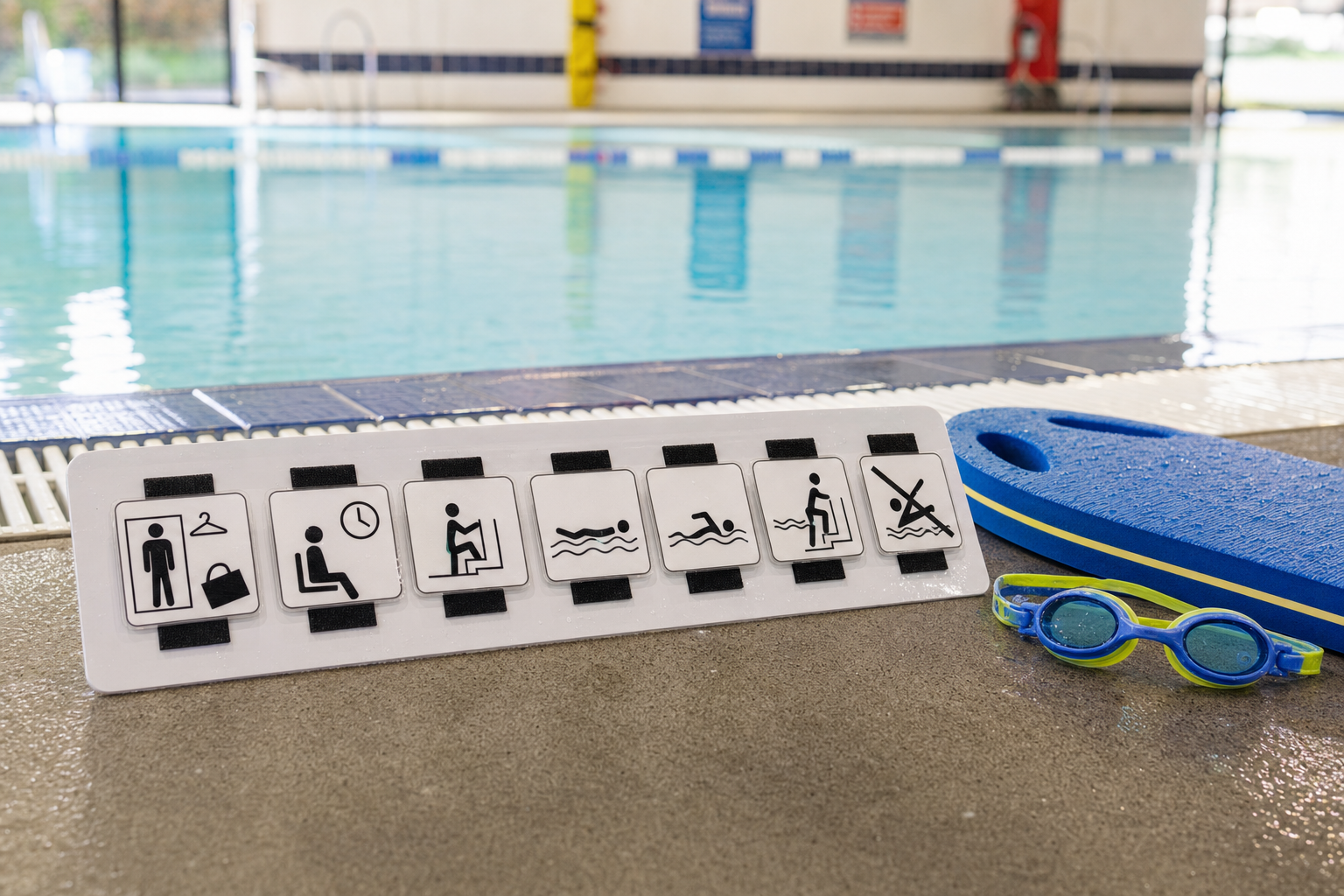
If your child is non-speaking, anxious, or has autism, picture-based boards and visual schedules (often called swim lesson visual supports or AAC pool boards) can transform swim lessons. They make cues clear, reduce anxiety, and help children feel more independent—helping lessons go more smoothly from the moment they arrive poolside.
Why Visual Supports Matter Right Away
Children learn best when they know what to expect. Visual schedules, cue cards, and AAC pool boards lay out each step—changing, entering water, doing drills, exiting—using icons or photos. For non-speaking kids especially, these supports give language to routines and safety cues that might otherwise feel confusing. Research from Autism Spectrum News shows that when instructors use visual supports, including communication boards and first/then boards, children with autism show better comprehension, lower anxiety, and more participation.(autismspectrumnews.org) The American Academy of Pediatrics also recommends visual schedules or social stories as part of water safety practices for children with special health needs.(healthychildren.org)
How to Use Picture Boards and Schedules Effectively
A good schedule or board has clear, consistent images, limited to what matters most in a lesson. Avoid overloading with dozens of symbols or changing things weekly—such changes can actually increase anxiety. Work with the swim instructor ahead of time to agree on symbols for cues like “wait,” “float,” “turn,” or “stop.” Pair them with verbal cues, gesture demonstrations, and whenever possible let the child practice or observe the steps ahead of time—maybe by walking through them on the pool deck.
Parents often find great value in following structured swim programs. For example, using tools grounded in evidence alongside plans that involve gradual exposure helps build confidence. Part of those plans may include systems like the 10-Week Plan by Swimy.org, which provides a structured pathway for learning routines, safety skills, and swim basics. Hyperlinking parental involvement, instructor consistency, and the family’s input in preparing visual supports can make a significant difference.
DIY Visual Boards vs Sourcing Waterproof Sets
You don’t always need to buy something expensive. A DIY communication board can be made by printing out icons or photos, laminating them, and sticking Velcro to create a removable schedule. Use large, simple images—real photos work well. For outdoor or pool-side use, use sturdy paper, laminate, and attach it to a clipboard or waterproof sleeve so it stays dry. Always leave these boards on deck—not in the water—to keep them in good shape and avoid accidental loss or damage.
If you want a structured way to help your child progress at home, the 10-Week Plan guides you step by step.
If you want something ready made, there are waterproof or highly water-resistant sets designed for aquatic use. Autism Swim, for example, offers downloadable communication boards and swim visuals in varying sizes, designed for non-spoken communication to help anxious kids feel more settled in aquatic settings.(learn.autism-swim.org) These specialist boards often use durable, laminated sheets or waterproof materials so they withstand splashes and dampness.
[[ctakid]]
Safety Tips When Using Visual Supports & AAC Boards
Always coordinate with the swim teacher before lessons begin. Share the child’s preferences: colours, symbols, how they respond to different types of prompts. Lamination and keeping the visual supports on deck rather than in water protect them, and prevent distractions. Let the child refer to them whenever needed, and build consistency by using the same visuals each lesson. The AAP emphasises that adapted aquatics, with tools like visual schedules, can reduce drowning risk in children with autism while improving confidence, mood, and motor skills.(publications.aap.org)
Common Pitfalls & How to Avoid Them
Sometimes visual boards can actually backfire. If there are too many icons, children may feel overwhelmed and unable to pick what applies. If symbols are changed too often—say, switching visuals each week—the child can’t build a stable routine. Keep it simple. Use symbol sets that the child knows, and introduce any new ones gradually.
Also avoid putting boards in the water; wet surfaces and handling can ruin them or create safety issues. Maintain safety tools; teach familiar phrases like “hold the wall” or “wait for whistle,” and use the visuals as reminders. According to evidence, when cues are paired with demonstrations and consistent visuals, children process them more easily.(autismspectrumnews.org)
Year-Round Lessons: Making Visual Supports Work All Seasons
Whether it’s summer or winter, indoors or outdoors, visual supports stay useful. In cooler months or for indoor pool facilities, acclimatisation routines (like warm bath before lesson, changing routines, and pool entry) are helpful. Use a visual schedule to map out every step outside the water too—car park, locker room, putting on swim gear—because transitions themselves can trigger anxiety.
Warm water, calm lighting, quieter times with fewer swimmers—all improve the effectiveness of visual support. Be sure boards are visible in low light, and that symbols are clear (high contrast, simple shapes) even if goggles fog or lighting changes.
Wrap-Up: Benefits You’ll See
When you use swim lesson visual supports or AAC pool boards, lessons tend to start going smoother: children become calmer, more independent, less frustrated. Communication improves, safety improves, and anxious moments reduce. Over time, what once felt overwhelming becomes predictable and manageable. Parents often tell me their child begins requesting favourite routines, feeling safer in the water, even leading parts of the lesson simply by anticipating what comes next.
If you’re a parent of a child aged 3-12 preparing for swim lessons, begin with clear, consistent visuals; coordinate with instructors; choose durable waterproof tools or make your own; avoid overload; and keep routines stable. It’s how swim lesson visual supports can truly unlock calmer, more confident lessons—and help your child become a strong, safe swimmer.
120+ swimming exercises sorted by age — with video and instructions. Developed by swim instructors, completely free.

120+ swimming exercises sorted by age — with video and instructions. Developed by swim instructors, completely free.