Swimming With Glasses: Safe Options for Kids Until Goggles Arrive
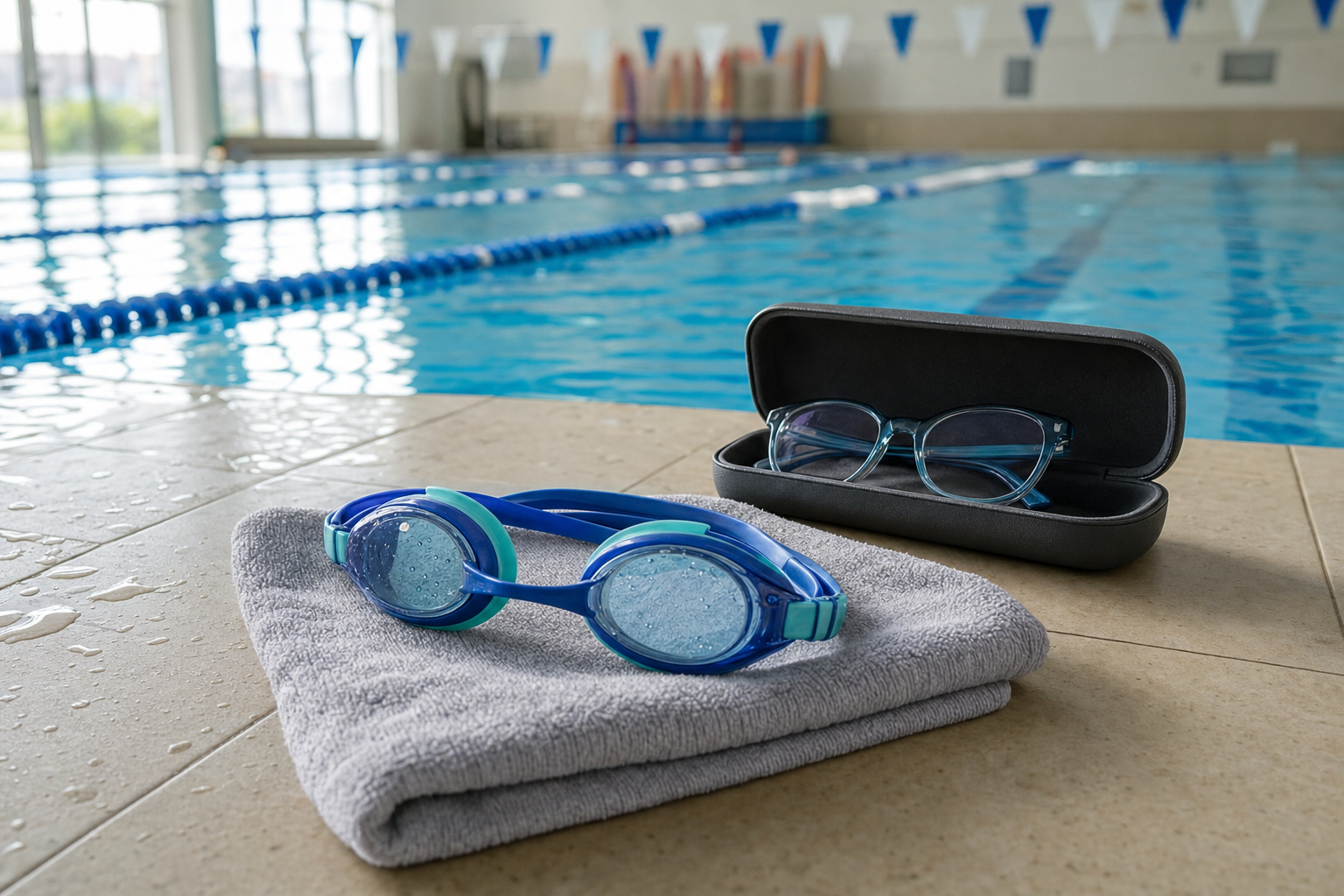
Your child has swim lesson tomorrow and their glasses are nowhere to be found. It’s tempting to let them swim in contacts or without vision—but those aren’t safe options. Here’s what parents of kids aged 3–12 need to know about keeping vision clear during swim time, reducing infection risks, and choosing safe, corrective eyewear.
Why Contacts and Water Are a Bad Mix
Contact lenses plus water equals unnecessary risk. The Centers for Disease Control and Prevention (CDC) clearly warn against wearing contact lenses while swimming, showering, or in any water activity. Pool water, lakes, and even tap water often harbor germs, particularly an organism called Acanthamoeba, which can cause a serious infection known as Acanthamoeba keratitis. This infection can blow up quickly: pain, blurred vision, sensitivity to light—and in rare cases, permanent damage or even blindness. (cdc.gov)
The same goes for sleeping in contacts, using water instead of lens solution, or skipping daily hygiene steps. All these behaviors make children more vulnerable to bacterial or fungal infections. CDC’s advice is simple: remove lenses before swimming, discard or disinfect them properly, and never expose contacts to water. (cdc.gov)
Prescription Swim Goggles: A Safer Way
If your child wears glasses for school or everyday things, prescription swim goggles are the best way to see clearly while protecting their eyes during lessons. The American Association for Pediatric Ophthalmology and Strabismus (AAPOS) endorses prescription swim goggles as an affordable and effective alternative for children who need corrective lenses and enjoy swimming. (aapos.org)
Here’s what to look for: polycarbonate lenses that resist shattering, UV protection for outdoor pools, proper seal around the eye, and adjustable straps that won’t slap your child’s ears. Prescription goggles help them see the wall when turning, follow the coach’s signals, and avoid bumping into others—all things that matter during lessons. (hey.nhs.uk)
If you want a structured way to help your child progress at home, the 10-Week Plan guides you step by step.
Mid-Lesson Safety Plan
Even before you buy a pair, you can put a backup vision plan in place. Keep your child’s everyday glasses within reach during lesson day—put them in a dry case near the pool deck. If goggles haven’t arrived yet, this ensures they can at least see well between lessons and get back quickly to vision correction afterward. Also consider earmarking a voucher or research option using the 10-Week Plan at swimy.org to help you plan ahead for buying prescription swim goggles based on size, budget, and your child’s growing vision. (specialty.vision)
[[ctakid]]
Glasses in Water? What about Splash-Point Vision
Some parents wonder if glasses can work in the water. The verdict: glasses are fragile around pools—they fog up easily, get drenched, and risk serious damage. Regular eyeglasses are not waterproof and will likely slip off or shatter if accidentally knocked. If you do let your child wear glasses before or after swim time, make sure they have straps or stay-put grips, carry a backup pair, and keep them dry and safe at all times. AAPOS suggests polycarbonate lenses for sports and swimming situations—that includes prescription swim goggles, not regular glasses. (hey.nhs.uk)
Why Waiting Isn’t an Option
Some families think: “We’ll just wait until their prescription changes next year.” But that forces your child into blurry vision now. It affects coordination, learning signals from the coach, judging wall distance—it reduces safety and confidence. Blurry vision also raises risks: misreading depth, bumping into lane lines, missing cues. When your child can see clearly, they swim safer and learn faster—especially during lessons that happen year-round.
What You Can Do Right Now
Start with a vision check—if it’s older than 12 months, it may be time for an eye exam. Ask your optometrist about prescription swim goggles that match your child’s current lens power, especially if they are nearsighted or have astigmatism. Keep a sturdy pair of glasses in the swim bag, clean and dry at all times. Above all, never let your child swim in contacts, even under goggles—CDC emphasizes that water exposure elevates the infection risk greatly. If contacts do get exposed, throw them away or disinfect thoroughly. (pubmed.ncbi.nlm.nih.gov)
Final Takeaway
Kids swim with glasses – yes, but only in forms made for the water. Prescription swim goggles give children aged 3–12 clear vision, safety, and peace of mind. Contacts in water? Too risky. Regular glasses? Almost useless when wet. Build your lesson-day strategy now: house backup glasses nearby, invest in prescription goggles, and follow contact lens water rules strictly. Safe vision means safer swimming—and happier kids in every lesson.
120+ swimming exercises sorted by age — with video and instructions. Developed by swim instructors, completely free.

120+ swimming exercises sorted by age — with video and instructions. Developed by swim instructors, completely free.