Watch, Don’t Coach: Parent Sideline Rules That Help Kids Learn to Swim
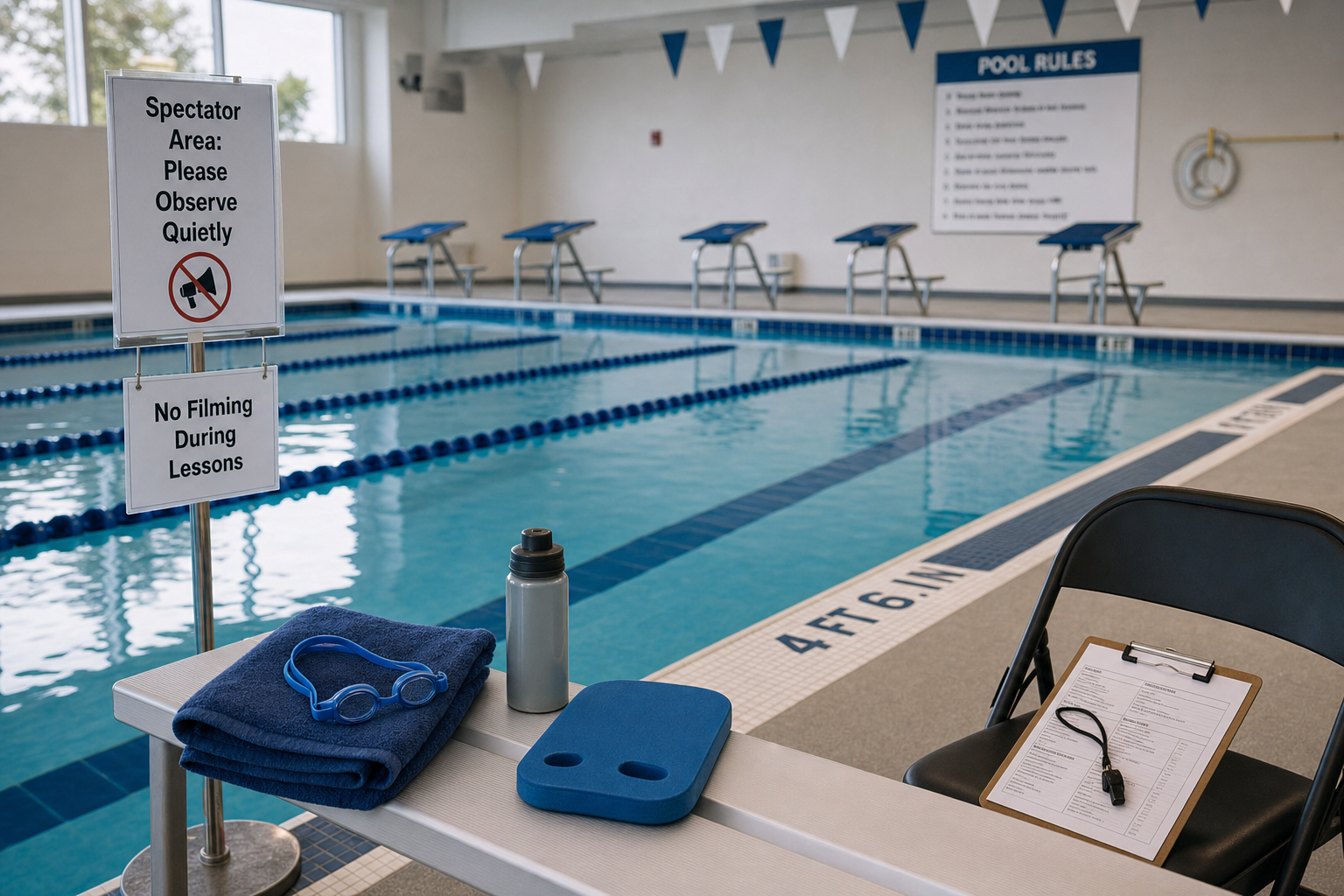
So you’re watching your child at swim practice or lessons, ages 3–12, and itching to help every second. But often, when you step in and coach from the sidelines, it backfires. Children get confused by mixed instructions, lose focus, or feel performance pressure. It turns a supportive role into a tug of war over technique. What actually works is staying in support mode—not coach mode—until after class. That’s when you can debrief, reflect, and build confidence.
Why Sideline Coaching Can Undermine Swim Practice
When you call out corrections mid-lesson—“paddle harder!”, “chin down!”, “kick from your hips!”—you’re often contradicting the coach’s instructions. Kids try to please both of you, which splits their focus and slows learning. Research shows parents tend to underestimate supervision needs and overestimate children’s abilities as lessons progress, partly because they interpret swim progress as full competence. (researchgate.net) This misperception can lead parents to back off when kids still need close supervision visually, even though you must always watch whilst giving space. That balance keeps børn safe and lessons effective.
Parent Guidelines: What To Do Instead of Mid-Lesson Coaching
Here’s a script and boundary framework you can follow so your involvement supports attention and confidence without confusing your child.
The Sideline Script: What to Say and When
Use this approximate structure during practice times and in debrief:
• Support, not correction, while your child is swimming. Examples: “I’m proud of how much you tried today,” or “That freestyle arm looks much smoother than last time.” Steer clear of specific technique cues during lesson; save that for after class.
• After class, when coach feedback is fresh, try this:
“Hey, I saw you working hard on your kick today. What part of your lesson felt good, and what felt tricky?” Then you say, “From what your coach said, today you can focus on strong kicks from the hip. Let’s try that together later.”
Use a “plus-delta” style: plus what worked, delta what could improve. Avoid film unless coach agrees; video can be overwhelming without context.
Boundaries That Protect Learning
If you want a structured way to help your child progress at home, the 10-Week Plan guides you step by step.
- Always maintain visual supervision—even when letting coaches lead. Don’t step in during the drill unless safety demands.
- Don’t film or record mid-lesson without permission from coach and facility; it feels like critique and can distract everyone.
- Do not focus feedback solely on outcomes: who won the race, how fast they were. Focus on effort, progression, confidence.
- Avoid bribery and comparisons with other kids; each brain and body develops differently.
How Parents, Coaches, and Practices Can Align
For kids to focus better and enjoy lessons, adopt these practical strategies.
[[ctakid]]
At The Start: Agree Roles With the Coach
Talk to your child’s coach early in the season. Ask, “How would you like me to help? When can I give feedback?” This sets shared expectations. Use tools like assessment forms or weekly check-ins so you see coach-led goals rather than guessing.
Practice Outside Lessons
Between swim lessons, play with new skills at home or in family swim time. Use the coach’s cues (once confirmed) in a relaxed, fun setting. For example, practising streamlined push-offs in shallow water while you cheer effort.
Midway through longer programs, track progress using something like the 10-Week Plan from swimy.org to test skill gains and help your child—and you—see clear wins. (publications.aap.org)
Use Age-Appropriate Feedback
Kids age 3-8 learn best when feedback is simple and tied to what they can control. For example: “Nice kicking from your hips.” For ages 9-12, you can give slightly more complex insight and ask what they felt. Always sandwich correction between praise. Research on feedback in swim education shows that overly vague or outcome-only praise fails to build confidence, while specific, actionable feedback boosts both technique and motivation. (sgsinkorswim.com)
Sample Boundary Rules to Keep Sidelines Supportive
To keep yourself in check, try assigning these internal guidelines to follow each lesson:
Before lesson: arrive early, remind yourself to watch, not coach.
During lesson: eyes on coach, no voice cues; if anxious, take a deep breath and redirect focus to your child’s expressions and effort.
After lesson: ask open questions about what the coach worked on; share only one or two observations.
Practice at home: use coach’s instructions, focus on what the child enjoyed.
When upset (child upset or skill doesn’t improve): wait 24 hours before giving critical feedback. Emotions cloud both your judgment and theirs.
Putting It Together — A Parent Speech
Here’s something you might say to your child right after class:
“I saw you trying really hard today—I love your enthusiasm. Your coach gave you a great tip about keeping your arm long in that stroke. Which part of the lesson did you feel proud of? Let’s pick one thing to work on together this week and practice it just a little bit each time we swim.”
This gives attention, choice, and one target, rather than overwhelming suggestions.
Final Thoughts
“Parent etiquette swim lessons” isn’t about being invisible; it’s about being tuned-in without hijacking. When you stop coaching during lessons and use positive reinforcement afterward, children get focused instruction from coaches, maintain confidence, and develop autonomy. That boosts both learning and enjoyment. Remember: your support is essential, your applause powerful, but your role is best placed beside, not in, the coaching spotlight.
120+ swimming exercises sorted by age — with video and instructions. Developed by swim instructors, completely free.

120+ swimming exercises sorted by age — with video and instructions. Developed by swim instructors, completely free.