What to Do When Your Baby Gags During Face-Wet Games (Swim Class Safety Guide)
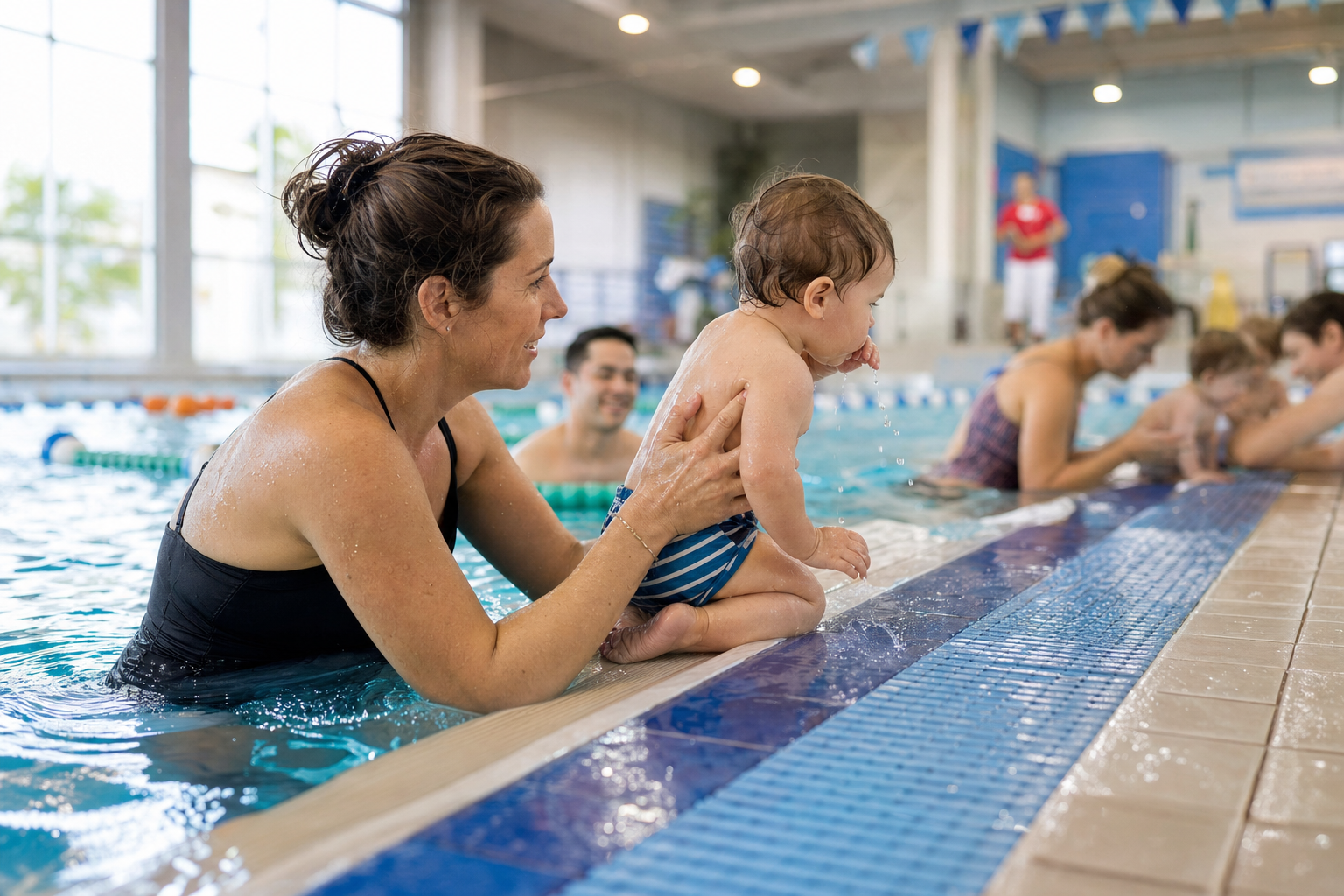
When your baby coughs, sputters, or gags during swim class, bubble games, or a splash accident, it’s scary—but it doesn’t always mean something is wrong. Handling these moments calmly and knowing when to pause or seek help can make all the difference. Whether your child is 4 months or 36 months, here’s how to read the signs and respond safely.
Recognizing Normal Gagging vs. Warning Signs
Babies under 1 year are still building reflexes for swallowing, breathing, and managing water exposure. It’s common for a baby to gag after their face gets wet, from bubbles or an accidental dunk. These coughs usually pass quickly, and the child returns to normal breathing.
If your baby coughs after going underwater but then settles down, that usually isn’t serious. It’s often just water touching the windpipe or nasal passages. But if any of these happen afterward, you should pause the activity immediately: baby is struggling to breathe, their face turns bluish, vomiting repeatedly, acting very sleepy, or repeatedly inhaling water. These are signals to step back and get help. The American Academy of Pediatrics (AAP) sets out similar urgent warning signs for drowned or water-inhalation incidents including difficulty breathing, vomiting, or unusual behavior immediately following water exposure. These symptoms might require medical evaluation. (healthychildren.org)
How to Help Right Away when Baby Streches or Splashes Too Far
Stay calm. Your baby will pick up on your stress. If coughing or gagging happens, you can help ease discomfort and make recovery smoother:
- Get them out of water. Lift them into your arms above water level. Pat their back gently. Don’t forcefully “pat out” water—they need to clear it naturally.
- Comfort and reassure. Sit them upright against you. Encourage slow, easy breathing.
- Watch closely for a few minutes. Listen for normal breathing, watch for pink lips, and make sure their alertness returns.
- Pause the game. Give it time — maybe try gentle face-wetting only, or blowing bubbles before dunking if your baby is older than 12 months.
Practicing in small steps helps babies build skills without overwhelming them. Swim play classes often do “face in water, blow bubbles, surfacing” as stage-by-stage tasks—key parts of helping babies learn how not to cough or drown when face wetting happens.
If you want a structured way to build water confidence at home, the 10-Week Plan guides you step by step.
Planning Swim Games Smartly and Safely
For babies aged 4–36 months, the AAP recommends swim lessons begin only after the first birthday. Before then, parent-led water play or “Mommy-and-Me” style classes help your baby get used to water safely. (publications.aap.org)
[[ctababy]]
Look for instructors who use readiness-based lessons. The idea is to pause any face-wetting exercise if baby shows distress—or just a plain “no thanks.” It’s a mistake to force breath control before a child is prepared. Progress should be gradual.
If you like structured guidance, tools like the 10-Week Plan from swimy.org can help you advance at your baby’s pace. It breaks down skills week by week, allowing plenty of time to adjust if baby is uneasy or gags regularly.
Common Parent Questions: Swallowing Water, Submersion, and “Dry Drowning”
Yes, babies sometimes swallow water during play. It usually passes through their digestive system without issue. Repeated or large inhalations—that’s when alertness and breathing changes matter. The often-used term “dry drowning” is misleading. Modern medical guidance avoids it and terms like “secondary drowning,” because they imply danger long after a small incident. It’s extremely rare. If symptoms happen, they nearly always appear quickly, within hours—not days. (medlineplus.gov)
If your baby has gone underwater, coughs or vomits, but then acts like their normal self, feeding well and moving around as usual, monitoring at home is often enough. But dreams, sleep, or continued coughs past normal breathing require checking in with a pediatrician. (reddit.com)
When to Seek Medical Help Urgently
You should call emergency services or go to the hospital if, after water exposure, any of these happen:
- Severe or worsening difficulty breathing at rest
- Lips or face turning blue or gray
- Repeated vomiting after the event
- Unusual sleepiness, confusion, not waking easily
- Swelling or crackling in the lungs, chest pain, or wheezing
- Any sign that baby repeatedly inhaled water and can’t cough it out easily
These are red flags. They suggest more than just gagging or swallowing water—they could mean fluid in the lungs or airway compromise that may worsen without rapid care. (publications.aap.org)
Wrap-Up and Takeaways
Gagging, coughing, or sputtering during face wetting or accidental splashes is usually not dangerous—it’s a way your baby adapts to water. What matters is minding their comfort, stopping if distress appears, and keeping supervision constant. Baby swim class skills should be built gradually, not forced.
Trust your instincts. It’s normal to feel nervous. But with good supervision, gradual exposure, support from instructors following readiness-based guidelines, and knowing the warning signs from reliable sources like the American Academy of Pediatrics, you and your baby can enjoy water play safely all year long.
120+ swimming exercises sorted by age — with video and instructions. Developed by swim instructors, completely free.

120+ swimming exercises sorted by age — with video and instructions. Developed by swim instructors, completely free.