When Your Toddler Grabs Someone in Baby Swim Class: Gentle Boundaries and Water Safety
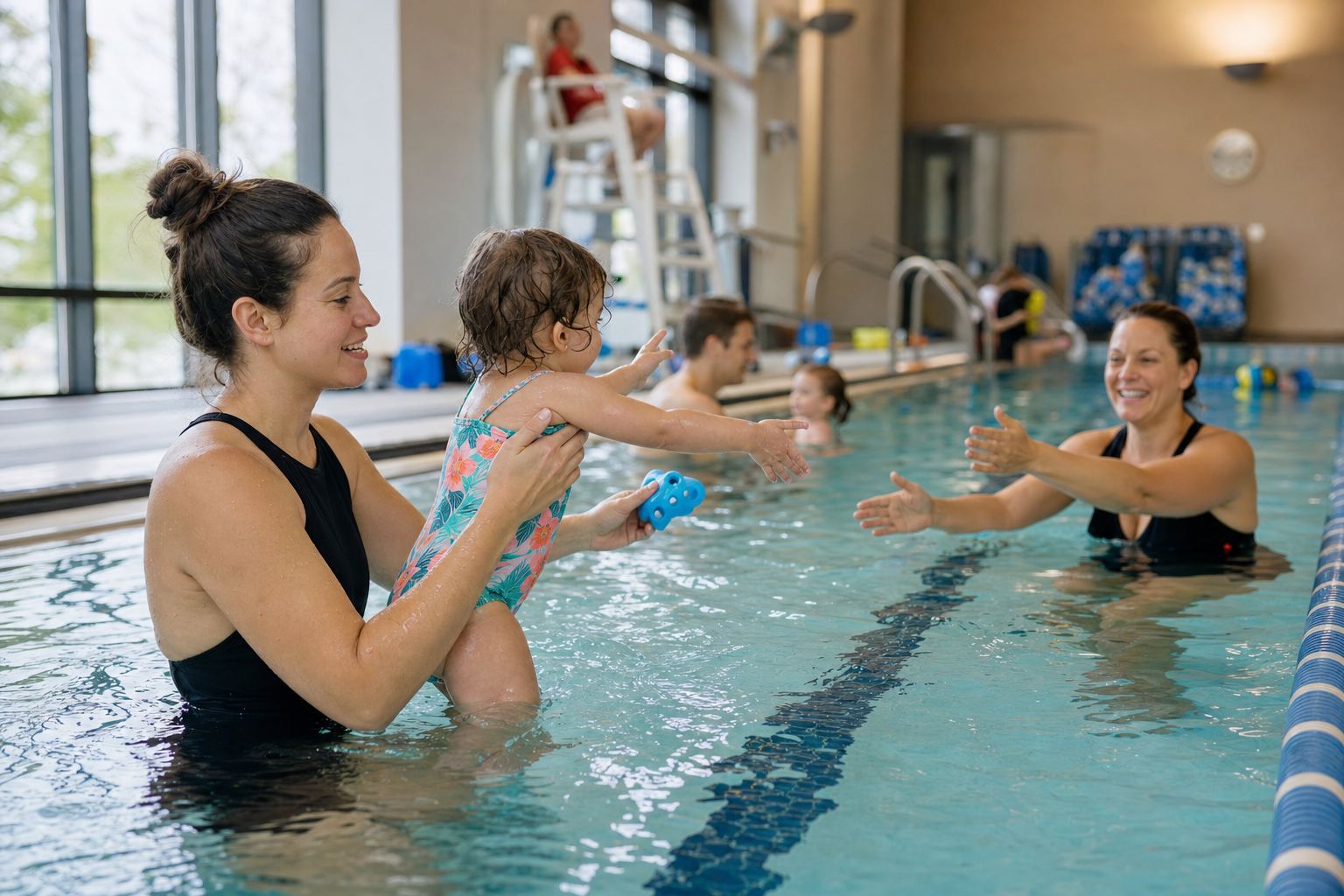
It can feel startling when your mobile 9–36-month-old reaches out and grabs another parent, the instructor, or a fellow child during swim class. It's not uncommon—babies explore boundaries through touch long before they fully understand social norms. What matters most is how you respond, especially when safety is on the line.
Resetting Boundaries Kindly (Without Shaming)
First, watch your tone: calm, even gentle, but firm. As children grow, they need clear simple messages. When your toddler grabs someone—whether it’s Mom, Dad, Instructor—get close so they can see your face. Hold their hands and say, “Hands to yourself, please,” or “We keep hands safe,” in short, clear phrases. Back it up with eye contact so they know you mean it.
Alongside, encourage contact only when it’s safe and welcome. Teaching consent early means asking: “Can I tickle you?” or “Do you want a hug?” so your baby learns others have choices too. WebMD offers great guidance on young children learning that their body belongs to them—and helping them understand other people’s space too. (healthy.kaiserpermanente.org)
Keep Holds Secure But Supportive
In swim settings "toddler grabs people in swim class" is more than social—it’s safety. You must never loosen your hold to redirect socially but instead maintain physical control where necessary. The American Academy of Pediatrics strongly recommends “touch supervision,” which means being within arm’s reach to prevent slipping or wandering, especially in and around deeper water. (healthychildren.org)
Use smooth transitions for holds: guide their torso, support under their arms, maintain contact without squeezing, and always prioritize safety over politeness. If another child grabs yours, don’t let go of your secure hold to respond. Instead, intervene simply, “Please let go,” and move away gently.
Using Social Cues & Alternatives
Toddlers respond well to nonverbal signals. If your baby is about to grab—maybe pulling on earrings or reaching for another’s swimsuit—try soft verbal redirection paired with a physical cue: gently cover their hands or step between them and the object of interest. Use eyes, calm voice, body posture: gentle frowns or pulling back signals “not ok.”
Programs like the swimy.org 10-Week Plan are designed to build both safety and confidence in toddlers and parents by gradually increasing independence while reinforcing secure holds and boundary setting. Embedding clear rules for behavior around touch is part of many structured swim plans. Use that plan (linked here to https://www.swimy.org/10-week-plan) to review expectations ahead of class: how we move, how we touch, what safety means.
Offer acceptable alternatives immediately. When your child grabs the instructor’s nose or a peer’s toy, say, “Here, you can squeeze this toy,” instead. According to ZERO TO THREE, substituting something safe and interesting is an effective tool to redirect grabby hands while the behavior fades. (zerotothree.org)
[[ctababy]]
When It’s More Than Just Curiosity
Laughing it off feels easy at first—cute grabbing, baby giggles. But in swim class, when water is involved, or in the presence of strangers, the stakes rise sharply. Start early: set rules for safety. Explain that hands are for holding on, splashing, not grabbing people. Use consistent, age-appropriate discipline methods. The American Academy of Pediatrics suggests positive discipline strategies for children under age 3: stop bad behavior with clear voice, distract with safe alternatives, and always reinforce kind, gentle actions. (apa.org)
Never rely on humor when grabbing becomes hazardous: a hand reaching for goggles can knock off someone’s respirator; a pull on instructor’s swimsuit might disrupt balance in deeper water.
Training Environments, Classes & Setting Expectations
Choose swim classes framed around safety and small ratios. The US Swim School Association’s infant-toddler guidelines advise that “Caregiver and Me” classes hold no more than eight toddlers per instructor. When classes are small, instructors and parents can better respond when toddlers grab others. (usswimschools.org)
Practical Steps You Can Try
When your toddler grabs someone:
- Hold them securely, prioritize safety.
- Use short clear phrase: “Hands down,” or “Keep hold.”
- Distract with an object they can touch—maybe water, goggles, or toy.
- Offer praise when they redirect: “Good job letting hands be gentle.”
If grabbing continues, move them closer to you, change position so they feel held and protected. Use visual cues: eye contact, shake head slightly. Praise often. According to guidance for managing toddler aggressive behavior, praising even small moments of gentle touch helps feelings of empathy grow. (healthychildren.org)
Safety First (Always)
Never loosen your hold to try to teach them socially in unsafe conditions. If in deeper water, water must always cover only up to parent’s shoulders, and you remain in control physically. Always supervise with undivided attention. The American Academy of Pediatrics summary on drowning prevention warns that toddlers are most at risk around water, urging constant supervision and stay-within-arm’s-reach holds. (guidelinecentral.com)
Final Words
Boundaries plus love: that’s the combo that helps toddlers learn what’s safe, what’s gentle, what’s okay. You won’t get perfect every time, but being consistent, clear, and kind sets you up for fewer grabbing moments—and greater trust from your toddler. Swim class isn’t just about water skills—it’s about learning to move in a world with other people, respecting space while staying safe. You’ve got this.
120+ swimming exercises sorted by age — with video and instructions. Developed by swim instructors, completely free.

120+ swimming exercises sorted by age — with video and instructions. Developed by swim instructors, completely free.