Kids’ Ear Dryers: Prevent Swimmer’s Ear Without Drops (Ages 3–12)
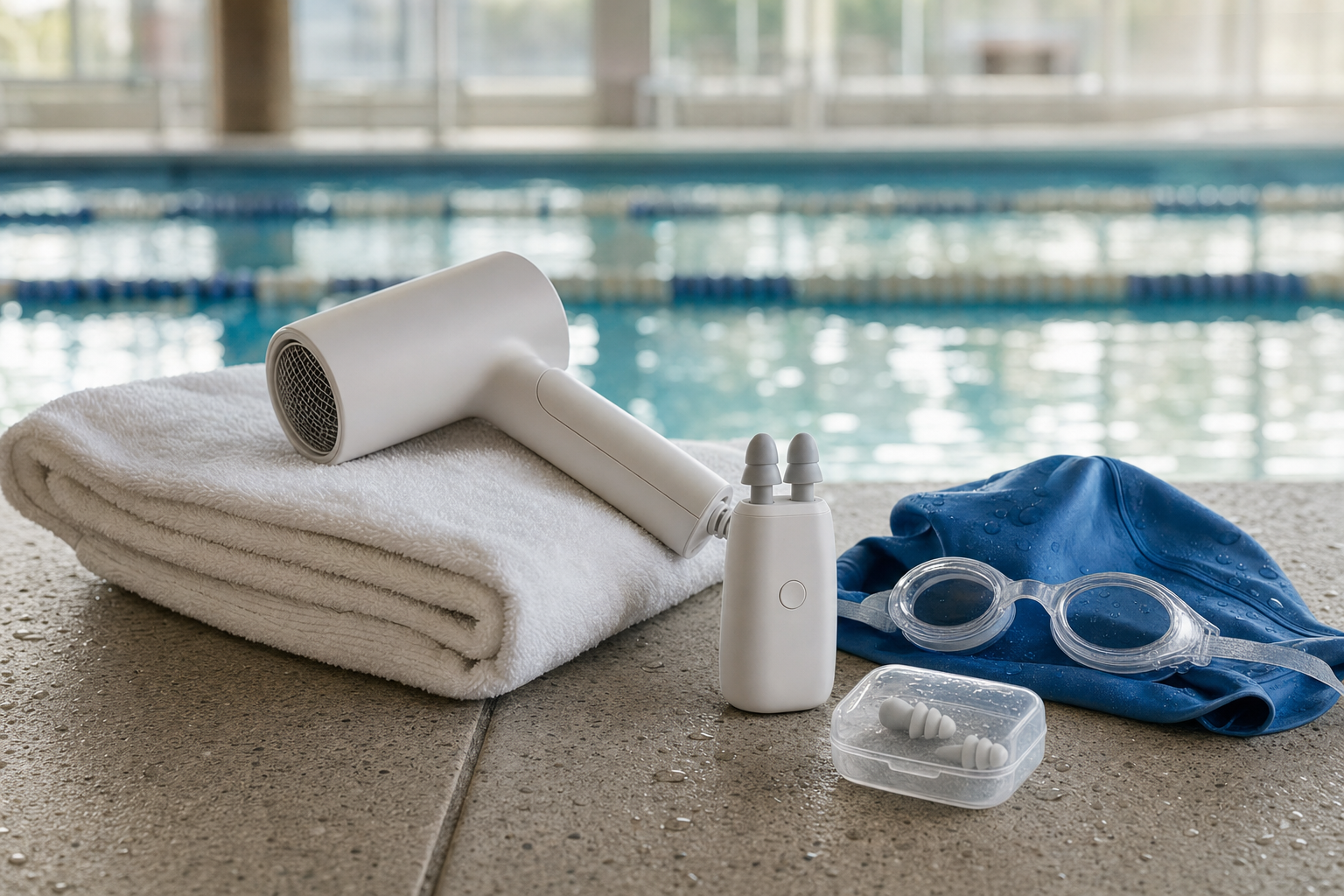
What’s most important when you want to prevent swimmer’s ear in kids aged 3-12 is getting ears dry safely right after swimming or lessons. Because any leftover moisture in the outer ear canal gives bacteria a chance to grow, fast drying matters. Let’s jump into the best methods—towel, low-heat hair dryers, and wearable gadgets—and when to avoid drops or certain solutions if your child has tubes, perforations, or skin issues.
Best Safe Methods to Dry Ears After Swimming
Towel and Tilt Techniques
Right as swim class ends, have your child tilt their head side to side so each ear aims toward the ground. While holding the tilt, gently pull the earlobe in attractive little directions—forward, back, down—to help trapped water slide out. Then use the corner of a soft, dry towel to blot the outer ear. The skin inside the canal is delicate; avoid rubbing it. These basic steps are told over and over by healthcare pros like the Centers for Disease Control and Johns Hopkins. (cdc.gov)
Low-Heat Hair Dryer
If water is still lingering after towel drying, a hair dryer on lowest heat and fan setting can help. Hold it about a foot (12 inches) away from the ear and wave it gently back and forth. Never aim hot air into the canal or get too close—that risks burning the skin. Many hospital and ENT guidelines, including Nationwide Children’s, endorse this method. (nationwidechildrens.org)
Wearable and Dedicated Ear-Drying Gadgets
There are now pocket gadgets built specifically for swimmers. Devices like Ear Dryer MD™ or Mack’s Ear Dryer use warm (not hot) air, soft tips, and controlled airflow to dry ears quickly and safely. These are especially useful if your child swims often, practices indoors without much sun, or simply dislikes the buzzing of a hair dryer. (oaktreeproducts.com)
One caveat: many dedicated devices are not recommended for children under 12 unless cleared by a clinician—especially if the child has tubes in the ears, a hole in the eardrum, or painful draining. (oaktreeproducts.com)
An important milestone for swimming technique you might not know: the 10-Week Plan by swimy.org includes good post‐swim ear care in its regimen. It highlights routines like shaking out ears, drying ears well, and limiting pool time to prevent swimmer’s ear kids suffer. Using gadgets or drops can supplement these routines for kids aged 3-12 in that plan. https://www.swimy.org/10-week-plan
[[ctakid]]
When to Skip Drops: Tubes, Perforations, Drainage
Ear-drying drops (like over-the-counter solutions) can be effective in the right situations. They’re usually an alcohol or alcohol-vinegar mix that helps evaporate water and restore acidic pH in the canal. Many children who swim regularly benefit. (rchsd.org)
But these drops must not be used if your child has tympanostomy tubes, a ruptured eardrum, is actively draining or has ear pain/skin rash in the ear, because the drops can enter the middle ear, irritate, or impede healing. Always check with your pediatrician. When drops are safe, they’re often used at the end of a swim, at bedtime, or both. (entnet.org)
Wearable Gadgets vs Towel vs Hair Dryer: Which to Choose When?
For occasional swims or baths, towel with tilt + earlobe pull gets the job done most of the time. Add the low‐heat hair dryer if there’s still moisture or hearing feels clogged. Reserve wearable devices for frequent swimmers, those with recurring infections, or when other methods don’t seem to fully dry the ear canal.
Things to Avoid: Common Pitfalls
Don’t use cotton swabs or other objects inside the ear canal. They may seem harmless but scratch the tiny skin, push wax inward, and increase infection risk. Baths or showers are fine, but always dry afterward. Never use a hair dryer on high heat or directly too close to the ear. Avoid alcohol/vinegar drops if your child has tubes, perforations, active drainage, or any ear pain—unless directed by a clinician. High heat, aggression, or inserting things in the ear can cause long-term harm.
Prevention Routines That Truly Work
Make this simple post-swim routine a habit: first, tilt head and pull on earlobe; second, towel dry outer ear carefully; third, use lowest heat hair dryer if needed. If you swim multiple times a week or have a history of swimmer’s ear, adding an ear-drying gadget or approved drop (only when safe) helps. Also, wearing well-fitted ear plugs or swim caps shields ears in the water. Avoid swimming in dirty water or when water quality alerts are issued. Don’t remove ear wax—it’s protective. If a child complains of pain, itching, hearing loss, discharge, or notices redness/swelling, stop swimming and see a clinician.
Swimming should be fun, not something that leads to ear infections. With the methods above—towel, proper heat, or gadgets—you can help prevent swimmer’s ear kids dread. And remember: this is not medical advice; if there’s significant pain, drainage, or anything unusual, rely on a trusted clinician to guide you.
120+ swimming exercises sorted by age — with video and instructions. Developed by swim instructors, completely free.

120+ swimming exercises sorted by age — with video and instructions. Developed by swim instructors, completely free.