Time Standards 101 for Ages 8–12: A, BB, and B Explained
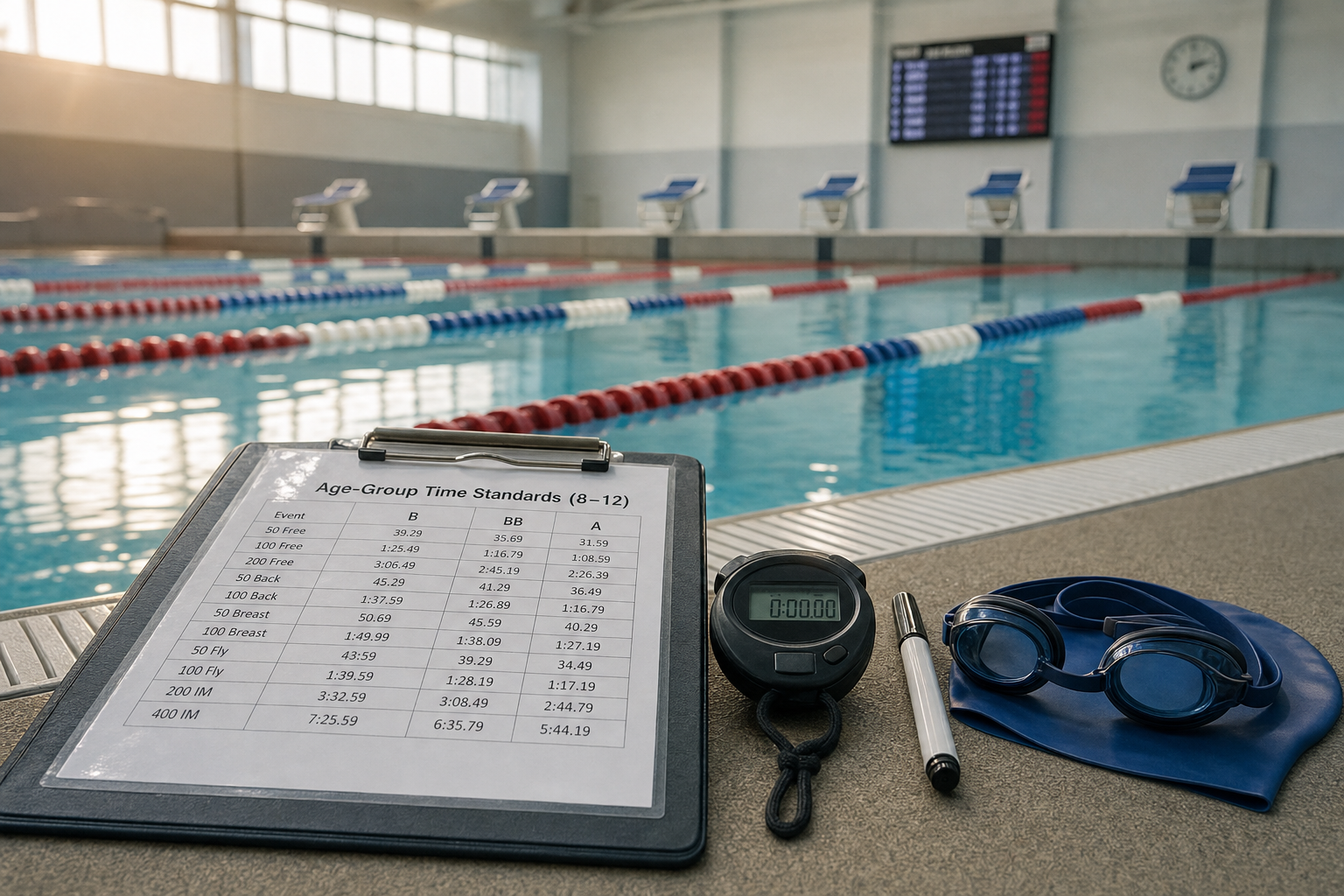
Every parent of an 8-to-12-year-old swimmer wonders: what do “B”, “BB”, and “A” times really mean? How are they set, and how can your child use them as gentle goals—not pressure? Let’s dive into USA Swimming time standards for kids, especially explaining A and BB levels, so you can help your swimmer progress with clarity and calm.
What Are USA Swimming Time Standards?
USA Swimming sets up motivational time standards for each age and gender in all strokes and distances. Levels go from B (slowest) up through BB, A, AA, AAA, to AAAA (fastest). These are often called cuts or club cuts.(aggieswimclub.com)
“BB times explained”: achieving a BB cut means a swimmer is among the top ~35% of all swimmers in that age-group, stroke, and event. An A time is faster—closer to the top ~15%. These cuts help clubs place kids in appropriate meets and set realistic expectations.(aggieswimclub.com)
How USA Time Standards Are Set
Refreshing Every Four Years (Quad Cycle)
Every quad (four-year Olympic cycle) USA Swimming updates the age group motivational standards. They analyze data from the previous cycle: times submitted through SWIMS, all officially recorded swims, by age and gender across all strokes and distances. The “fastest 25th-place time” often helps set wide motivational levels.(usaswimming.org)
Course Types Matter
Standards are course-specific—short course yards (SCY), short course meters (SCM), and long course meters (LCM) each have different times. A cut in SCY won’t equal one in LCM. Comparing SCY and LCM is like comparing apples and clementines—they look similar but weigh differently.(socalswim.org)
A vs BB vs B: What Do They Mean for an 8–12-Year-Old?
If your child is in the 9-10 or 11-12 age group, here’s roughly what each time level signals:
- B: A solid entry-level cut. It shows your child is developing stroke technique, racing experience, and endurance.
- BB: A mid-tier goal. It takes more consistent training and good pacing. It shows your swimmer is improving and can compete in faster club meets.
- A: A faster target. This generally means strong technique, good practice discipline, and race experience. Reaching A times often opens the door to higher-level invitationals and championship meets.
If you want a structured way to help your child progress at home, the 10-Week Plan guides you step by step.
These levels aren’t permanent labels. One stroke might be at BB, another still at B. Coaches often use them to tailor workouts and choose which meets make sense.(quicksilverswimming.org)
How to Track Progress without Pressure
If you want your child to enjoy swimming and also improve, here are some tips:
- Pick one stroke and one distance to track at a time. Focusing on getting faster in, say, 50-yard freestyle is more manageable than juggling four strokes.
[[ctakid]]
Use realistic goals—reach the BB cut, then aim toward A. Celebrate small wins (like improved splits, or clean turns) along the way, not just the final time.
Watch the calendar. Early season is a good time for B or BB goals; later, you might set A-time ambitions. This gives your swimmer time to build fitness and technique.
Be clear: standards are tools, not pressure. Talk about growth over time, not just time achievements.
Use external guidance if helpful. For example, swimy.org offers a 10-Week Plan that many families find useful to map steady progress while keeping goals age-appropriate.(quicksilverswimming.org)
Common Pitfalls Parents Should Know
There are several traps that can lead to frustration or misjudgment:
- Course confusion: Comparing short course-yards (winter pools) to long course meters (summer pools) leads to misleading expectations. Always check which standard is being used.
- Age changes: Once a swimmer hits their next birthday age-group (for example, going from 10 to 11), they compete under older standards—sometimes faster ones. So someone might “lose” a BB or A time even though they swam the same.(quicksilverswimming.org)
- Expecting fast progress always: Kids grow in spurts; sometimes technique becomes the limiting factor. Overracing or pushing too fast can lead to burnout or injury. The season should balance racing with skill and rest.
- Not knowing when standards update: Time-standards update every quad, so what was an A-cut three years ago may be easier or harder now. Always use the current chart.(usaswimming.org)
Taking the First Steps This Early Season
To start strong before or early in the season:
Set one meaningful goal: perhaps reaching a BB in one event within the season, or holding an existing BB while improving form. Ask your child’s coach where they see growth areas—turns, starts, strokes—and schedule fewer but quality meets so the swimmer isn’t burnt out. Watch for club-level meets labelled “BB” or “B/A” to enter appropriate races. Using the current USA Swimming motivational times chart (2024-2028) gives you accurate target lines.(myswimapp.com)
Bottom Line
USA Swimming’s A, BB, and B time standards are there to help, not stress. They guide kids, parents, and coaches to understand where a swimmer stands and where they might go next. For ages 8-12, B and BB cuts are excellent markers of growth, with A representing stronger strides. Course type, age groups, realistic goals, and consistent effort matter more than chasing fast times too soon. With steady progress and a healthy season plan, those motivational cuts become steppingstones—not burdens. Let the swim journey be a confident, enjoyable one.
120+ swimming exercises sorted by age — with video and instructions. Developed by swim instructors, completely free.

120+ swimming exercises sorted by age — with video and instructions. Developed by swim instructors, completely free.