Kneel-to-Stand Dives: A Safe Progression for Ages 8–12
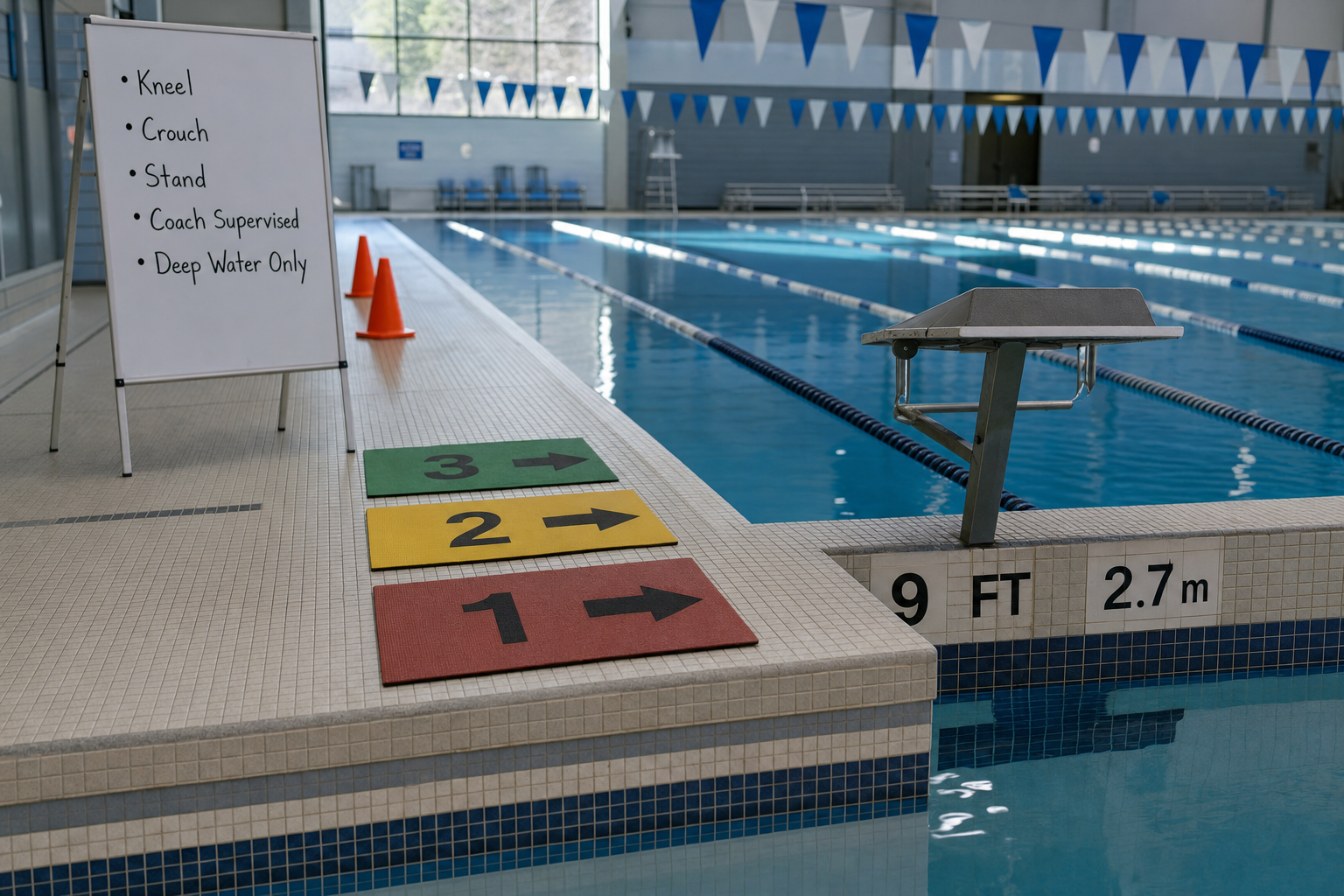
When you want to teach kids to dive safely between ages 8–12, one of the strongest tools is a carefully sequenced tell-tell pathway: starting with kneel-dives, then crouch-dives, and finally standing dives. This kneeling dive progression gives children confidence, control, and safe head-first entry technique—all essential for fun and injury prevention. Let’s walk through how to do this properly, what minimum diving depths to use, and when it’s better to stick to feet-first only.
Why Start from Kneeling
For kids aged 8–12, strength, balance, and coordination are still developing. If you launch into standing dives too early, mistakes are more likely: poor form, wrong angle, or, worst of all, hitting the head or neck. Kneeling dives reduce those risks. When kneeling, learners can focus on extending arms, keeping head aligned, and entering water smoothly—without the fear of a big vertical drop. Once they master kneel dives, move to crouch or one-knee, then to full stand.
Minimum Depth Rules & Safety Essentials
Safety is the top priority. The American Red Cross recommends that all head-first dives—like stand or kneel diving—take place only in water at least 9 feet (2.7 meters) deep. This avoids spinal, head, or neck injuries from hitting the bottom. It’s especially important for diving from pool decks or low platforms. That same guidance says never dive head-first in pools under that depth, nor into murky water or above-ground pools. (health.ny.gov)
In the UK, RLSS UK guidance states that beginner or inexperienced divers learning entry skills should have water at 1.8 meters minimum for head-first entries. When teaching, use clearly regulated deep-water zones, ensure forward clearance (no obstacles), full supervision, and good visibility. (rlss.org.uk)
Key safety essentials to always apply:
- Only teach head-first entries in deep, clear, clean water with clear pool bottom.
- Always have a certified coach or instructor supervising.
- Prohibit head-first entries if depth is unknown, visibility poor, or water is shallow (US < 9 ft; UK < 1.8 m).
- Never use above-ground pools or pools with uneven or spoon or hopper bottoms for diving. (studylib.net)
If you want a structured way to help your child progress at home, the 10-Week Plan guides you step by step.
Safe Dive Progression Steps
Here’s a step-by-step path through kneel-to-stand dives that works well in pre-team and summer swim seasons:
Kneel-Dive from Deck: Child kneels on deck or poolside, feet tucked under, arms extended forward. Emphasise straight body alignment and entering hands first, head between arms.
Crouch or One-Knee Dive: Once comfortable kneeling, move to one knee or a half-crouch, reducing drop distance but practicing proper arm reach and body angle.
Standing Dive (Walk-in or Side-stand): When the child shows strong control and confidence in kneel & crouch dives, introduce standing dives. Make sure the dive is smooth, with full body tension, eyes downward along arms.
Racing Starts or Block Dives (Older or Competitive): Only after mastery of standing dives and under coach supervision. Still enforce minimum depth and careful risk assessment. UK Swim England rules insist training in head-first starts only when the child has shown competence in poolside and crouch entries into 1.8 m water. (uk.gomotionapp.com)
This pathway helps children learn how to dive safely, gain control, and gradually build comfort before doing riskier stand dives.
[[ctakid]]
In some summer swim programs, or when preparing for team try-outs, using a structured plan can help. For example, the 10-Week Plan from SwimY is designed to take young swimmers through skills including safe head-first entries. It builds step by step—kneel dive, crouch dive, stand dive—under coach supervision and emphasizes minimum diving depth from the beginning (within pools that meet required standards). This kind of plan embeds confidence and safety in every session.
When Feet-First Only Is Wisest
Even with progression, there are times when only feet-first entries are appropriate. If water depth is known but less than the required minimum—for instance, if you’re in a pool with variable depth that dips under 9 ft (US) or 1.8 m (UK)—stick to feet first. Also, feet-first should be the rule in murky water, above-ground pools, or when visibility is poor. If the child is uncertain or nervous, feet-first builds entry confidence without exposing head or neck to risk.
Common Pitfalls & How to Avoid Them
A common mistake is attempting head-first dives in shallow or variable depth water, or failing to check pool bottom shape. Spoon or hopper bottoms can deceive divers into thinking the water is deep when it slants shallow near the side. Always verify depth with signage, pool markings, and supervisor confirmation. Avoid letting kids dive unsupervised, or where rules prohibit it. While children learn, they might overestimate their control—coach monitoring is essential.
Bringing It All Together: Confidence, Control, Safety
Parents and coaches alike want children to swim with confidence and skill while minimizing accidents. By following a kneeling dive progression, enforcing strong minimum diving depth rules, sticking to feet-first where needed, and supervising strictly, you set kids up for success. Dive skill, like all swimming skills, builds slowly. Prioritizing safety early means head-first entries are not forbidden—they’re earned. And when kids finally perform a standing dive with clean form and full control, it will mean so much more.
Early swim seasons are a perfect time to work through this pathway—before competitive pressure sets in. Teach kids to dive safely. Respect minimum diving depth. And enjoy watching their confidence and joy in the water grow.
120+ swimming exercises sorted by age — with video and instructions. Developed by swim instructors, completely free.

120+ swimming exercises sorted by age — with video and instructions. Developed by swim instructors, completely free.