Swim Class After a Missed Nap: What Parents Should Know
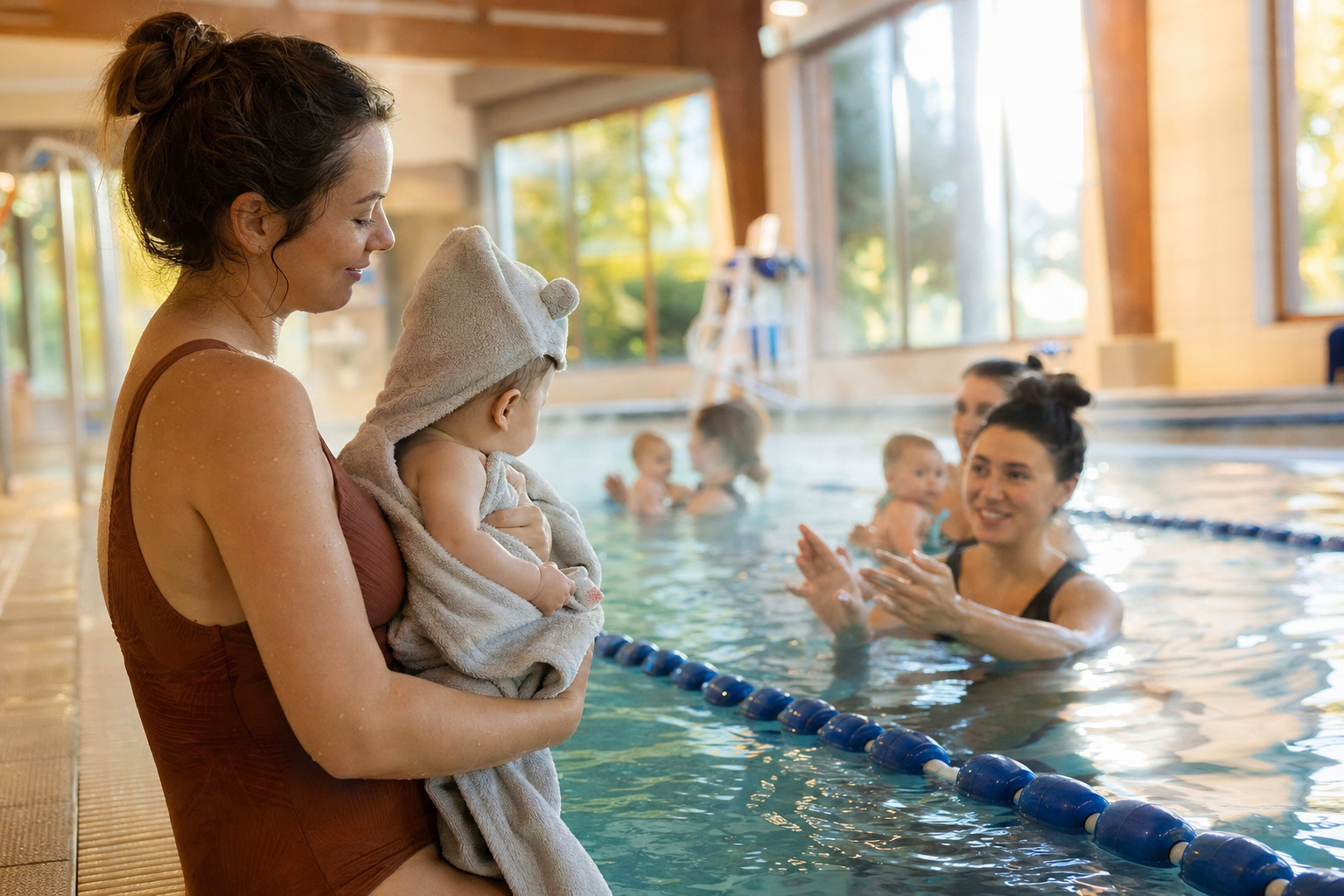
If your baby skipped a nap and you’ve paid for swim class, you may be wondering: Should you push through or skip it altogether? When a baby age 0-36 months is overtired, four key areas are affected—temperature regulation, listening and attention, crying, and recovery. Understanding these helps you decide.
How Tiredness Impacts Key Areas During Swim
Temperature Regulation
Babies have a high ratio of body surface area to weight, thin skin, and less insulating fat. These make them lose heat faster—especially when wet. If skin temperature drops just one degree below 36.5°C (97.7°F), oxygen use jumps significantly. Preterm or low birthweight infants are especially vulnerable. (chop.edu)
When a baby is overtired, they produce stress hormones that raise their metabolic rate. This boosts heat loss. In a cold pool or with a lot of splashing, their body may struggle to stay warm. A tired baby may shiver, go pale, or become chilled. That’s a safety concern.
Listening, Attention & Cognitive Load
Babies who miss a nap often show decreased attention spans. Their ability to follow instructions, engage, or learn new skills during swim class drops. Trying something like a structured plan—for example, the 10-Week Plan designed for consistent progress over time—can help when lessons happen regularly and when baby is well-rested. But on days they’re overtired, the same plan can become overwhelming.
Under fatigue, babies may zone out, become unfocused, or withdraw. They might not respond to cues like “blow bubbles” or “kick legs” because they’re simply too tired. That’s not unlike how toddlers around 4-6 months awake show early signs of overtiredness after just 1½-3 hours, or older babies after 2-3 hours awake. (revision-elearning.sdc.qld.edu.au)
Crying, Distress & Water-Swallowing
An overtired baby is more likely to cry—sometimes uncontrollably—which can interfere with the lesson. Crying may increase swallowing of water, especially when submerged or flipped. Water swallowing isn’t just messy; large amounts can tax hydration and strain circulation. (cetus.fi)
Also, if a baby is overtired, they may become clingy, refuse to let go of a parent, or resist any instructor cues. This adds stress for everyone. The noise, lights, and sensory inputs of a pool area feel much stronger when baby is beyond tired. Lessons become less about fun or learning and more about endurance—for the parent as much as the child.
Recovery & Rest After Class
After effort, activity, and sensory stimulation, babies need recovery. With a missed nap, recovery takes longer. An early bedtime might be necessary. If even one class pushes them into overtired territory, it can set back naps for the next day or lead to nighttime wake-ups. For babies under 1 year, missing that nap means you might pull bedtime earlier. Older toddlers may need downtime or a gradual wind-down routine instead of full class intensity. (kidsinthehouse.com)
[[ctababy]]
Safety Caveat: When Staying Isn’t Safe
An overtired baby may cling and cry, swallow more water, and lose body warmth faster. If these signs show, leaving early is a valid choice. Safety always outweighs sunk costs like how much you paid for that lesson.
Now that you know how tiredness affects baby in swim class, here’s how to decide whether to go or stay home. Use the Go/Skip decision tree below.
Go or Skip Swim Class: Decision Tree for Under-Threes
Start with answering these questions:
- How old is your baby?
- Younger than 6 months: very sensitive to temperature, prone to swallowing water. Strong case for skipping if overtired.
- 6–36 months: more resilient, but still limited capacity.
- How long has baby been awake?
- Within normal wake window? If yes, go. If past usual nap time or far past ideal awake span, skip.
What are the sleepy cues?
Good cues (yawning, glazing over, rubbing eyes) suggest skip. If baby seems alert and engaged, go.Are pool conditions ideal?
Warm water (≈ 87-94°F or 30-34°C), calm entry, towel ready, minimal waiting. If water’s cold or class involves lots of submersion/unfamiliar movements, leaning toward skip.How tight is your lesson schedule / payment barrier?
Yes, classes are expensive, but staying just because you paid can backfire—leading to distress or negative water association. Sometimes skipping once is better long-term.
What to do if you decide to go: tips to make it work
- Arrive early so baby adjusts to sights and sounds.
- Bring warm dry clothes and a hooded towel for after class.
- Feed or hydrate before class, not immediately after unless that’s their usual timing.
- Communicate with the instructor: shorter class, more breaks, earlier exit if needed.
If you skip: use the time for a nap or quiet play. Later in the week, try a class when baby is well-rested.
Decision Tree Summed Up
If your baby skipped a nap and is showing strong tired cues, or it’s well past their normal wake window, skip the swim class. If the lesson costs a lot and you feel pressure, remember: paying doesn’t improve baby’s ability to learn on a bad day. On go-days, make the environment as soothing as possible.
Final Thought
“Should I skip swim class baby did miss a nap?” is a question every parent wonders. Temperature drops faster in overtired babies; listening and focus suffer; crying, water swallowing, and recovery get harder. For ages 0-36 months, missing a lesson isn’t failure—it’s protecting wellbeing. Sometimes returning when baby is rested creates a more positive, safer, and more fun experience. Trust your instincts, watch the cues, and remember: one skipped class won’t ruin your child’s swim journey.
120+ swimming exercises sorted by age — with video and instructions. Developed by swim instructors, completely free.
120+ swimming exercises sorted by age — with video and instructions. Developed by swim instructors, completely free.