Baby Swim Lesson Guarantees: Read Carefully
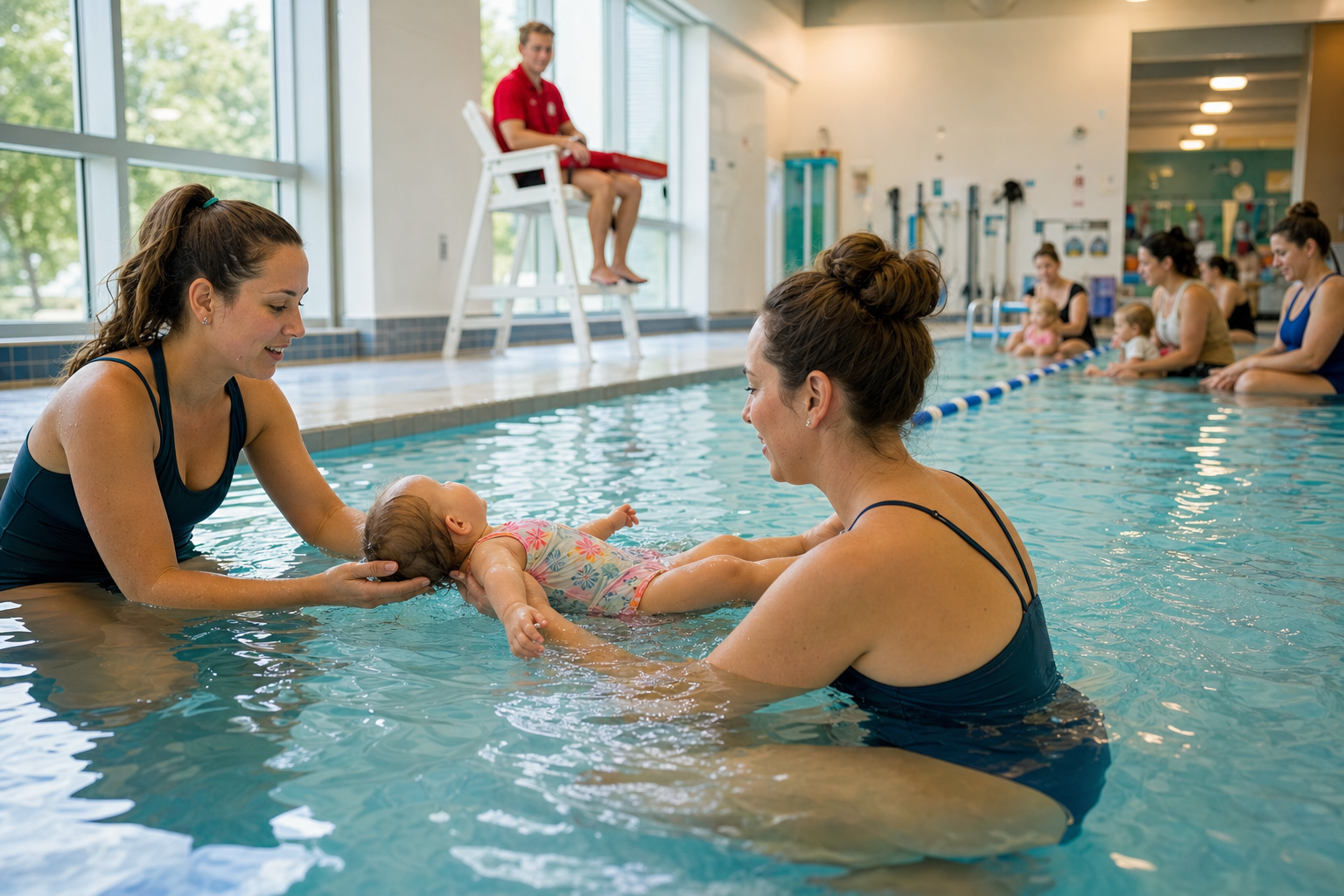
Many parents shopping for baby swim lesson guarantee or infant swim lessons results come across promises like “drown-proof in 10 lessons” or “float and swim independently after one package.” These can sound tempting, but they often overpromise and underdeliver—especially for babies ages 6–36 months. To help you pick lessons that set realistic goals and protect your child, here’s a guide on how to read guarantee claims safely, avoid pressure tactics, and choose milestone markers that actually fit your baby’s stage.
What Policy and Experts Say — and What They Don’t
The American Academy of Pediatrics (AAP) released a key policy statement in 2026 on drowning prevention. They recommend swim lessons start after a child’s first birthday, when toddlers become mobile and risk exposure to water increases. AAP finds no data that swim programs for infants under one year old lower drowning risk. While reflex back-floating can be taught to some infants, experiences of submersion may also be traumatic or misleading. (publications.aap.org)
Policies also stress that swimming lessons should never be interpreted as baby “drown-proofing”. Swim lessons are just one part of a broader safety setup that includes constant adult supervision, pool barriers, life jackets, and caregiver education. (healthychildren.org)
Why Guarantees Like “Swim-Ready” or “Fast Results” Can Mislead
Swim schools sometimes offer swim readiness or “survival” packages that claim babies will float, roll over, or even swim independently after a set number of lessons. But research suggests that most water competency skills need many lessons, especially for toddlers. A study comparing groups aged 1 to 5 years found significant gains after 4–8 lessons, but more advanced skills like breath control or floating without assistance often required 12–18 lessons—and many children still couldn’t do all the skills independently. (pmc.ncbi.nlm.nih.gov)
Packages that claim fixed timelines like “learn to swim in 20 sessions” often ignore individual development—things like coordination, emotional readiness, frequency of lessons, and even health status matter. There’s also risk in early submersion: infants under 1 year are not yet developed enough to regulate breathing or move their limbs properly for real survival swim skills. (publications.aap.org)
How to Read Guarantees Safely
When choosing a swim program for your baby or toddler, watch for:
If you want a structured way to build water confidence at home, the 10-Week Plan guides you step by step.
- Clear definitions: What exactly is guaranteed? A float, turning over, exiting the pool, or a fully coordinated swim?
- Age specifications: Is the guarantee valid for babies 6–12 months, or only for toddlers over 1 year?
- Lesson count and schedule: Does it specify how many lessons and how often? Are these full sessions with proper instructor ratio?
- Conditions: What happens if your child doesn’t meet the guarantee? Is there a refund, a free extension, or some other fallback?
These help you fight vague marketing promises and spot contracts that might pressure you into large purchases based on unrealistic outcomes.
[[ctababy]]
Healthy Expectation Markers: What Skills Matter, and When
For infants (6–12 months), realistic markers include getting comfortable in water, acclimating to wet and warm environments, and parent-child water play. For toddlers over 1 year, more relevant skills are:
- Entering and exiting shallow water without help.
- Back floating or turning over to float.
- Breath control underwater (briefly).
- Finding an exit or pool wall.
A common mistake is expecting complete swim competency—a full swim, stroke coordination, or swimming unsupervised—before a child is developmentally ready. Skills like front crawl or swimming laps often emerge around ages 4–6. (publications.aap.org)
A study of water competency skills in toddlers ages 1–4 found that many children couldn’t swim 25 meters without stopping, exit pools without ladders, or tread water for a minute. Only about 10% could perform all six key water competency skills at any age in that range. (pmc.ncbi.nlm.nih.gov)
How Many Lessons Are Enough?
If you’re wondering “how many swim lessons baby or toddler needs”, here are some research-based estimates:
- Four to eight lessons help toddlers gain basic skills like entering the water and simple exits.
- Twelve to eighteen or more are often needed for more advanced skills like floating, breath control, and modest self-propulsion.
- Consistency matters: weekly or twice-weekly lessons give better outcomes than sporadic ones.
Even after dozens of lessons, no child should be considered safe unsupervised. Guarantees that imply otherwise or promise drowning prevention are misleading. You might also check programs like the 10-Week Plan by swimy.org for a staged, realistic structure with measurable progress rather than sweeping guarantees.
Tips to Protect Your Child from Pressure and Overselling
When shopping:
- Ask for progress reports in writing: what skills your baby has practiced and what goals are realistic next.
- Get any guarantees in writing. Vague oral promises are hard to enforce.
- Consult your pediatrician about when your baby is ready, considering physical, developmental, and emotional readiness.
- Prioritize programs that integrate caregiver involvement—teaching you water safety and supervision framework helps beyond what the baby learns in lessons.
- Watch out for “large package deals” priced based on promises like “drown-proofing”—these often lock you in before results are clear.
Bottom Line: Reality Check
Lessons can build confidence, introduce early movement skills, help babies enjoy water, and reduce risk when your child is old enough. But there’s no quick fix. For babies under one, swim classes should be about acclimation and bonding, not guarantees of independent water survival. For toddlers, skills grow gradually, and many lessons are needed. Even then, supervision, barriers, life jackets, and caregiver safety education remain essential. According to the AAP’s “Prevention of Drowning” policy, swim lessons—no matter how good—do not make a baby or toddler drown-proof. (publications.aap.org)
Reading guarantee claims carefully, choosing programs based on milestones, and focusing on safety layers will help you get value without falling for risky promises. Stay skeptical, stay informed, and keep your child safe.
120+ swimming exercises sorted by age — with video and instructions. Developed by swim instructors, completely free.

120+ swimming exercises sorted by age — with video and instructions. Developed by swim instructors, completely free.