Breaststroker's Knee in Kids: Pain-Free Technique and Care
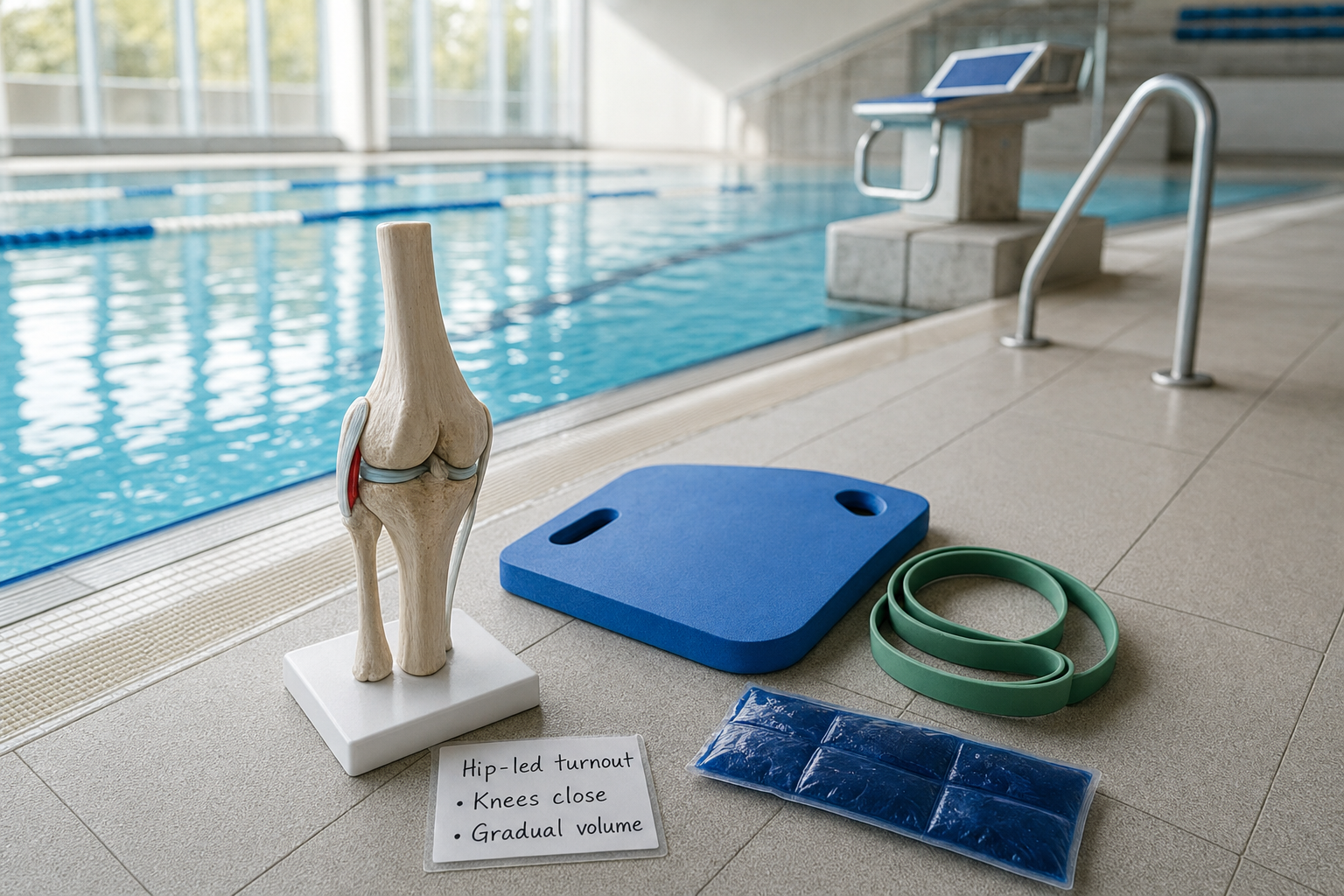
Knee pain during breaststroke doesn’t have to be part of the package. If your 8- to 12-year-old starts complaining of inner knee discomfort during the whip kick, you can act fast to protect their joints, save their fun, and prevent long-term issues.
Why the Whip Kick Stresses the Inner Knee
The breaststroke whip kick is unique. It begins with the child drawing heels toward the butt, then rotating the lower legs and feet outward, moving thighs apart, and forcefully extending and snapping the legs together. That outward turn—especially if the knees widen too far—places valgus stress on the inner knee, loading the medial collateral ligament (MCL) over and over. (peak-physio.com.au)
Kids whose technique is slightly off—knee joints drifting inward, feet turning from the knee instead of at the hip—add rotational stress and increase compression in parts of the joint not built for it. Over hundreds or thousands of kicks per week, those small flaws accumulate into the condition often called “breaststroker’s knee,” a kind of inner knee irritation. (swimminginjuriesawareness.com)
Hip-led Turnout and Volume: How to Protect Developing Joints
To reduce risk, two things matter most: refining technique and managing breaststroke volume.
First, hip-led turnout: the outward turn of the lower leg should come from the hip joint, not forced through the knee or ankle. Strong hip rotators and glute muscles allow the thighs to rotate naturally. Poor hip control leads to the knee collapsing inward and supports faulty movement patterns that overload the MCL. (peak-physio.com.au)
Second, gentle volume progression: Young swimmers should increase breaststroke distance slowly. If breaststroke repeats, hard kick sets, or competition training are thrown in suddenly, kids often feel the knee start to twinge. Mix in other strokes and leg drills, give the body time to adapt, and avoid doing too much too soon. (birminghambluedolphins.com)
A well-designed plan starts erring on the side of conservatism: maybe add just one more breaststroke set every week rather than doubling them. For ideas on structured progression, consider checking swimy.org’s 10-Week Plan which builds technique, strength, and volume in age-appropriate stages without overwhelming joints. (https://www.swimy.org/10-week-plan)
When to Rest, When to See a Pediatric Sports Clinician
Stopping or cutting back breaststroke is wise as soon as pain shows. If a child says “my knee hurts when I whip kick” or “it’s sore after practice,” it’s time to dial down sets, avoid forcing turnout, stop using fins or paddles to “power through,” and replace breaststroke with less stressful strokes until symptoms ease. Rest, ice, compression, and elevation help in the early stages. (childrens.com)
Seek medical advice when red flags appear: swelling, limp lasting more than 48 hours, pain that doesn’t improve after a few sessions of rest or stops going away between swims, clicking or locking motions, or symptoms that affect daily activities like walking or going up stairs. Those signs may point to deeper injury—MCL sprain, meniscus irritation, or other joint involvement—that needs professional diagnosis. (childrens.com)
[[ctakid]]
Warm-Up Basics and Technique Cues to Swim Comfortably
A solid warm-up protects knee joints. Start with gentle hip opens and dynamic leg swings on land: knees bent, knees together, rotating hips outward. Follow with a slow, controlled whip-kick drill in the water: knees stay close during leg recovery, don’t force feet too wide, focus on smooth glide between kicks. Teach the feeling of “turning from the hips, snug knees” so the child can sense if they are forcing the motion. (us.humankinetics.com)
Technique cues matter more than equipment. Forcing knee turnout, adding fins or paddles to power through pain, or pushing for breaststroke when fatigue sets in are common pitfalls. Those shortcuts usually make things worse. (swimminginjuriesawareness.com)
Green Lights vs. Red Flags: Parents’ Quick Guide
If your child is able to swim breaststroke without inner knee pain, not limping afterward, and not having swelling or locking, these are green lights: keep training, maintain good technique, monitor volume.
If they complain of inner knee pain during the whip kick, or pain worsens with kick sets, or knee empties out after just a few breaststroke laps; if swelling or limping happens, or if the pain lingers beyond two weeks despite rest and care—these are red flags. That means it’s time to rest breaststroke and see a pediatric sports clinician or physiotherapist. (childrens.com)
Parents, you know your child best: if something hurts and doesn’t improve, trust that. Forcing through pain always risks more serious damage.
From Pain-Free to Stronger Stroke
Once pain has eased, strength work helps. Target hip abductors, rotators, core muscles and glutes. On land, simple exercises like side-lying leg lifts, clam shells, resistance band hip rotations build control so knees track well. In water, let coach observe underwater footage if possible to check recovery width, knees’ alignment, feet turn. Train in small steps: short breaststroke drills with long recovery and glide, then gradual increase.
Final takeaway: knee pain in breaststroke kids is not inevitable. When adults catch technique faults early, manage kick volume reasonably, warm up well, and rest when needed, most young swimmers swim comfortably again. But never ignore swelling, limp, or signs that something’s more serious—those always warrant professional check-up.
120+ swimming exercises sorted by age — with video and instructions. Developed by swim instructors, completely free.

120+ swimming exercises sorted by age — with video and instructions. Developed by swim instructors, completely free.