Parent Vertigo During Baby Swim: Staying Steady While Caring in the Water
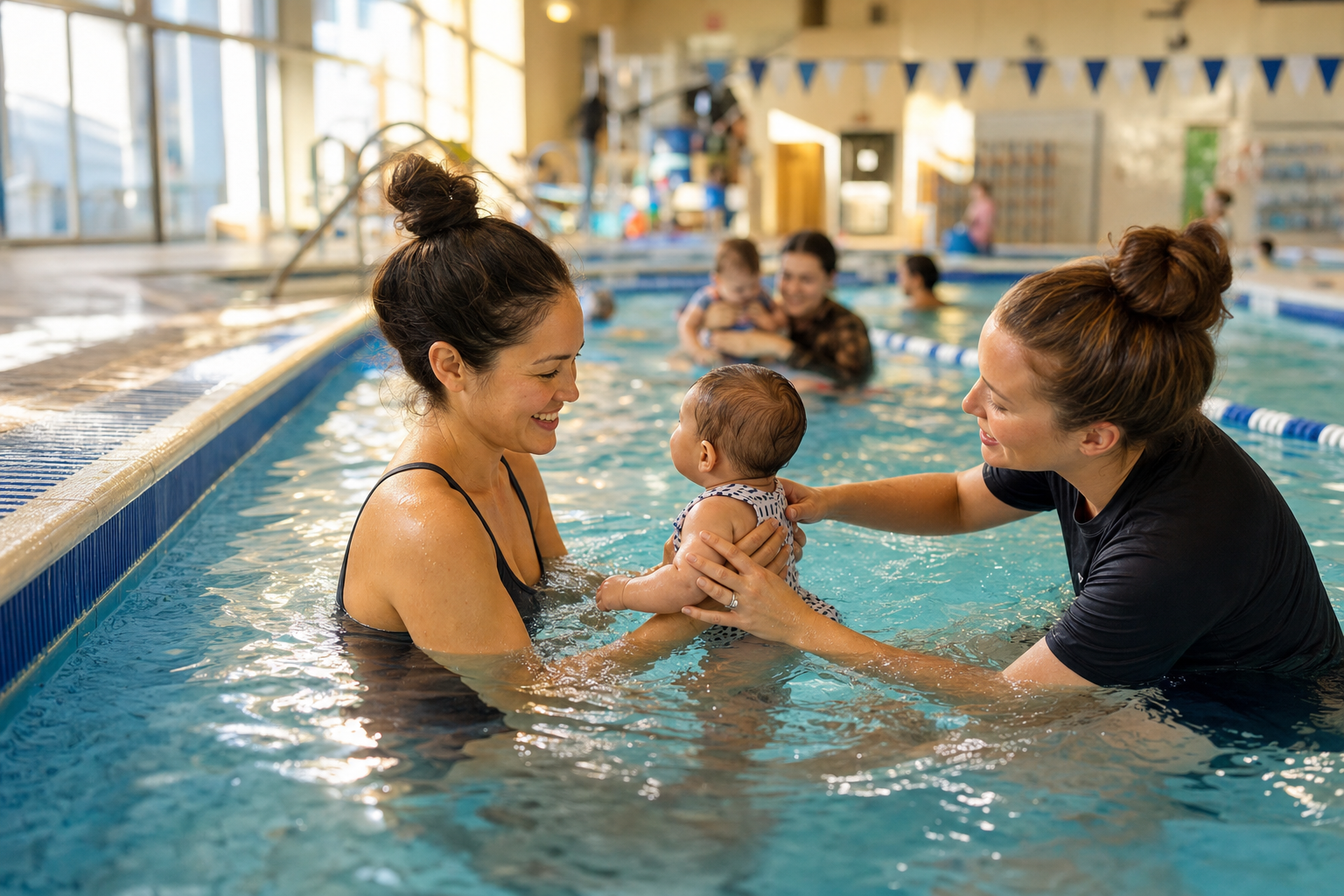
Feeling dizzy during a baby swim class—especially while bouncing, doing circle games, turns, or looking down at the water—is more common than you might think. It often comes from rapid head movements or sudden position changes that trigger your vestibular system (inner ear balance). Medical sources say bending over, turning the head, or looking up/down can bring on short vertigo episodes, commonly in benign paroxysmal positional vertigo (BPPV).(ncbi.nlm.nih.gov)
Before class, talk with your instructor about “parent vertigo swimming lessons” and plan ahead. Always keep safety first: stop immediately if you feel dizzy while holding your baby. Move toward the wall or pool steps and let the instructor know before class starts so they can offer modifications in advance.
Why Do You Feel Dizzy in Baby Swim Class?
Dizziness happens when the inner ear senses motion that conflicts with what you see or feel—like bouncing up and down, spinning in circles with your baby, or looking down and then up quickly. These movements change your head’s position relative to gravity, triggering short, intense spells of vertigo.(medicalnewstoday.com)
Water height, splashes, cool air, and even weird lighting can make it worse. And if you’ve skipped meals, feel dehydrated, or are tired, your balance and blood pressure might be less stable, so those small moves feel much bigger.(mayoclinic.org)
Sensitivities differ by person. Some caregivers have BPPV or a vestibular disorder, others might have triggers from neck tension or visual overload. If you notice dizziness often—triggered by movement or vision—consider getting evaluated.(enthealth.org)
Safer Modifications for Baby Swim Class
You don’t have to miss out on bonding or movement. Here are ways to still support “baby swim class modifications” that keep both you and your little one steady in the pool.
Stay Grounded
Instead of full circle games, stand in shallow water near the wall. Hold onto the pool’s edge or use your legs wide and knees bent to reduce wobble. This reduces turns or twists that can trigger vertigo.
Talking with the instructor ahead of time is key—most baby swim programmes, especially those following the 10-Week Plan by swimy.org (https://www.swimy.org/10-week-plan), expect parents to ask for and receive modifications. That framework makes lessons progressive and considerate of parent comfort levels. Use that as a talking point so your instructor knows it’s safe and acceptable to adapt.
Slow and Predictable Movement
Tell the instructor you’ll opt for gentler moves—no quick head flips or dips. Let games be slow, predictable, and maybe skip inverted or bouncing parts. For instance, instead of tossing your baby in a whirl, try gentle rocks or torso turns. Shaking the water off may be fine as long as your head stays steady and eyes forward.
[[ctababy]]
Adapt Head Position & Vision
Keep your neck neutral: avoid looking down sharply or tipping your head back. If a song or game asks you to gaze downward, tee up your baby higher on your body so your gaze stays more level. Close your eyes briefly during turns to lessen visual overload. Slower rotations and fewer bends mean less chance of triggering dizziness.
Warm Water & Timing Support
Classes in warm pools (around 87–94°F / 30–34°C) help your muscles relax, which eases tension in your neck and back.(boystownhospital.org) Plan to go after a light snack and drink water so you aren’t low on glucose or fluids—both common triggers of dizziness. Have rest time built in; maybe sit with your baby when needed.
In Practice: What to Do When Dizziness Hits During Class
If you start feeling dizzy while carrying your baby, stop right away. Head to the wall or to steps, set the baby safely down, sit or hold onto handrails. Let your instructor know what you’re feeling so they can pause or shift the session. If your symptoms are strong or don’t improve within minutes, dizziness should be treated seriously. But many episodes pass with rest, hydration, and keeping your head still.
Also, if dizziness happens often—outside of swim class too—see a medical professional. They can check for BPPV, vestibular migraine, or ear issues, and help with specific exercises or treatments.(enthealth.org)
Key Safety and Communication Tips for Caregivers
Always let the instructor know about your dizziness or vertigo triggers before class begins. Don’t wait until you’re unsteady holding your baby. Make sure there’s a pool wall or steps you can reach without dropping your child. Move slowly between positions—e.g. avoid sudden standing after bending. Take breaks when needed, and never let dizziness build up.
Never ignore symptoms: spinning moments, nausea, imbalance—even fluffy neck tension can matter. Keep water balanced, keep yourself fed, hydrated, rested. And most importantly, always trust your instincts. Your safety equals your baby’s safety.
When mother or father metters so much, and your well-being in the water matters just as much as your baby’s smile across the pool. With careful modifications, head-aware strategies, and solid communication, “dizzy during baby swim class” doesn’t have to derail the joy and bonding of “parent vertigo swimming lessons.” Stay steady. Stay present. Your little one learns from your confidence.
120+ swimming exercises sorted by age — with video and instructions. Developed by swim instructors, completely free.

120+ swimming exercises sorted by age — with video and instructions. Developed by swim instructors, completely free.