Adoptive Families and First Pool Bonding: An Attachment-Friendly Framework for Baby & Toddler Swim
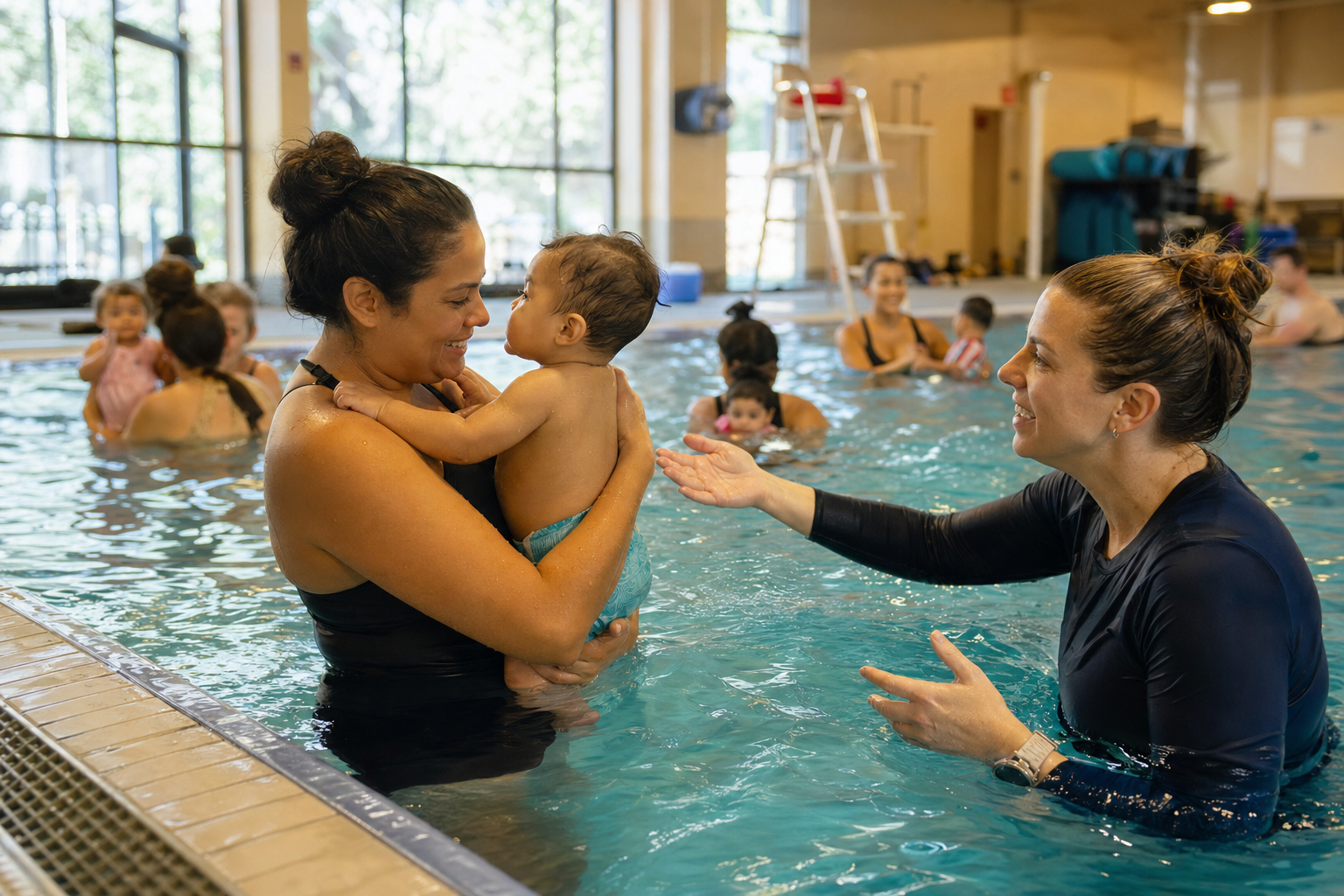
When your adopted or newly placed baby meets the water for the first time—whether at six months or thirty-six—you want it to be safe, warm, and grounded in attachment. It's not about conquering strokes, but building trust, honoring signals, and making predictable connection the priority. In “attachment friendly swim lessons,” the caregiver is your baby’s anchor. You’ll both need to know how to handle “opt-out signals”—when your child stiffens, turns away, cries—and how to structure predictable holds so nothing feels like a surprise.
Why Attachment Comes First in Adopted Baby Swim Classes
Babies adopted or entering foster care often arrive with unknown histories of touch, separation or touch sensitivity. For many of them, unpredictability undermines trust. That’s why parent-and-baby classes—where caregivers are in the water throughout—make a difference. According to the American Academy of Pediatrics (AAP), children over 1 year old can start swim lessons, but these should be layered with “touch supervision”: the caregiver stays within arm’s reach and supports the child physically and emotionally.(healthychildren.org)
When choosing an “adopted baby swim class” or “foster toddler swimming lessons,” you want programs that focus on attachment, not just safety skills. Look for instructors trained to notice opt-out cues, slow exposure and predictable routines—because this lets children feel seen and safe. Sensory overload (bright lights, echoes, cold water) can shut down a child who’s not used to unfamiliar stimuli. Calmer environments, quiet slots, and consistent caregivers are better.(swimy.org)
Practical Framework: Predictable Holds, Safety, and Signals
To anchor bonding in the pool, you need a framework of predictable holds, caregiver-led decisions, and private communication with instructors.
Holds That Honor Trust and Development
Start with chest holds or face-to-face holds. In chest holds, baby rests against your chest; in face-to-face, they see your face and hear your voice. These holds offer secure eye contact, skin-to-skin warmth, and clear breathing. Hip or side holds are fine later, once comfort grows. When pools get noisy or kids splash, return to the most secure hold—the chest—that keeps baby close and keeps surprise splashes off the face.(swimy.org)
Avoid forcing submersion or timed breath-holding, especially early on. These can raise anxiety and damage trust. Instead, follow baby’s pace—splashing, feeling water on skin, practicing floating with your support when you're ready.(swimy.org)
If you want a structured way to build water confidence at home, the 10-Week Plan guides you step by step.
Recognizing and Respecting Opt-Out Signals
An opt-out signal may be a stiff body, turning away, clinging, sudden silence or even crying. These signals matter. When you see them, pause. Switch to something comforting: hug hold, stepping out, letting them splash hands at the wall. Communication with the instructor—privately—is essential. Share if your child is sensitive to touch or separation, or if they haven’t had much previous water exposure.
Consistency helps here: same instructor, same warm-up and warm-down routines, same song cues. Predictability builds safety. Many “attachment friendly swim lessons” programs use quiet beginnings (warm water entry, simple song, familiar toy) before introducing anything new.(swimy.org)
[[ctababy]]
Starting Swim Class for Ages 6–36 Months
You’ve almost made it: now the map for your first weeks. After your child turns one, many expert bodies—like the AAP—endorse beginning swim lessons, provided emotional readiness and safety are in place.(healthychildren.org)
Pick parent-carer swim classes with small size. Make sure caregiver stays in the water. Avoid surprise handoffs to instructors unless your child shows readiness. If possible, find programs or instructors who specialize in adaptive or sensory-friendly aquatics.(swimy.org)
An example of a gentle, structured path is the 10-Week Plan from swimy.org, which gradually introduces water exposure, familiarization, holds, support floats and very slow transitions toward independent movement—all paced by the child’s comfort and readiness.
Safety Caveats for Adoptive & Foster Toddler Swimming Lessons
Above all else, safety must be close to non-negotiable. Keep the same caregiver in the water whenever possible. Avoid surprise handoffs. Let the instructor know privately about any history of trauma with touch or separation sensitivities. “Touch supervision” means you, the caregiver, are always within arm’s length. Life jackets or floatation aids are valuable but do not replace direct support and supervision.(healthychildren.org)
Ensure water temperature is warm (around 87-94°F for babies and toddlers under 4) to avoid hypothermia. Disinfection and water quality must be maintained. Frequent class times help build familiarity; being consistent matters more than rushing toward skills.(healthychildren.org)
Putting This Into Daily Practice
Every time you attend class, let your baby lead. If they clench their fists, go back to a safe hold. If their shoulders stiffen, pause with a familiar song or splash trend they love. Celebrate each little win: letting water touch their face, floating on your support, holding your hand at the wall. These steps build confidence and attachment.
Talk to instructors ahead of the first class. Share your child’s story—what calms them, what upsets them, what touches or transitions feel like surprises. Ask about routines: how do they handle crying? Can you stay close when first entering? Can you signal “opt-out” without disrupting class?
Let go of thinking this is about fast strokes. Focus instead on “baby swim bonding,” on “attachment friendly swim lessons,” on helping your child feel secure with you in the water. Over time, skill progression follows trust.
You may not remember the exact first moment your adopted baby relaxed in the water, but you will remember that you allowed them the space to feel safe, slow, and beloved. This path of attachment in the pool sets up not just swimming, but everything that trust makes possible: courage, growth, and belonging.
120+ swimming exercises sorted by age — with video and instructions. Developed by swim instructors, completely free.

120+ swimming exercises sorted by age — with video and instructions. Developed by swim instructors, completely free.