Tiny Pool, Real Progress: Swim Drills for Kids in 10-Yard Lanes
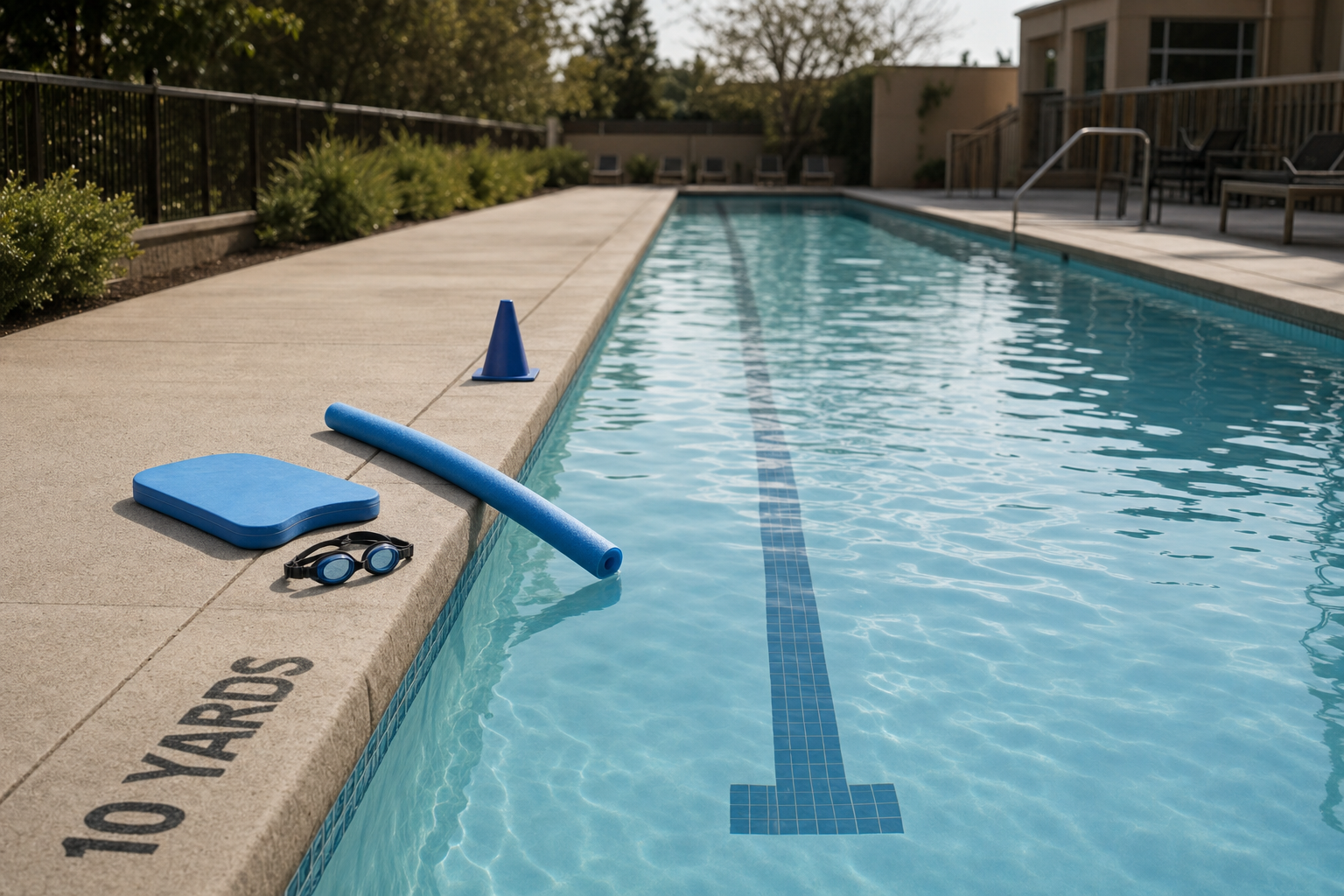
When you only have a hotel or condo pool—a narrow 10-yard lane or so—you can still build your child’s swim skills and endurance. The key is working with short, focused drills that improve streamline, balance, breathing rhythm, and push-offs—without relying on long underwater swims or crowded lengths.
What to Prioritize in Small Pool Settings
In tight space, every inch counts. The push-off from the wall in streamline position becomes more important than ever, because you’ll often swim just one or two strokes before needing to turn. Balance in the water (hips high, toes pointed), breathing rhythm (steady exhale underwater, quick inhale when head clears), and clean body position are foundations you can build in a 10-yard lane. Safety must always come first: no breath-holding contests or prolonged submersion, always adult supervision, and clear rules for sharing the pool with others. WaterWiseKids advises parents to be active watchers, choose shallow zones when possible, and set rules to avoid accidents. (waterwisekids.com)
Drills You Can Do in a Hotel or Condo Pool
Streamline Push-Offs and Glides
Ask your child to hug the wall, stretch arms overhead into a tight streamline, toes pointed, head tucked between the arms, then push off. The goal: glide as far as possible with no strokes. This teaches strong body line and helps them feel what momentum off the wall can do. Add gentle flutter kicks after the glide for balance practice. These work very well in short pools because your child can focus on perfect form without needing long distance. (swimy.org)
Side-Kick and Wall-Kick Drills
Holding onto the wall (or using a kickboard in shallow water), have your child point one arm forward and rest their head on that shoulder as they kick from the hips. Rotate gently so the body feels balanced. Wall kick / vertical kick drills strengthen core and leg alignment. These drills help prevent hips from sinking and toes from dropping. Real gains come fast when you isolate the kick without worrying about full strokes. (swimy.org)
Breathing Rhythm and Face-In Games
If you want a structured way to help your child progress at home, the 10-Week Plan guides you step by step.
Start with blowing bubbles at waist- or chest-deep depth. Have them submerge face, exhale fully, rise to inhale. Then move to “blow-and-glide” drills: push off wall, streamline, exhale underwater, break the surface to inhale. These drills build breathing rhythm without overtaxing lungs. Avoid prolonged breath holds; fun rhythm games and safe submersion matter more. (flowermoundswimlessons.com)
Turns and Push-Offs with Targets
Even in a 10-yard pool, you can use landmarks placed one or two body lengths from the wall—a tile, a cone, a sticker—to mark where the last stroke before touch-turn should begin. Practice the “elbow-high pivot” open turn (feet-first, not flips), then push off straight into streamline. The rhythm “touch-turn-push” helps with wall awareness and improves push-offs without pushing the pool rules. (swimy.org)
[[ctakid]]
Sample 10-Yard Pool Set for Kids (Ages 6–12)
Here’s a mini-set you can do with limited space. It uses short drills that build skill, not volume.
Warm-up (5 minutes): Start with bubble breathing and easy kicks while holding the wall. Do 2 streamline push-offs glides to get the feel.
Main set (15-20 minutes):
• 4 × push-off glides, glide as far as possible, then 3 strokes freestyle, pause and breathe.
• 4 × side-kick drills (one arm forward, head resting) for 15 seconds, then switch side.
• 4 × elbow-high pivot drills: mark where turn starts, swim in, touch, pivot, push off in streamline.
Rest long between repeats so form stays clean.
Cool down (5 minutes): Gentle floating, relaxed breathing games, light kicking.
If you want a structured weekly progression, Swimy’s “10-Week Plan” breaks core swim skills into short sessions that cover streamlines, push-offs, kicking, breathing, and turns so you build confidence and skill gradually. (swimy.org)
Safety & Pool Etiquette Tips
Never turn every small pool session into a wall-kick or turn competition. Kids often try to push too hard or stay underwater too long. Always supervise actively (no phones, no distractions), keep drills short (5-15 minutes per session), and require rest between drills. Follow local pool safety rules, and in public hotel pools set clear sharing rules: others might want to swim, dive, or play loudly—your child’s drills should be flexible around other users. (waterwisekids.com)
How to Avoid Common Pitfalls
Some parents try to turn every length into a wall-kick contest; this can sacrifice breathing form, core alignment, and turns. Always balance those with breath control and streamline drills. Another trap: ignoring other pool users—crowded hotel pools or shared condo amenities need flexibility. If someone else is using the wall, switch to side-kick drills or kicking in deep water. Respect lane space, share the wall, avoid clashes so your child learns both technique and pool community respect.
Final Thoughts
Working in a 10-yard lane or small pool doesn’t mean small progress. With regular drills for streamline, push-offs, balance, and breathing rhythm, children aged 6-12 can grow stronger and swim more efficiently. Use short play-rich sessions, keep safety front and centre, and build skills gradually. Before long, those tight turns and glides will translate into confident strokes in any pool.
120+ swimming exercises sorted by age — with video and instructions. Developed by swim instructors, completely free.

120+ swimming exercises sorted by age — with video and instructions. Developed by swim instructors, completely free.