Wildfire Smoke Days: Should Kids Swim or Skip Lessons?
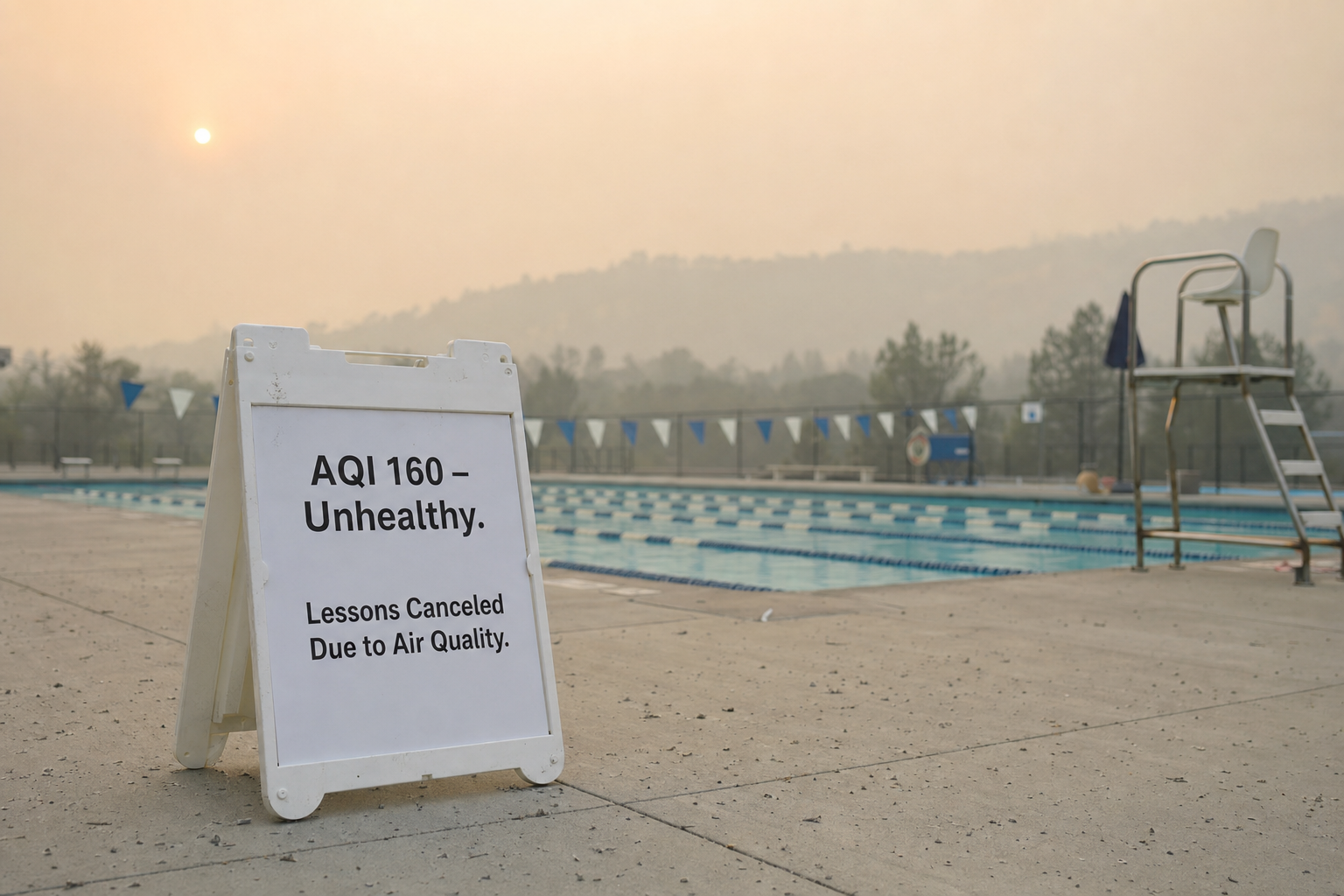
Wondering whether to take your 3-to-12-year-old to swim lessons when wildfire smoke rolls in? It’s a tough call. Here’s a clear decision-tree using local AQI that helps you decide between swimming in wildfire smoke or skipping lessons—plus what to watch out for, especially if your child has asthma, and what alternatives you can choose.
Know the Risks When Kids Swim During Smoke Events
Wildfire smoke contains tiny particles (PM2.5) and gases that irritate lungs, worsen asthma, and affect heart and lung development in growing children. Research shows even in moderate smoke, children breathe faster and take in more air per body weight than adults, so they get a bigger dose of pollutants. (cdc.gov) For kids with asthma or respiratory issues, smoke triggers coughing, wheezing or asthma attacks. (cdc.gov) Importantly, indoor pools aren’t always safe unless ventilation, filters or HVAC systems are high quality—chloramines and trapped smoke inside poorly ventilated buildings can also harm sensitive lungs. (aahealth.org)
Follow This Simple AQI Decision Tree: Swim or Skip
Here’s a decision tree to help you decide whether to head to the pool or reschedule lessons based on your local AQI (Air Quality Index). Use real-time data from sources like AirNow or equivalent in UK/AU.
Outdoor Pools
If lessons are outdoors, follow this:
- AQI 0-50 (Good): Go ahead. Swimming outdoors is fine.
- AQI 51-100 (Moderate): Sensitive children (asthma, allergies) should slow down or take extra breaks. Others okay.
- AQI 101-150 (Unhealthy for Sensitive Groups): Skip outdoor swim. Reschedule or move lesson indoors if indoor AQI is clean.
- AQI 151-200 (Unhealthy) and above: Cancel outdoor lessons. Health risk for all kids.
Indoor Pools
Even indoors, smoke can sneak in. Consider these:
Does the building have a modern HVAC system with high-efficiency filters (MERV-13 or higher, or HEPA)?
Is fresh air intake controllable or can the facility recirculate clean air properly?
Are chloramines under control? Crowded indoor pools with warm water worsen air quality via disinfection by-products. (aahealth.org)
Drylands or drills: Practice kicks, flutters, finger-drag technique or pretend breathe outs of the pool.
Reschedule: Many swim schools offer make-ups. Avoid losing momentum but not at the cost of health.
Use your plan: If your child is working through something like the 10-Week Plan swim program, it’s fine to miss a week and catch up. One skipped session won’t derail progress.
Indoor lessons are safer when AQI is up to 150 and ventilation + filtration are good. If AQI > 150, even indoors may pose risks, especially for children with asthma. Skip or reschedule.
[[ctakid]]
What Parents Should Do: Practical Tips & Alternatives
When smoke threatens your child’s swim lesson, here’s what to prioritize:
- Prioritize asthma: Kids with asthma need their inhaler ready, and for severe or uncontrolled asthma, better to stay home.
- Check ventilation: Ask pools about their air systems. If filters are old or windows can’t close tightly, air quality may still be poor.
- Understand mask limits: Masks are useless in water. Even if swimmers wear an N95 or surgical mask outside, it offers zero protection while submerged or splashing water.
If you decide to skip, here are alternatives:
Regional Wildfire Season & Timing
Wildfire season differs by region: Pacific US states typically summer through fall, Australia during dry and hotter months, parts of the UK have variable smoke drift from far-away fires. When your region’s seasons are coming, stay extra alert to AQI forecasts. Plan swim lessons early morning when air is cooler and often cleaner.
Indoor Pool Air Quality: What to Ask & Look For
When evaluating indoor pools to decide if it’s safe on a smoky day, ask:
- What filter type do you use? How recent are filters replaced?
- Can you set the HVAC to recirculate clean air and reduce outdoor air intake during smoke events?
- What are the humidity and chlorine/chloramine readings? Do they smell strongly of chlorine?
Look for windows or vents sealed, fresh air intake controls, visible dust or smoke smell entering, or discomfort among other swimmers—even healthy ones.
Final Thoughts: When to Skip Lessons
- If AQI is “Unhealthy for Sensitive Groups” (101-150) and your child has asthma or breathing issues, skip outdoor swimming.
- If AQI reaches “Unhealthy” (151-200) or worse, skip both outdoor and indoor unless you have confirmed excellent air filtration.
Remember, swimming in wildfire smoke can seem like a small risk, but for school-age kids, repeated exposure adds up. It’s better to miss a lesson or two than to deal with asthma flare-ups or long-term lung irritation. If unsure, reschedule, do dryland, breathe easier, swim safer.
120+ swimming exercises sorted by age — with video and instructions. Developed by swim instructors, completely free.

120+ swimming exercises sorted by age — with video and instructions. Developed by swim instructors, completely free.