2026 Sunscreens for Swim Kids: What Actually Changed (and What to Buy)
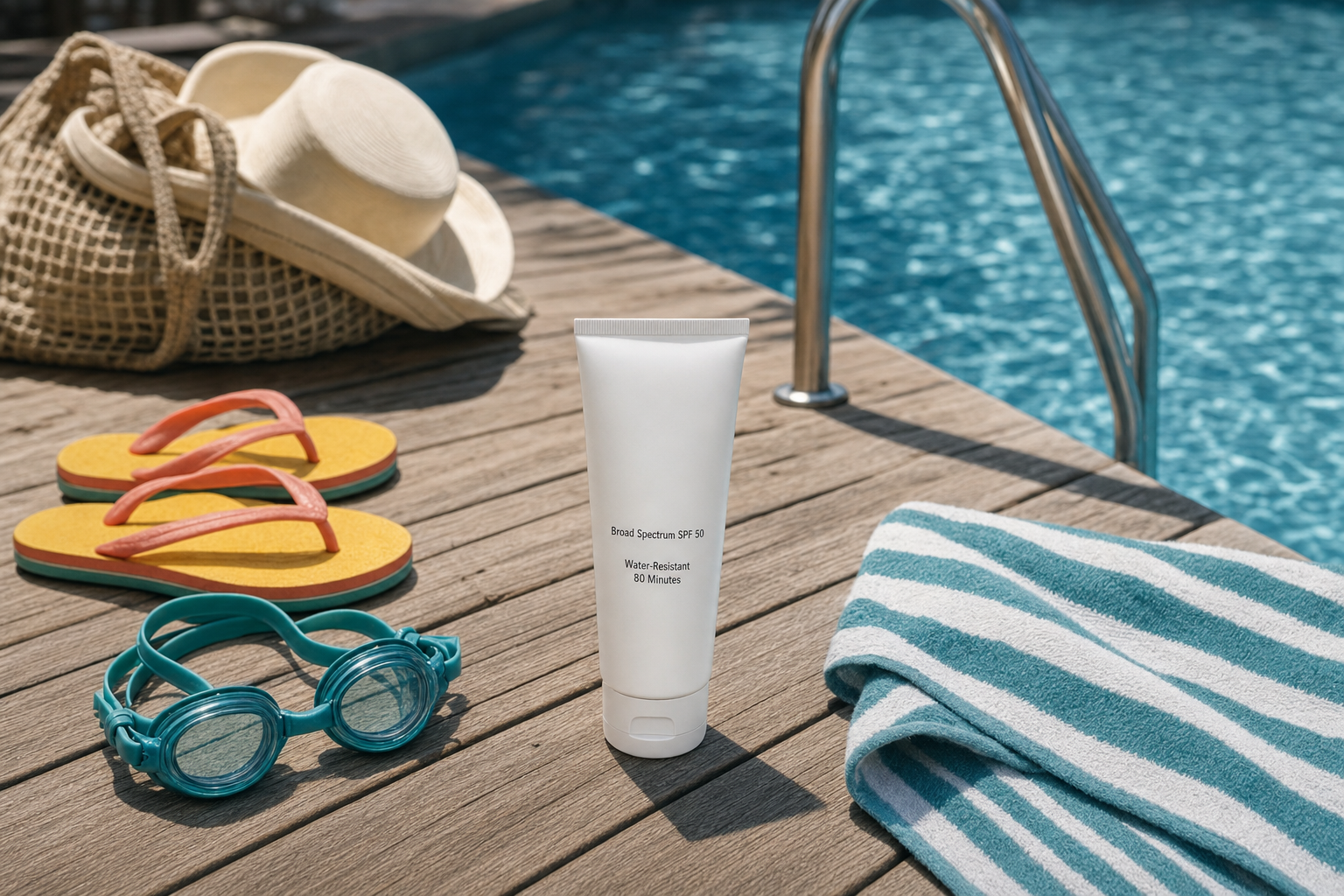
If you're a parent of school-age children (ages 3-12), you’ve probably noticed recent headlines about new sunscreen filters and ingredient updates. It’s confusing out there. Here’s what’s different in 2026, what matters now for kids swimming, how water-resistance labels work, and what to buy for the pool vs the beach so you feel confident protecting your child.
What’s New in 2026: Bigger UVA Gains and Safer Ingredients
In June 2026, the U.S. Food and Drug Administration (FDA) approved bemotrizinol (aka Tinosorb S or PARSOL® Shield) as a new sunscreen active ingredient. This is the first new filter approved in the U.S. in over 25 years. It offers stronger protection across both UVA and UVB rays, and greater shelf stability without losing its effectiveness. (fda.gov) Parents should know this means sunscreen formulas are now improving, especially for children who spend hours by the pool or at the beach. (apnews.com)
Also in 2026, the FDA issued a final administrative order removing PABA (aminobenzoic acid) and trolamine salicylate from the list of sunscreen actives that can be considered “generally recognized as safe and effective” (GRASE). Those ingredients are now officially off the list because their risks outweigh their benefits. (fda.gov) At the same time, zinc oxide and titanium dioxide keep their GRASE status, which is great news for mineral sunscreen fans. (fda.gov)
Another major change has to do with UVA protection. The final order proposes that all sunscreens with SPF 15 or higher must satisfy a new UVA I/UV ratio requirement of 0.7 or above. That means stronger coverage against deeper-penetrating UVA rays, which contribute to skin aging and risk for melanoma. (fda.gov)
Understanding Water Resistance: What Labels Really Mean for Kids
When your child swims, sunscreen faces its biggest test. In 2026, the FDA clarifies that water-resistant sunscreens must be tested and clearly labeled for 40 minutes or 80 minutes of effectiveness during swimming or sweating. Anything beyond that—“waterproof,” “sweatproof,” “sport”—must not be used on bottles, because they are unregulated and usually misleading. (fda.gov)
If your child is also working through swim levels or learning to swim more confidently this season, you might also find helpful structure and safety in the 10-Week Plan of swimy.org for building up swim skills, but still pair that with strong sun protection to prevent UV damage. https://www.swimy.org/10-week-plan
[[ctakid]]
So when you're shopping for swim days: check for “water-resistant 80 minutes” if your child’s going to be in and out of water. If it’s only 40 minutes, plan more frequent reapplication. And even with 80-minute formulas, reapply after towelling off or heavy sweating. Note that broad-spectrum protection still matters—many sunscreens protect UVB well (SPF), but not all UVA equally. Look for newer formulas that mark the improved UVA/UVB ratio.
Pool vs Beach: Which Sunscreen Style Fits Best
Pool swimming: Chlorine, splash, and short sessions. A water-resistant SPF 30 or 50 with mineral filters like zinc or titanium will handle this well, especially if it now includes the new bemotrizinol or paired with stable UVA filters. Mineral tends to be gentler around eyes and less likely to sting, but not always—some chemical filters are now formulated to reduce eye irritation too.
Beach swimming: Harsh sun, salt, sand. Here go for a higher SPF 50, very water-resistant (80 minutes) formulation. Look for a mix of filters—mineral or modern chemical filters including bemotrizinol—that can survive sun, water, and rubbing by towels or sand. Always cover lips and the tops of feet, areas commonly forgotten but vulnerable.
What Parents Should Look For: Your Sunscreen Checklist
First, always choose broad-spectrum SPF 30 minimum, but 50 is better for full beach exposure. Second, check the ingredients: formulations using zinc oxide, titanium dioxide, or bemotrizinol now are preferred for safety and stronger UVA protection. Third, confirm water resistance for swimming—ideally 80 minutes for beach, at least 40 for pool play.
Kids don’t read labels, so you do: avoid ingredients no longer regarded as safe (like PABA or trolamine salicylate), check for eye-friendly formulations, look for tint or oil controls if your child hates the greasy feel. And always slap on sunglasses with true UV protection plus swim specific coverage.
Common Pitfalls Parents Often Miss
Never assume a “mineral” formula won’t sting—if it lacks proper formulation, it still can. And while mineral filters are sturdier, they might need thicker application. Don’t gloss over UVA coverage: SPF focuses on UVB (sunburn), but UVA causes longer-term damage. Always ensure the sunscreen is “broad spectrum” and seeks the new UVA ratio if visible on newer labels.
Also, many skip lips and the tops of feet because they think they’re small or overlooked. These places burn easy. Use a lip balm with SPF 30+, and rub sunscreen well over feet, especially when there’s sand or flip-flops after beach or pool.
Bottom Line: What Changed and What to Buy Now
In short, 2026 delivers the first new U.S. sunscreen filter in decades (bemotrizinol), tighter rules around UVA protection, and official removal of older unsafe ingredients. For school-age kids swimming this season, go for broad-spectrum SPF 30+, water-resistant formulas clearly marked 40 or 80 minutes, ideally using mineral or bemotrizinol filters, protect their eyes, lips, feet, and reapply often.
You’ll feel a lot better handing them sunscreen knowing what’s under the label truly stands up, not just in the lab, but in every splash, every swim, every sandy footstep at the beach.
120+ swimming exercises sorted by age — with video and instructions. Developed by swim instructors, completely free.

120+ swimming exercises sorted by age — with video and instructions. Developed by swim instructors, completely free.