Accessible Swim Days: A Parent Checklist for Kids with Mobility Needs
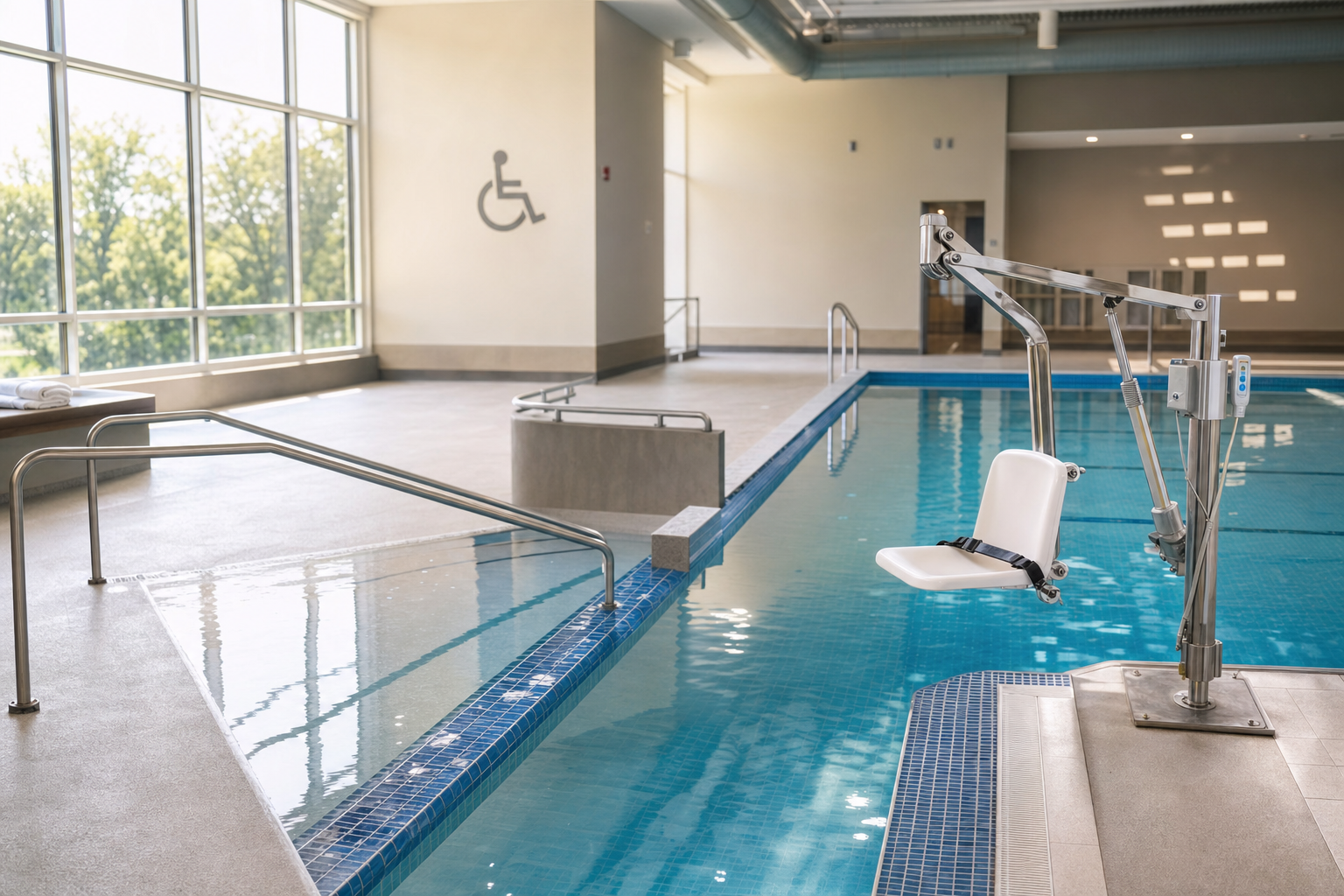
Choosing a pool that truly works for your child with mobility needs is about more than just whether it’s “nice.” It’s about dignity, safety, and independence. When lessons are in a pool with a fixed lift, zero-entry, or transfer wall that meets ADA and Access Board standards, children ages 3-12 can participate fully, feel secure, and build real skills.
Below, you’ll find what to ask, how to check venues, scripts for calling ahead, and gear tips for lessons so your child can thrive in accessible swimming lessons.
What ADA and Access Board Standards Tell You: What Makes a Pool Really Accessible
For any venue offering accessible swimming lessons, these features are key. A large pool (300 linear feet of wall or more) must provide two means of entry and exit. One must be a pool lift or sloped entry. The second can be another lift, a transfer wall, a transfer system, or pool stairs. Smaller pools must provide at least one means of entry, either a lift or sloped entry. These rules come straight from the ADA’s 2010 Standards and ADAAG guidance. (ada.gov)
If there’s a fixed pool lift, its seat height raised should be between 16-19 inches from the deck. In the raised position, the seat should overhang at least 12 inches inside the edge of the pool, with clear deck space (36 inches wide by 48 inches long minimum) beside the seat so children can safely transfer. Lifts must allow unassisted operation and have a lifting capacity of at least 300 pounds. (access-board.gov)
Transfer walls offer another option. Their height must be 16-19 inches measured from deck, width between 12-16 inches so a child can sit and pivot, and clear deck space of 60×60 inches to make transferring easier. Grab bars must be included. (hastingswaterworks.com)
Zero-entry or sloped entries are gentle slopes into the pool (often called beach entries), providing firm, stable walk-in access without steps or lifts. The slope must not exceed 1:12 (~8.33%) and should extend into the water to a pleasant depth—not just ankle depth, but enough for children to float (24-30 inches). ADA demands at least one sloped entry or lift. (access-board.gov)
Pitfalls: sometimes pools have lifts that aren’t deployed (e.g. staff don’t bring them out), or deck space is too narrow so transfers are unsafe. Also watch for slippery surfaces, high barriers around showers, or changing areas without accessible routes. The ADA Standards require clear routes to all parts of pool facilities. (access-board.gov)
If you want a structured way to help your child progress at home, the 10-Week Plan guides you step by step.
Calling Ahead: What to Say so You Know Before You Go
Here’s a script you can use when calling or emailing a pool, swim school, or community centre to check if their setup is truly ADA compliant and ready:
“Hello, my child is 6 years old and has mobility needs. We’re interested in your accessible swimming lessons. Before we book, I’d like to check a few things:
• Do you have a fixed pool lift or a zero-entry (sloped) entry? If a lift, is the seat height between 16-19 inches and is there clear deck space beside it?
• Do you offer a transfer wall or transfer system, and is the deck space around it at least 60×60 inches?
• Are these features permanently available, or do I need to bring anything or request setup in advance?
• Could I visit during a class to assess noise, deck width, and audience-to-class ratios?”
[[ctakid]]
This makes sure you know whether the pool meets the standards before investing time and money.
Gear Tips: Getting the Right Equipment for Comfort, Dignity, and Safety
The right gear can make a big difference in how comfortable lessons feel for your child. Dignity matters—a bathroom break shouldn’t be stressful, and swimsuits should not be a barrier.
Adaptive swimwear that includes side zippers, magnetic or Velcro closures, or built-in access for medical devices helps a lot. Rash guards, full back openings, and smooth fabrics reduce irritation and strain. Brands like Cat & Jack and Bolster specialize in swimwear with these features. (reviewed.com)
Floatation devices should support trunk control and allow free movement of arms. Avoid bulky armbands that restrict upper body motion. Look for adaptive vests or belts designed for special needs. Also, bring familiar sensory items (a towel, water shoes, favorite goggles) to reduce anxiety. (sportable.org)
Finally, at home or before lessons, practice using portable gear: short-blade fins (once ready), kickboards, noodles, that kind of thing. These help with kicking technique, body alignment, and confidence. Some swim-lesson plans outline how to use aids over time, like swimy.org’s 10-Week Plan, which integrates simple gear and gradually builds skills so your child isn’t overwhelmed. (swimy.org)
Venue Walkthrough: Testing the Pool When You Visit
When you visit, check specific spots:
Walk onto the deck using your child’s mobility device or walk beside if they can walk. Is the route wide (minimum 36 inches), smooth, slip-resistant? Are there handrails?
Locate the lift: is the seat fixed? Are the controls reachable from both water and deck? Are cables and mechanisms clear of obstruction? Try calling the lift if possible.
Check the sloped entry if there is one: how steep? Is there a handrail on both sides? Does the material feel stable underfoot?
Inspect the transfer wall: height, grab bars, space to turn a wheelchair or device. Are surfaces rounded, safe, and clean?
Evaluate the surrounding deck: is space narrow (pitfall)? Are there benches or other obstacles that limit movement or spotters helping transfers?
Summary: What to Expect for a Great Lesson
When you find a pool and swim school that check these boxes—fixed lift or sloped entry plus a secondary entry like a transfer wall, gear that works without compromising dignity, space that’s wide enough, equipment deployed—the lessons become truly accessible. Your child can focus on kicking, floating, strokes, and fun, rather than battling the pool setup itself.
Accessible swimming lessons are doable, dignified, and empowering. With the right pool and gear, ages 3-12 can join in confidently and safely. When every lesson begins with assurance, no time is wasted—just water, smiles, and progress.
120+ swimming exercises sorted by age — with video and instructions. Developed by swim instructors, completely free.

120+ swimming exercises sorted by age — with video and instructions. Developed by swim instructors, completely free.