ADHD-Friendly Swim Games That Build Focus (Ages 6–10)
If you're a parent of a school-age child with ADHD (ages 6–10), here's what matters most in swim games: short tasks, minimal waiting, and clear rules. Kids this age respond best when skip full-pool sprints or complicated drills—instead, give them structured games that reinforce streamline, kick rhythm, and breath control without long holds or lines. Keep them moving, listening, and having fun, and you’ll see focus improving fast.
What Makes a Game ADHD-Friendly
First, ADHD swim games succeed when movement is constant and feedback is instant. Waiting in line, long instructions, or underwater breath-holding traps drain focus and can frustrate kids. Best practices include routines that repeat the same sequence, visual cues (lane ropes, colored spots), and splitting lesson time into tiny blocks—two to five minutes of drill or play, then switch. Use games to teach kicks, streamline posture, or breathing—each with simple rules and zero long waits. Research confirms that swim lessons built this way raise selective attention, body coordination, and mood among children with ADHD. (swimy.org)
Safety must also guide what you pick. Never encourage games where underwater breath-holds are extended. Enforce frequent breathing or surface exposure. Always supervise closely, especially when kids are impulsive. Follow lane etiquette (one swimmer ahead, one behind; move in your lane), so games don’t mix with chaos. (swimy.org)
Best Games for Kids Ages 6–10
Here are several swim games that help build focus, streamline, kick rhythm, and breath control—all with minimal equipment and short holds.
Red Light, Green Light (Pool Edition)
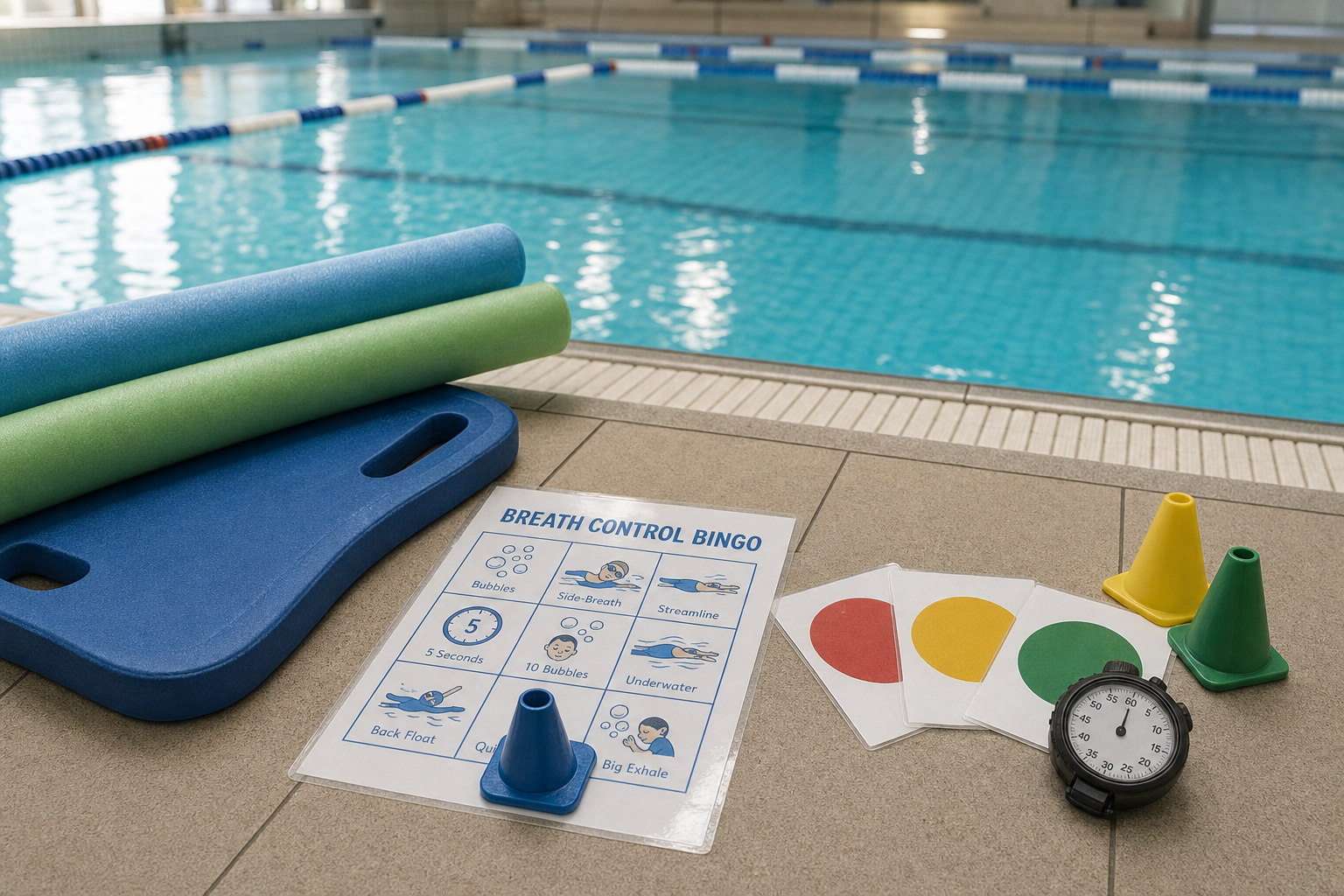
This game teaches listening, impulse control, and freestyle kick rhythm. Kids hold the wall or a kickboard. On “Green Light!” they kick and move; on “Red Light!” they freeze with no splash. Add “Yellow Light!” for slow motion. Each round lasts just a minute or two so attention stays high. This builds discipline and strengthens kicks without overwhelming verbal instruction.
Breath Control Bingo
Make a 3×3 or 4×4 bingo card where each square is a breath-based challenge: blow bubbles, turn head to side for a breath without lifting shoulders, exhale underwater then take inhale, etc. Kids pick squares to complete and shout “Bingo!” when they get a line. Games usually last 5–7 minutes. It turns breathing drills into play. (sgsinkorswim.com)
If you want a structured way to help your child progress at home, the 10-Week Plan guides you step by step.
Streamline Push-Off Races
Without complex equipment, use the pool wall. Have two kids push off (streamline position, arms stretched, body tight) and glide as far as they can, then break to kick back. Focus is on form: straight body, pointed toes, arms locked. It reinforces streamline, minimizes drag, and gives measurable wins. Rotate so everyone tries at least 3 times; you get progress through posture, not speed.
Equipment-Free Drills & Family Options
Use simple body positions or objects already in the pool. For example: practice kicking on back or side, work on streamline off the wall, or pretend to swim through tunnels made with arms or pool noodles. Also, regular swim lessons built around short drills grouped with games help kids with ADHD stay engaged. swimy.org’s 10-Week Plan includes structured weekly drills woven with safe games like these, helping children build technique steadily while enjoying family swim time. This plan reduces waiting, simplifies verbal instructions, and keeps sessions predictable.
Games like “Treasure Hunt” (retrieve visible items, surface frequently) or “Catch-the-Stripe” (swim a short stretch to tag a lane rope stripe and back) reinforce rhythm and breath without holding breath underwater long. Change activities every few minutes to match ADHD attention span. (sgsinkorswim.com)
[[ctakid]]
Tips for Runners-Up: What to Avoid and How to Adjust
Rules that are too complex hurt focus. Skip multi-step verbal instructions—rather than explaining five points, demonstrate what you want (“Watch me first, then you try”). Keep lines or turns to a minimum; instead of everyone waiting, break into small pairs or rotate constantly. Competitive races should be rare, unless the child is calm and confident—otherwise they can trigger anxiety or comparisons.
Also, avoid games that demand long underwater breath-holding or contests of who can stay under longest. These can be dangerous (shallow water blackout) and stressful. Use only brief submersions, surface-based breath work, and always supervise. (swimy.org)
Role of Parents & Instructors
Parents can prepare by sharing what helps their child focus: maybe they need less verbal info, more visual cues, or a quieter part of the pool. Instructors should use predictable lesson flow: warm-up, skill drill, game, cool-down. Use a visual schedule or storyboard. Also, use immediate praise to reinforce behavior and progress. Notice small wins—steady kick rhythm, correct streamline, frequent breaths without panic.
Engagement doubles when children feel ownership: let them choose which game or order of drills sometimes, within a clear structure. Choose smaller or private groups when possible; these reduce stimulation overload and waiting. Lessons in quieter lanes let children who's attention wanders get back on track without battling noise or distraction. (waterwisekids.com)
Swimming games designed with focus in mind—streamlined kicks, rhythm, breath control, short tasks—do more than teach strokes. They build attention, confidence, self-regulation, and calm. For kids ages 6–10 with ADHD, these small, fun wins add up fast. Try a game or two next time you’re in the pool, watch the transformation, and enjoy more engaged, happier swim time together.
120+ swimming exercises sorted by age — with video and instructions. Developed by swim instructors, completely free.

120+ swimming exercises sorted by age — with video and instructions. Developed by swim instructors, completely free.