After a Failed Camp Swim Test: Your Calm Two-Week Recovery Plan
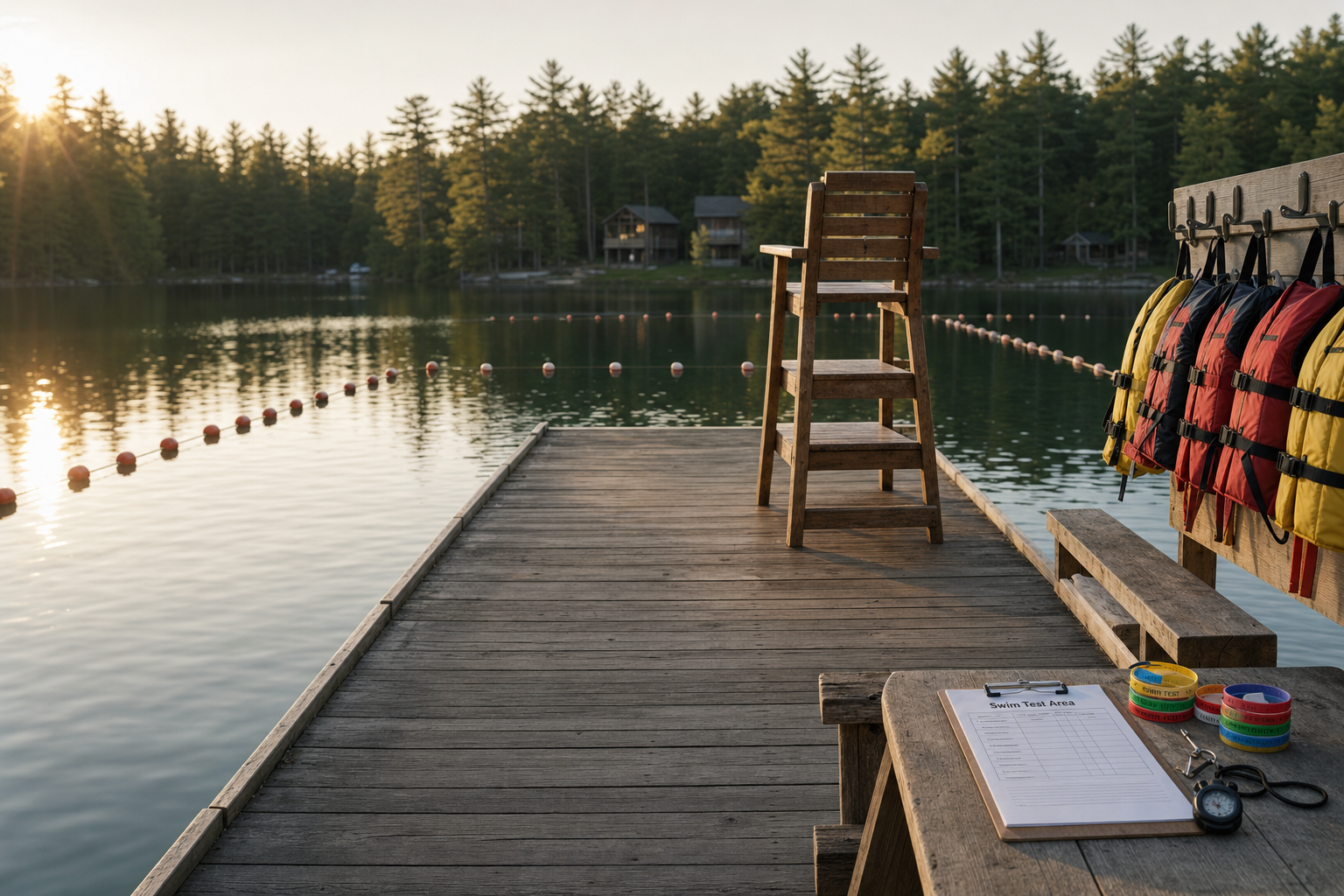
If your child just didn’t make the band or wristband test at camp, take a breath. Failing a camp swim test isn’t a judgement—it’s a roadmap. With a gentle two-week reset, you can rebuild confidence, sharpen weak skills (breath control, float, tread, distance), and make sure your child still enjoys time in the water under safe conditions.
What to Do Immediately After a Failed Swim Test
The very first step is communication—not lecture. Tell your child you see their courage. Then reach out to camp staff. Ask whether there are interim safeguards so your child can still enjoy water time—a life-jacket requirement, shallow water play, or restricted deep-water access until skills improve. These measures align with what organizations like the American Academy of Pediatrics and HealthyChildren.org recommend: children who are inexperienced or weak swimmers should wear U.S. Coast Guard-approved life jackets near or in water.(redcross.org)
Two-Week Reset to Target Weak Skills
You can build specific skills in just two weeks with consistent, supportive practice. Work on one weak point each few days—breath control, floating, treading water, then distance. Here’s how you might divide the two-week reset:
Week 1: Core Skill Boosts
Days 1-3: Breath & Submersion
Do gentle underwater games to help your child feel safe holding their breath. Bubble blowing, dunking under and resurfacing slowly, and blowing bubbles while floating. This sets the foundation for better float and tread work.
Days 4-6: Learning to Float
Teach back float and survival float. Help them relax so their chest rises. Let them rest often. Floating isn’t passive—being able to stop and rest in water is one of the things often tested and essential for safety.
Days 7-10: Treading Water
Work on proper body posture: head up, chest open, arms sculling gently and legs performing a flutter or frog kick. Start with 10–15 seconds, then build gradually toward 30 seconds or more. Make sure the child isn’t getting too tired or frustrated.
Week 2: Putting it Together & Distance
Towards late spring or early summer when camp swim tests usually happen, use this second week to practice sequences: jump in over the head, float, tread, swim a short distance (even just across the shallow end), rest, then swim back. Vary stroke style depending on what the camp requires. These combined skills mimic what many camp tests ask for. Use programs like the 10-Week Plan from swimy.org to structure longer-term improvement while giving yourself flexible building blocks for the reset. (Hyperlinked exactly once.) That plan helps guide parents and children through structured swim lessons and practice so skills build steadily.(ymcashr.org)
If you want a structured way to help your child progress at home, the 10-Week Plan guides you step by step.
Enhancing Confidence Without Shaming
Confidence is key. If a child feels shame, they shut down—you’ll lose progress. Frame every practice as fun, exploratory, not remedial. Celebrate small wins: breathing underwater, a float held for seconds, treading for 15 seconds. Use encouraging language. Avoid comparisons with siblings or peers. You want progress, not perfection.
[[ctakid]]
Avoiding Common Pitfalls
One mistake is trying to cram long distance without rest. Fatigue leads to sloppy technique and fear. Break your sessions into short bursts with rest and success built in. Another is skipping feedback. Instructors or camp staff often observe exactly which skill was missing: maybe the kick was weak or breathing irregular. Ask them for specifics. Use their advice to focus your reset so you’re not guessing.
Talking with Camp Staff About Water Time & Safeguards
Your child doesn’t have to be banned from water fun. Talk to camp leaders. Propose interim safeguards: wearing life jackets for deeper water, staying in shallower zones, pairing with a water buddy, or having extra supervision during swim times. Ask whether the camp can offer extra swim check opportunities before retaking the swim test. Many camps have policies similar to YMCA branches that require swim tests, issue bands or tags, and adjust water access accordingly.(tampaymca.org)
Maintaining Life-Jacket Rules Until Skills Improve
Life jackets are more than props—they save lives and build security. Until your child can tread well, float confidently, and swim the required distance, they should wear a properly fitting, U.S. Coast Guard–approved life jacket in deeper water. HealthyChildren.org and providers like the Red Cross agree: inexperienced swimmers should always have life jackets or other flotation in natural water, lakes or pools.(healthychildren.org) Make sure the life jacket fits snugly: straps adjusted, chest section secured, no wobbling above ears. If it’s too loose, it may fail in real situations.(boat.wa.gov)
Example Plan: What Practising Might Look Like
You could do a 30-minute swim time four times over two weeks. Begin each session with warm-ups (wading, gentle kicks). Move into focused work: breathing control exercises day one; floats day two; treading day three; combining all four skills with short swims by day seven. Listen to your child—if they say “I’m tired,” pause. Rest is not falling behind; it's part of building endurance.
When the Retest Comes Around
By the end of two weeks your child should feel more steady—floating without panic, able to tread 20-30 seconds, swim moderate distance properly. The day before retest, do a light practice (just rest, float, short swim). Overnight, lots of encouragement. On test day, ensure they arrive rested, hydrated, with positive energy. Remind them that one test doesn’t define them. The goal is progress and water safety.
Recovering from a failed swim test at camp is absolutely possible. With a calm recovery plan, targeted work on the missing skill, life-jacket safeguards until ready, and open communication with camp staff, your child can build both competence and joy in the water. It’s not about passing once—it’s about growing strong and confident swimmer by swimmer.
120+ swimming exercises sorted by age — with video and instructions. Developed by swim instructors, completely free.

120+ swimming exercises sorted by age — with video and instructions. Developed by swim instructors, completely free.