After-Lesson Swim Debrief: Two Questions That Build Confidence
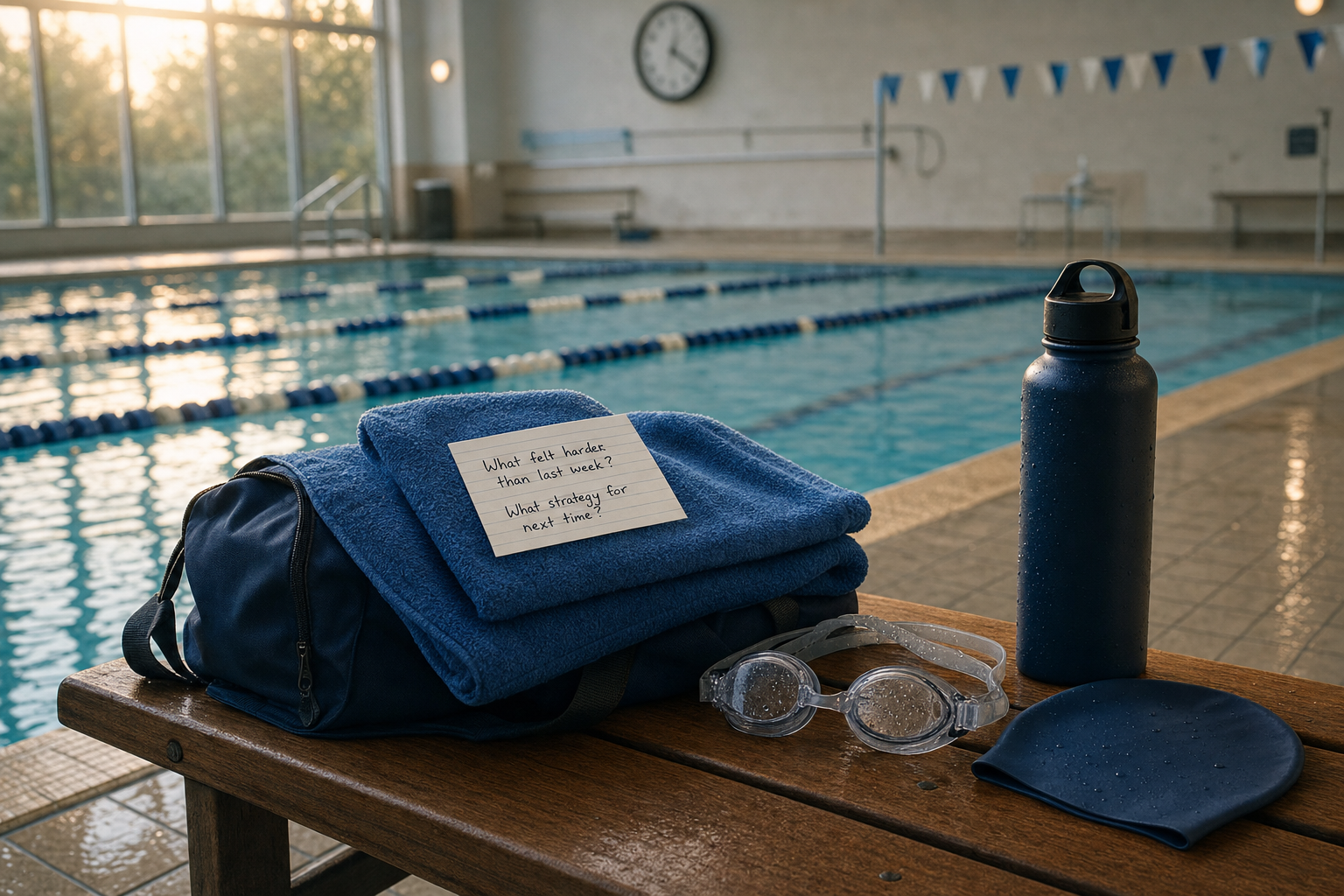
Imagine walking out of a swim lesson and knowing exactly what to say that lifts your child’s confidence, presses pause on pressure, and builds their grit. What follows is a weekly, 60-second growth-mindset chat you can repeat after every swim class. It helps children ages 3-12 notice their effort and strategy—things they control—not just the outcomes. Your words shape their love for learning hard skills.
What Parents Should Always Say after a Swim Lesson
Right after the lesson, start with a phrase that shifts praise toward the process, not just results. Instead of “Great swim!” or “You’re a natural,” try: “I saw how hard you worked today when you kept trying that stroke even though it was tricky.” This kind of feedback anchors confidence in perseverance, not perfection. Research strongly shows that process praise—effort, strategy, focus—encourages kids to take on challenges, stick with them, and believe they can grow. (appliedsportpsych.org)
Avoid comparing your child with others poolside. Saying “At least you’re faster than Liam” may feel supportive, but it invites fixed-mindset thinking. Focus on what they did, not where they stand among peers. Experts tell us that comparisons can undercut motivation and confidence especially in water skills, which often take more time than other sports. (sportspsychology.org)
Two Questions to Ask: Your Weekly Growth-Mindset Chat
Once the immediate praise is out of the way, have a two‐question ritual as you drive home or while packing the bag. Keep them simple, supportive, and never rushed.
First question: “What part of your swim today felt just a little harder than last time?” This helps your child notice progress, moving beyond “I did good” or “I won.” It also shows you trust them to recognize when they stretch their abilities.
Second question: “What strategy did you try, or what will you try next week to make that part easier or more fun?” Now you shift attention toward what’s possible—adjustment, growth, ownership. They learn that working through discomfort is not only normal but also where growth happens. Growth mindset research emphasizes strategy as powerful—kids who focus on how they adjust or set new goals feel more confident through the process. (appliedsportpsych.org)
Together, these two questions build persistence in harder skills like flip turns, breathing drills, or backstroke kicks. Over time, your child starts looking forward to what’s tougher—not just what’s finished.
If you want a structured way to help your child progress at home, the 10-Week Plan guides you step by step.
Midway Check-In and Key Resources
When your child starts swim classes, perhaps using something like the 10-Week Plan at SwimY.org (free version) can give you shared goals to refer back to. That plan maps out gradual skill steps—so you can point to concrete improvements each week. For example: Week 3 might be about blow bubbles, Week 5 about side-breath, Week 8 about strong kick, etc. That helps when you ask “what felt harder” or “what strategy” with real reference points. It grounds the chat in observable progress rather than ambiguous praise.
[[ctakid]]
During those chats, also be ready to reassure: struggles or mistakes aren’t punishments—they’re part of learning. Don’t rush to correct or criticize. If your child is upset, start with empathy: “I can see you felt frustrated when that stroke didn’t go how you wanted.” Then gently shift toward growth. "That means your brain and muscles are getting stretched—awesome."
What to Avoid and Common Pitfalls
First, over-coaching poolside. If you tell your child every stroke tip as they swim, or call out corrections in front of others, it adds pressure and distracts both child and instructor. Let the instructor handle skill coaching during lessons. Your role after is encouragement and reflection. (sportspsychology.org)
Second, comparisons. Saying “Billy did that so well” or “She’s faster” makes your child feel judged. Instead, always compare today to yesterday: “Today you pushed more with your kick than you did last week.” That stays in the growth mindset zone. (appliedsportpsych.org)
Third, overly generic praise like “Good job!”—while well-meaning—doesn’t help children know what to repeat or improve. Growth mindset research shows that kids who get process-focused feedback grow more resilient than those who simply get blanket praise. (youthathleteperformance.com)
When It Works Best and Why It Matters
Using these two questions weekly builds confidence that lasts. For example, I remember my daughter struggling with freestyle breathing. One week she shared that turning her head felt harder, the strategy she tried was slowing her breath tempo. Next class, she was pushing off deeper, then later she submerged more fully. She believed in her progress because we talked about hard parts and what to try next, not just whether she won a race or got the blue ribbon.
This kind of approach supports persistence, especially in skills that take many weeks or months to master—flip turns, swimming under water, dolphin kick. Those are exactly the hard skills where kids often quit unless they learn to persist.
Final Thoughts: Putting It Into Practice
After swim lessons, pick your moment—maybe in the car, by the pool gate, or while gathering their towel. First, share a piece of process praise that acknowledges effort or strategy. Then ask:
What part was harder than last week?
What strategy will you try to make it better next time?
Keep the mood warm. Safety here means emotional safety—keep the tone encouraging, not pressure-filled. If something serious or fear-related comes up, talk privately with the swim instructor later.
These chats are evergreen—they work at the start of a season, mid-season, and any time swimming feels tough. Growth mindset for swim sports parents doesn’t need perfection. Just consistency. Praise effort not outcome, reduce comparisons, and watch your child grow stronger, more confident, and excited to keep swimming.
120+ swimming exercises sorted by age — with video and instructions. Developed by swim instructors, completely free.

120+ swimming exercises sorted by age — with video and instructions. Developed by swim instructors, completely free.