Ask About UV: Healthier Air at Indoor Pools for Kids
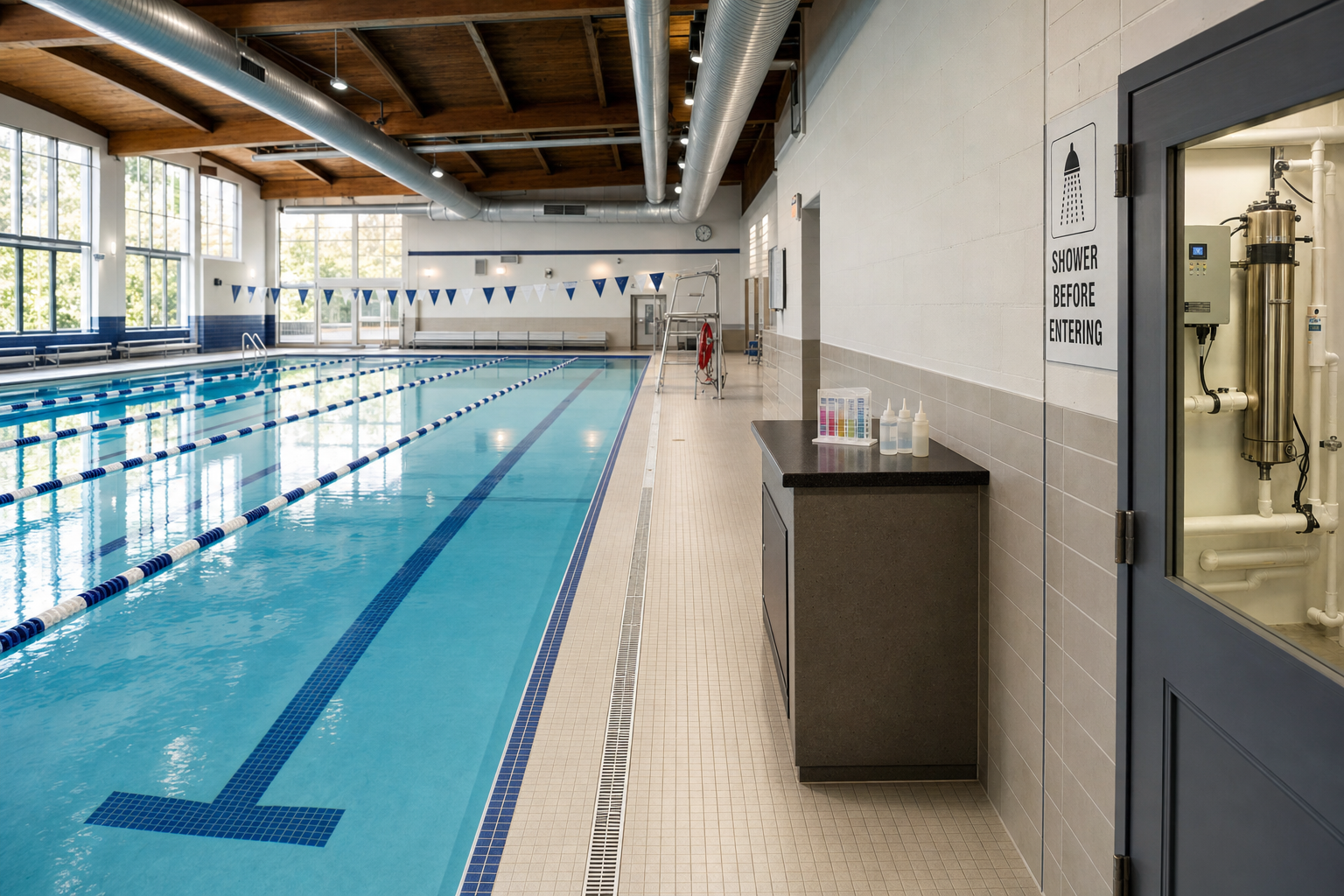
If your child swims indoors during winter—or anytime—the air quality at the pool matters as much as the water. Red, watery eyes and coughs aren’t just nuisances; they often mean the indoor pool is letting too many chloramines (aka “combined chlorine”) build up. As a parent of kids aged 3–12, you should expect better. Here’s what you can ask and what every pool should do to protect your family’s lungs, eyes, and overall comfort.
What causes that “chlorine smell” and why it hurts
When free chlorine in pool water meets sweat, dirt, pee, or even skin cells, it forms chloramines—chemical irritants that often get breathed in above the water or pool deck. That “chlorine smell”? It’s actually a sign of chloramines in the air. Poor ventilation lets them accumulate. High chloramine levels can make kids cough, their eyes sting or turn red, trigger asthma, or make breathing difficult. Indoor settings are worst in winter when everything is sealed up tight. (cdc.gov)
“Free chlorine” is the chlorine doing the disinfecting work. “Combined chlorine” or “total chlorine minus free chlorine” measures how much chlorine has already been ‘used’ reacting with those contaminants, forming chloramines. Health guidelines often say combined chlorine should stay below around 0.2 to 0.4 parts per million (ppm). Anything above that can start causing discomfort and bigger risks. (cdc.gov)
How UV secondary disinfection helps
UV (ultraviolet) disinfection is a secondary treatment pool operators can install on top of regular chlorine. It treats water after filtration but before returning to the pool. Medium-pressure UV lamps are especially good at breaking down chloramines and other byproducts that cause red eyes, coughs, and strong odors. While UV doesn’t replace chlorine (you still need a free chlorine residual), it reduces how much chlorine is “used up,” which keeps things cleaner and air better. (health.nsw.gov.au)
A scientific study found that turning on UV treatment in an indoor therapy pool reduced combined chlorine in the water by 58%, and lowered airborne chloramines by about 15%. That means less irritation for swimmers. (pubmed.ncbi.nlm.nih.gov)
If you want help building a stronger routine around swim safety and reducing air-pool irritant exposure, the 10-Week Plan at swimy.org includes helpful tips for driver habits and facility questions. https://www.swimy.org/10-week-plan
What ventilation or air handling means for your kids
Good air systems pull fresh air in and push stale, chloramine-tainted air out. The air ducts, exhaust fans, and HVAC units need to be running well—especially at pool level (where people breathe) and over the water surface (where chemicals off-gas fastest). If the air seems damp, stale, or still smells “strong chlorine” after many swimmers, that’s a red flag. Studies show that when ducts don’t deliver fresh air where swimmers are, or when air changes per hour are too low, eye irritation and respiratory symptoms rise. (handbook.ashrae.org)
[[ctakid]]
Quick questions to ask before you sign up or take a family swim
When you go to an indoor pool, especially in winter, you can ask staff or management these simple but powerful questions:
- What is your combined chlorine level test result, and how often do you test it?
- Do you use a secondary disinfection system like UV or ozone?
- What is your ventilation/air handling system like—how many air changes per hour, and is outdoor air used?
- How often do swimmers shower before entering? Do you ask them to take bathroom breaks?
- What is your free chlorine level, and what is your pH? (Ideally free chlorine should be kept within the range set by relevant health code, pH between about 7.2–7.8.)
Facilities that have done improvements (better ventilation, secondary disinfectants) tend to have fewer complaints about red eyes, coughs, and other irritations among kids and staff alike. (pubmed.ncbi.nlm.nih.gov)
What parents and kids can do right now
Even in a well-run pool, behavior makes a difference. Have your child shower with soap just before swimming—it washes off sweat, creams, and other things that react badly with chlorine. Make sure they use the restroom before going in. Never let kids pee in the pool. All these reduce the raw materials that create chloramines. (health.nsw.gov.au)
Teach them to avoid splashing too much (disturbed water releases more chloramines into the air). After swimming, encourage a quick rinse and letting clothes dry—wet swimsuits keep irritants close to skin.
Spotting warning signs and when to speak up
If your child repeatedly returns from a swim with red, itchy eyes, a cough that lingers, or asthma gets worse, don’t assume it’s “just chlorine” or “kids being kids.” Pools with high levels of combined chlorine, or poor ventilation, are common culprits. Report symptoms to pool staff. Ask if they check combined chlorine and air quality frequently.
If smells linger even when the pool is empty, or if the air feels heavy like a greenhouse, you’re dealing with poor air handling. It’s okay to skip a session if conditions feel bad.
Indoor pool air quality for kids doesn’t have to be a gamble. With a few questions in hand, you can pick or advocate for a facility that uses UV secondary disinfection, keeps combined chlorine low, and has fresh air flowing where and when it’s needed. The pool can then stay fun—and safe—without causing red eyes, coughs, or other avoidable discomforts.
120+ swimming exercises sorted by age — with video and instructions. Developed by swim instructors, completely free.

120+ swimming exercises sorted by age — with video and instructions. Developed by swim instructors, completely free.