Asthma-Friendly Swim Sets for Kids (6–12): Warm-Up, Pace, Recover
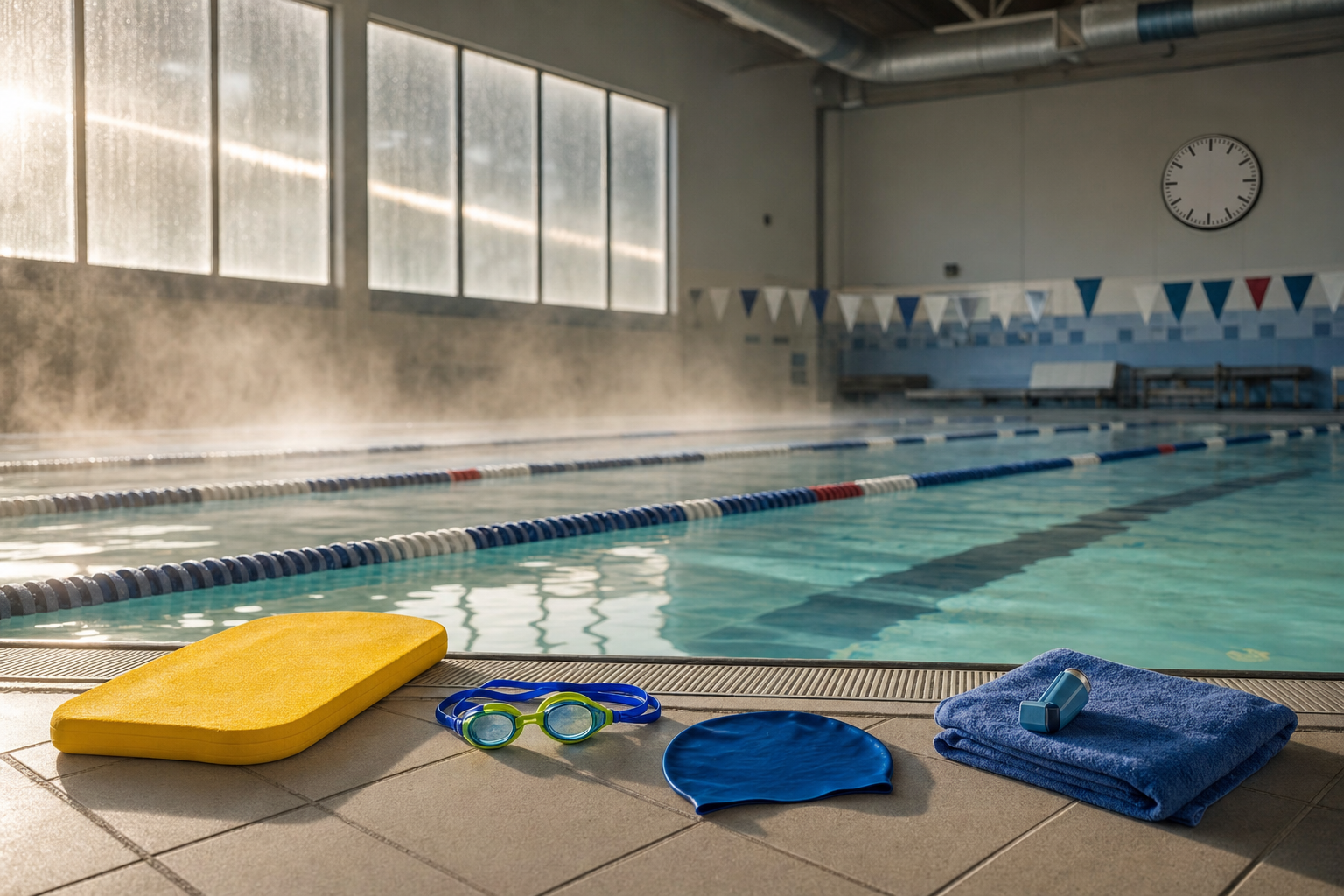
Swimming can be a safe, fun way for school-age children (roughly ages 6-12) with asthma or exercise-induced bronchoconstriction (EIB) to build fitness—if swim sets are paced right, warm-ups are humid and gentle, and recovery is built in. Below are expert tips to help parents work with coaches on asthma swimming for kids, with clear warm-ups, interval sets, cueing to lessen breath-stacking, and managing pre-exercise meds.
Warm-Humid Warm-Ups: Setting the Stage
To reduce risk of flare-ups, begin every swim session with a warm, humid warm-up lasting about 10-15 minutes. This might be light swimming combined with easy drills, walking in water, or kicking with a board while breathing through the nose. Clinical guidelines from the American Thoracic Society strongly recommend an interval or combination warm-up before planned exercise to trigger a refractory period, which can reduce airway narrowing for up to two hours. (thoracic.org)
During fall and winter when indoor pools are heavily used, ventilation is often poorer and air can be dryer. Ask for humidified, warm water pool sessions and ensure the pool’s air handling is good. Avoid sudden cold air exposure post-warm-up or after swim when breathing cold air too quickly can exacerbate EIB.
Intervals with Longer Rests: Pacing That Prevents Panic
Rather than launching into continuous fast sprints, structure swim sets with 6- to 12-second bursts of moderate effort followed by longer rest periods—resting until breathing is near normal. For instance, swim two pool widths fairly hard, rest or easy swim back, repeat across a set. These intervals allow the airways to recover heat and moisture, reducing symptoms. Evidence shows interval warm-ups or warm-ups that mix high and low intensity are more effective in reducing EIB than steady continuous effort. (thoracic.org)
Another consideration is using sets that stay under about 40-70% of maximum effort for sustained periods, so the child isn’t mouth-breathing deeply or gasping. Overdoing sprints too soon or pushing too hard without full warm-up often leads to the dreaded “flare.”
Cueing to Reduce Breath-Stacking
Breath-stacking happens when inhalations come too fast or without full exhalation, causing discomfort and triggering tightening. Teach cues like exhale underwater fully, breathe rhythmically every third stroke or every two strokes depending on stroke, slow breathing before walls, and relax shoulders. Coaches can include drills that force controlled breathing—such as sculling, vertical kicks with bubble breath, or head-turn breathing drills.
If you want a structured way to help your child progress at home, the 10-Week Plan guides you step by step.
Children benefit when coached to notice early symptoms (tight chest, wheeze, cough) and slow down rather than powering through. Building steady breathing into the set helps endurance without triggering an asthma or EIB episode such as what many kids face during un-paced sprints.
Sample Swim Sets for Kids 6-12 with EIB
Warm-Up (10-12 mins warm-humid): Easy swim 200 m, drills focusing on gentle breathing and technique, plus 4×25 m moderate pace with 1-minute rest.
Main Set: 8×12-second bursts of freestyle at moderate effort with 30-45-seconds rest. Then 4×6 breaths per 25 m with focus on exhale under water, long rest in between.
Endurance Build: several longer swims such as 2×100 m at easy-moderate pace, rest until breathing near baseline; maybe 1×50 m moderate above comfort, then recover.
Cool-Down: 5-8 mins of easy swimming, gentle strokes, slow breathing through nose and mouth.
One helpful resource for planning weekly swim progressions is the 10-Week Plan of swimy.org, which offers structured sets tailored towards endurance and breathing control.
[[ctakid]]
Pre-Exercise Meds & Asthma Action Plan Coordination
If your child has asthma or EIB, always follow the personalized asthma action plan. Healthcare guidelines recommend using a short-acting bronchodilator (SABA) like albuterol about 10–15 minutes before exercise. Some plans call for longer lead time depending on type of inhaler. (eguideline.guidelinecentral.com)
Long-term control medications (inhaled corticosteroids, sometimes leukotriene modifiers) may also be needed if EIB symptoms happen frequently or SABAs alone don’t cover them. Confirm inhaler technique with coach and medical provider.
Always ensure rescue medication is on deck—coach’s kit or swim bag—and practice what to do if symptoms worsen. Cold air post-swim and indoor pool chloramine exposure can worsen asthma, so holding off cold weather or making sure dressing areas are warm helps.
Pitfalls to Avoid & Safety Reminders
Avoid heading into intense sprint sets without warm-up. Do not force participation during cold or highly chlorinated pool sessions, especially when indoor air seems stale or smells strongly of chlorine. High levels of chloramines (the mix of chlorine and biological by-products) accumulate in indoor pools with poor ventilation and irritate airways, triggering cough, wheeze or asthma symptoms. (cdc.gov)
Cold-air exposure just after swim when the body is wet also heightens risk. Always towel-dry quickly and warm up outside swim. Cool-downs should be extended to let breathing settle.
Finally, involve your child’s coach in planning these asthma-friendly sets. Show them wording like “6-12 s moderate effort with long recoveries”, “breath rhythm drills”, “warm-humid warm-ups” and “extend cool-downs”. A well-informed coach will help adapt sets as the child improves or as air conditions change.
Swimming with asthma or EIB doesn’t have to limit fun or fitness. With warm-humid warm-ups, intervals built for recovery, cues to avoid breath-stacking, and the right medication timing, kids aged 6-12 can swim through fall, winter, or summer without flare-ups holding them back. Always follow the asthma action plan, adjust to pool environment (especially indoor settings with chloramines), and communicate closely with the coach. Your child can gain endurance, confidence, and love of the water safely and joyfully.
120+ swimming exercises sorted by age — with video and instructions. Developed by swim instructors, completely free.

120+ swimming exercises sorted by age — with video and instructions. Developed by swim instructors, completely free.