Baby After Swim Class: From Wet to Warm, Dry, and Car-Seat Secure
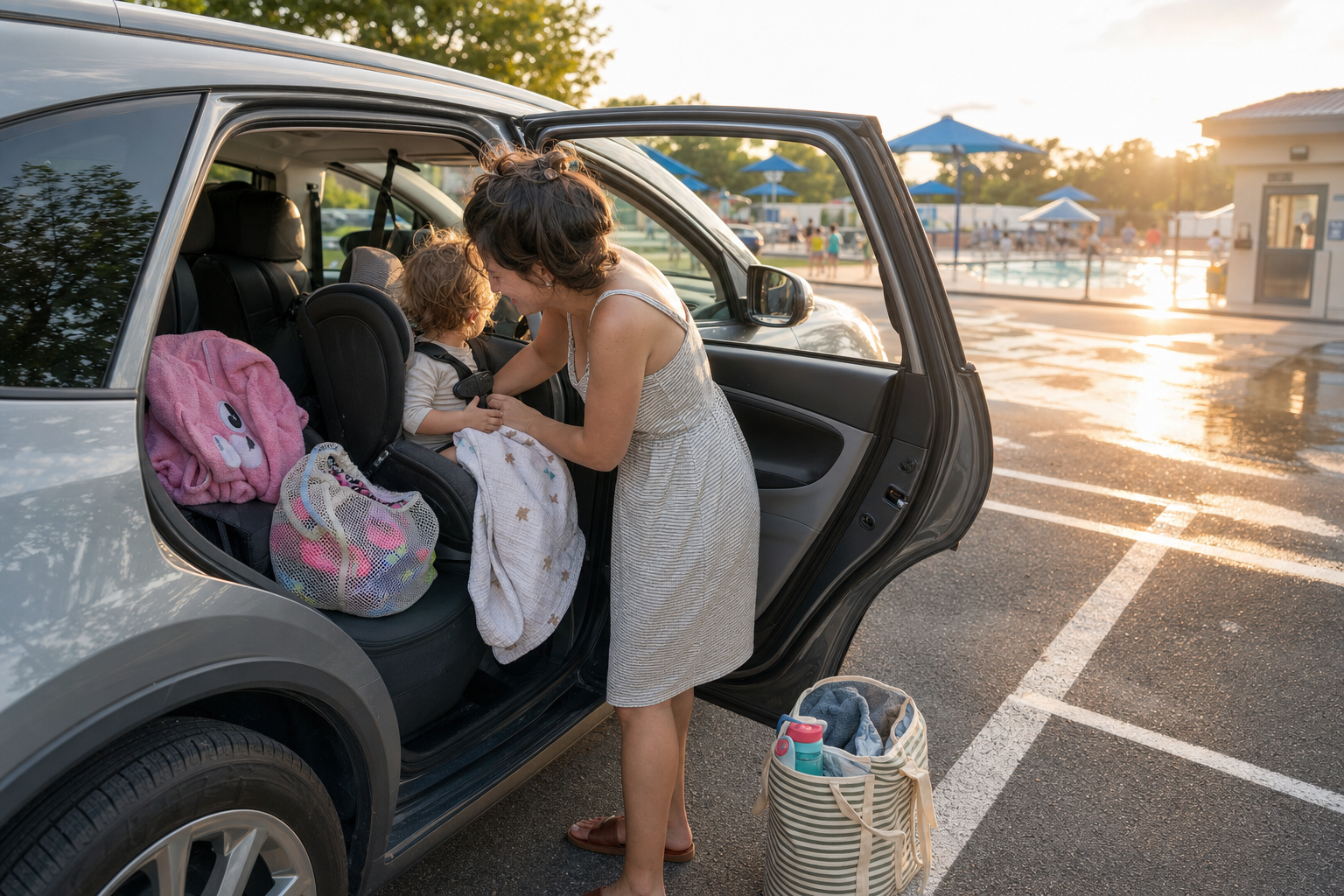
You’ve just wrapped up swim class—your little one is dripping wet, exhausted, and ready to crash. The last thing you want is a rushed ride home where the child sits in a wet swimsuit or loosens straps because you’ve piled on bulky layers. Here’s how to quickly shift from swim mode to car-seat secure, making sure your baby or toddler (0–36 months) stays warm, dry, and safe.
Why Wet Swimsuits & Rushed Straps Are Risky
Great car seat safety always starts with the harness fit. The CDC warns: “Children should be buckled in a car seat, booster seat, or seat belt that is appropriate for their age and size every ride” and that misusing any part of the restraint system drastically increases injury risk. (cdc.gov)
Wet fabric under straps or a harness that’s too loose—often caused by thick towels or untested accessories—can compromise the system during a crash. The padding compresses, leaving space that shouldn’t be there. According to the American Academy of Pediatrics, bulky clothing should never go under the harness. Layers need to be thin, and any blankets or jackets should go over the straps after buckling. (pediatric-trauma.med.umich.edu)
Avoid leaving baby in a swim diaper for the drive. It’s wet, uncomfortable, and adds dampness. Even if you stash a change of clothes in the car, switching swim diaper for cloth diaper saves on sit-in wetness and signals that clean-up matters, not just safety.
Step-by-Step Post-Swim Transition Routine
Follow this simple routine so you don’t accidentally let dampness or faulty fitting slide when you’re short on time.
Dry Off First, Change Quickly
Right after swim class, towel dry baby thoroughly. Use a hooded towel to capture nose and ear drips. Then swap out the wet swimsuit for snug dry clothes—ones that aren’t bulky. A fitted cotton onesie or light leggings and tee are much better than hovering robes or oversized parkas.
Dress in Thin Layers & Warm Outer If Needed
Choose outfits that layer well: breathable base, thin mid-layer, and a lightweight jacket if air-conditioned or it’s cool outside. Keep warmth over the harness, not underneath. A blanket or coat thrown over the harness once baby’s secured keeps them cozy without compromising safety. (healthychildren.org)
If you want a structured way to build water confidence at home, the 10-Week Plan guides you step by step.
Buckle First, Add Bulk Second
Secure the harness with snug straps and chest clip at armpit level. Perform the “pinch test”—if you can pinch the webbing between fingers, it’s too loose. Later, lay jackets or blankets over the buckled harness for warmth. Do not let anything be tucked under the baby or between their body and harness.(pediatric-trauma.med.umich.edu)
[[ctababy]]
Spare Supplies & a Mindful Snack
Pack a small change of clothes, spare diaper or swim diaper, towel, and plastic bag for the wet gear. If your toddler is exhausted and asking for snacks, wait until the car is parked and harness is secure. Endless mess and risky choking hazards can come from grabbing food while strapped in.
Re-check Every Ride
Every time you leave swim class, follow this routine. Car seat manuals and safety experts all stress consistent application: age- and size-appropriate car seat, harness snug, clothing thin underneath, outer layers safe over straps.(cdc.gov)
Expert Guidance & Practical Resources
The American Academy of Pediatrics and National Highway Traffic Safety Administration both echo these best practices. They highlight that transport risk depends heavily not just on having a car seat, but using it properly every single ride. (nhtsa.gov)
For swim schools wanting structured teaching, the 10-Week Plan from swimy.org includes advice about what to do after baby swimming and strategies for families developing routines around swim class. Parents often find that this plan helps establish habits that carry through post-swim transitions and beyond.
Common Pitfalls & How to Avoid Them
It’s easy to slip into unsafe habits when you’re tired or in a rush. Don’t dozens of things that seem harmless, like:
- Putting on thick towels, robes or bulky coats under the harness. The padding compresses in a crash, leaving space even when harness seems tight. (pediatric-trauma.med.umich.edu)
- Letting a wet swim diaper ride in the seat—moisture irritates baby’s skin, interferes with harness fit, and leaks can lead to slippery seat covers. Replace with dry diaper or proper cloth diaper before strapping in.
- Grabbing snacks for a wriggly toddler and letting them feed themselves while driving—they can choke or drop bits around straps that make tightening harder. Keep snacks for when parked.
Final Word: Secure Ride Home
When your baby’s been swimming, the easiest way to smooth the ride home is this: dry, change, thin layers, buckle securely, then extra warmth goes on top, not beneath. Every child 0–36 months deserves that transition—it protects them physically, but also builds your confidence as a parent who never skips safety just because the clock says “late pickup.”
Ride safe, ride dry, ride calm.
120+ swimming exercises sorted by age — with video and instructions. Developed by swim instructors, completely free.

120+ swimming exercises sorted by age — with video and instructions. Developed by swim instructors, completely free.