Cuts, Scrapes & Stitches: Swim or Sit Out? A Parent’s Guide
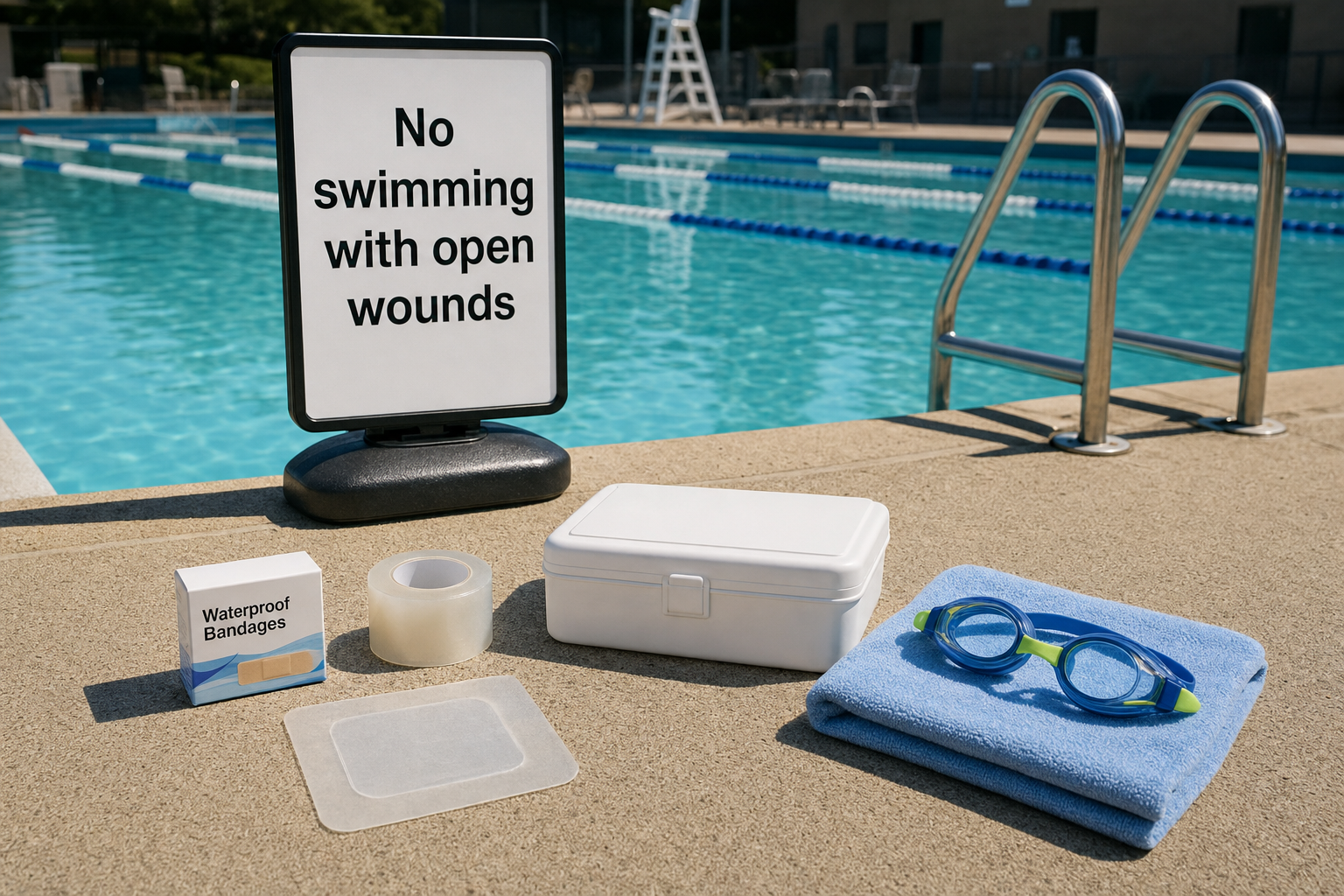
If your child (ages 3-12) comes home with a cut, scrape, or stitches, you want to know right away: can they swim or should they skip it? Here’s a clear decision tree so you know when a well-covered scrape might swim, when open or post-surgical wounds must stay dry, and how to protect healing skin at the pool, lake, or ocean. Plus: infection warning signs and when to call a doctor.
1. Decision Time: Cut, Scrape, or Stitches?
Minor, clean scrape or cut
If it’s a small cut that’s clean and shallow, and you can completely cover it (no edges peeling, no stitches), then swimming may be allowed—but only if it’s well protected with a truly waterproof bandage. If the bandage gets soggy or slips, it fails. The water (chlorinated or natural) can introduce bacteria via even a tiny gap. Use a high-quality waterproof dressing, change it often, and check it before entering water.
Stitches, glue, or surgical wound
With stitches (dissolvable or non-dissolvable), surgical wounds, or glue closures, the medical advice is much stricter. The UK NHS advises avoiding swimming until the wound is fully healed and stitches have been removed. For glued wounds, typical guidance is: no swimming for at least 7 days. For sutured wounds, wait until stitches are out and the skin has healed. (frimley-healthiertogether.nhs.uk)
2. Clear Decision Tree at a Glance
Here’s how to decide:
Is the wound open or is there fresh bleeding, stitches, or surgical closure?
• Yes → No swimming yet. Wait until stitches removed/dissolved and skin healed.
• No → Move to next step.Is the wound completely covered with a waterproof dressing that stays in place comfortably?
• Yes → Maybe swim under supervision and monitor.
• No → Sit out until you can cover it well.Has your doctor given you clearance? Especially after surgery, always follow their timeline. NHS suggests waiting until any dressings are removed, and the site looks healed. (nhs.uk)
If you want a structured way to help your child progress at home, the 10-Week Plan guides you step by step.
[[ctakid]]
3. How to Protect Healing Skin in Water
Even when a wound looks fully covered, water exposes it to germs. Here’s how you protect it:
- Always use waterproof bandages or dressings. Change them after swimming, or sooner if wet or dirty.
- After surgery or stitches, keep the closure dry for the first 2-5 days as advised by your clinician. NHS leaflets say: sutured wounds need to stay dry for about 5 days; glued wounds about 2 days. (frimley-healthiertogether.nhs.uk)
- Avoid hot tubs, jacuzzis or warm spas—these heat and moisture are ideal for bacteria.
- After healing, protect skin from the sun when wet: new skin is fragile.
- During swim lessons (such as the swimy.org 10-Week Plan), ensure your child’s wound is healed and dressings are secure before jumping in. (alderhey.nhs.uk)
4. When “Skip It” Is Non-Negotiable
Some situations where swimming must wait:
- Post-surgical wound: until doctor confirms healing and stitches are gone. NHS says: don’t swim until fully healed, stitches removed, and dressings gone or stable. (uclh.nhs.uk)
- Deep or jagged wounds: if edges are separated or wound is draining.
- Animal bites, puncture wounds, or wounds older than 12-24 hours without medical review—those risk infection more. (frimley-healthiertogether.nhs.uk)
5. Infection: Know the Red Flags
Even with dressings, infections can happen. Watch for:
- Redness spreading out from the wound, warmth to touch.
- Increased swelling, worsening pain.
- Discharge that is yellow, green, creamy, or unexpectedly smelly.
- Fever, chills, or the child feels unwell.
- Wound edges separating.
If you see any of those, call your GP or take your child to urgent care or the Emergency Department. NHS hospital leaflets stress: these signs mean don’t delay. (uclh.nhs.uk)
6. Bottom Line: Can Kids Swim with Cuts?
Yes—but it depends. A small scrape that’s clean and well covered might swim if you’re vigilant. With stitches or surgical wounds: sit out until fully healed and a healthcare professional says it’s safe. Trust “waterproof” dressings only when they truly keep the water out. Never ignore redness, drainage or warmth.
Swimming throughout the year is great for kids ages 3-12, but healing skin doesn’t wait for warm weather. You’ll keep your child healthy, avoid infections, and ensure they can enjoy the water again soon—safely.
120+ swimming exercises sorted by age — with video and instructions. Developed by swim instructors, completely free.

120+ swimming exercises sorted by age — with video and instructions. Developed by swim instructors, completely free.