Keep Swim Lessons Calm with a Small-Home Swim Laundry System
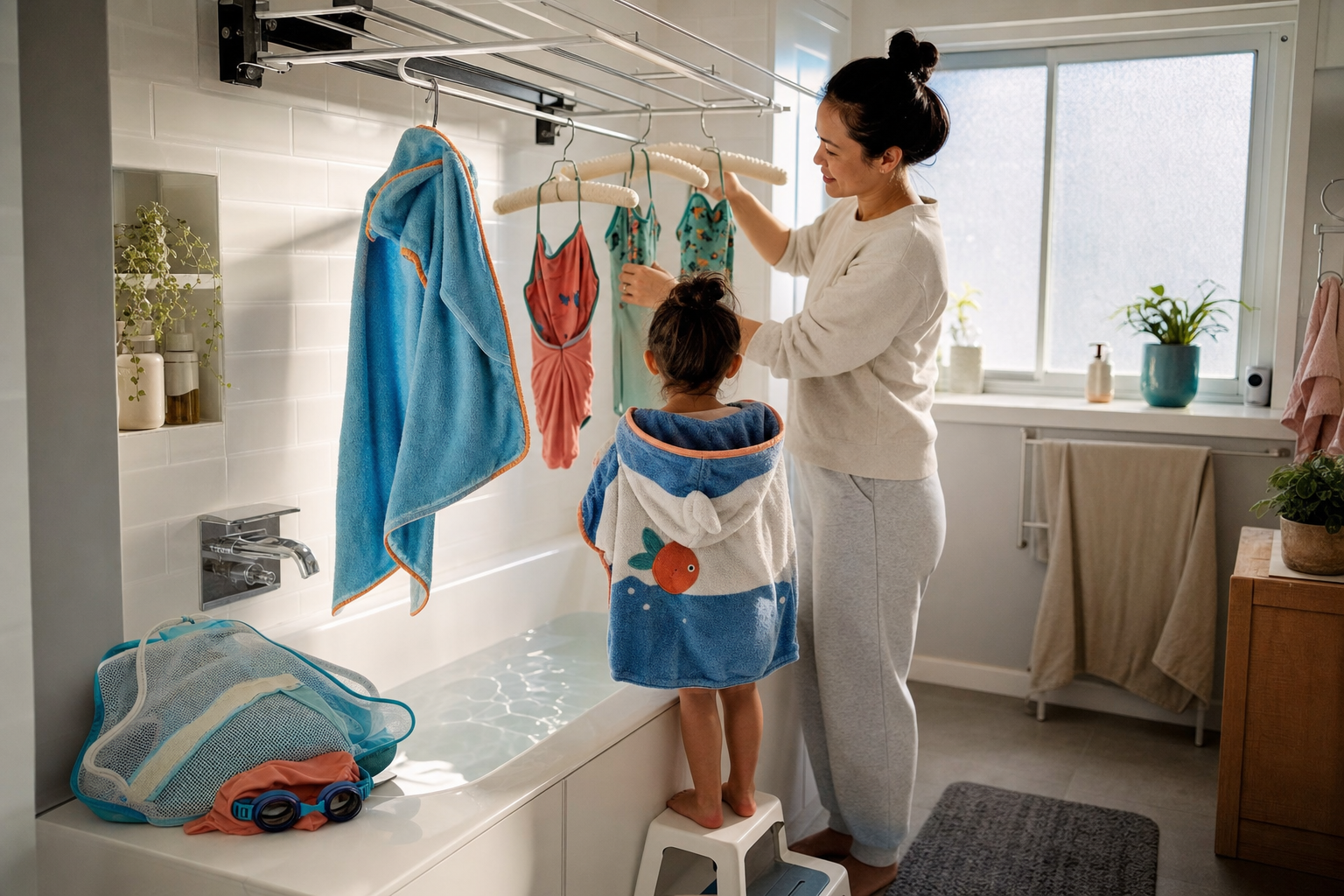
Parents of babies and toddlers aged 0–36 months know how fast swim lessons can turn into a whirlwind of damp towels, swim diapers, and chaos. A solid swim lesson laundry routine and smart organization for “drying swimsuits in apartment” spaces can make all the difference. These logistics‐focused tips are especially helpful when you’ve got siblings, twins, or back-to-back lessons. Arrive less rushed, leave less stressed—baby is dry, clean, and predictable.
What to Do Immediately After Swim Time
You’ll save time, odor troubles, and stress if you begin right when swim class ends. First, wrap your baby in a large hooded towel on poolside. This protects their warmth and keeps water off the floors and your car seat. Next, remove the swim diaper—if possible—while baby is still wrapped, then swap in a dry diaper before getting into clothes. Changing off the wet gear first staves off damp backseats, chilly rides home, and prevents storing wet swim diapers full of germs. Reddit threads by parents highlight that bringing at least one backup towel and extra swim diaper helps avoid late-school meltdowns. (reddit.com)
If your facility has a rinse‐off shower, use lukewarm water to wash away chlorine from baby’s skin and hair. This extra step protects their skin from irritation and keeps gear fresher. (swimy.org)
Drying Baby Swim Gear in Apartments
Small apartments bring limited space and airflow. Here’s how to dry swimsuits, rash guards, neoprene, and towels without creating mildew or trip hazards.
After rinsing, gently squeeze out water—no wringing. Open up any folds or seams, especially in neoprene western suits or wetsuits. Hang them inside out first so the lining can dry, then turn right-side out when that part feels dry to finish the outer surfaces. Use wide padded hangers or lay items flat on a towel. Avoid direct sunlight and never tumble dry. (blueseventy.com)
Set up drying zones in your apartment: a fold-down drying rack over the bathtub, an over-door hook behind closet doors, or shower rods with spare hangers. Keep gear off walkways and exits to avoid trips. Use mesh laundry bags for swimsuits when washing it; delicate cycles only with cold water will extend life and preserve stretch. (gearaid.com)
One overlooked source of conflict: leaving wet neoprene inside swimming bags or let damp swim diapers sit too long. These become breeding grounds for mold and irritants. Consistent airing and prompt laundering stops this. (swimy.org)
If you want a structured way to build water confidence at home, the 10-Week Plan guides you step by step.
Weekly Wash Strategy & Making It Predictable
To manage frequent swims (especially summer intensives or winter indoor lessons), you need a repeatable wash-day plan that fits life with little ones. A predictable routine reduces the mental load of always having to remember extra towels or backup suits.
Part of how some parents build rhythm into their swim lesson laundry routine is by following a plan like the “10-Week Plan” by swimy.org, which pairs swim class schedules with care tips that help your swim gear survive without smell or stretch loss. (swimy.org)
[[ctababy]]
Choose a fixed wash day—say once every three swims or when odors return. Use mild, non-detergent soap or baby shampoo, especially for neoprene. Skip bleach or harsh chemical detergents; they degrade elastic fibers and can irritate a baby’s skin. Sweat, sunscreen and body oils get trapped in fabric—soaking helps lift them before washing. (neoprenecustom.com)
Dry thoroughly and store completely dry gear in breathable or mesh-lined containers. Plastic bins trap moisture; cloth laundry bags or laundry baskets allow air flow. (wetsuitcenter.com)
Organizing Everything Before, During, and After Lessons
Organization is what turns chaos into flow. Set up a swim-ready bag with the essentials: swim diapers (plus backups), rash guards, two towels (one for wrap-up, one spare), dry clothes, and a bag for wet items. Some parents recommend having a labeled zippered pouch just for swim-lesson necessities so when you leave the house you can scan it quickly and know nothing’s missing. (reddit.com)
In winter, layer babies with waterproof outerwear to get back to the car or home, avoiding chills. Let siblings ride together with spare towels or change clothes packed in easy-access tote bags. Make the gear bag lightweight and compact so it doesn’t become another burden. In small homes, keep the laundry basket, drying rack, and laundry supplies in one dedicated spot—near the exit—so after class, everything heads toward that central hub.
Safety and Health You Can’t Skimp On
Drying and storing swim gear improperly can be dangerous. Wet swim diapers, neoprene that isn’t dried inside out, or damp towels left on the floor pose hazards. Keep drying systems where cords and racks don’t block walkways or exits. Be attentive to mildew—if gear smells or shows spots, wash right away.
For babies under 36 months, fresh water rinse, careful drying, and clean storage can help avoid skin irritation, yeast, or rashes. Bathing or showering at home later that day helps remove chlorine completely. Ensure the space you use to dress baby avoids slips: use mats, avoid slick floors, use towels or portable pads. (swimy.org)
Putting It All Together: Sample Daily & Weekly Plan
After swim class, rinse gear in fresh water. Dry in staged zones: hang inside out, then flip. Change baby into dry clothes. By next morning, everything is dry and stored so nothing is damp in the swim bag.
Weekly, wash all swimwear and neoprene gear with mild soap. Deep soak stubborn smell. Air-dry fully. Replace or launder spare towel. Restock swim diapers and backup swim suits. This keeps the top‐off supplies ready—and means fewer mid-lesson panic moments when realizing something’s missing or soaked.
When swim lessons are regular, siblings involved, or seasons shift from winter to summer, having a reliable system means parents arrive calm, babies stay warm and clean, and the after-swim scramble becomes surprisingly smooth. Establish your swim lesson laundry routine, get drying swimsuits in apartment spaces sorted, and your baby swim gear organization will stop being an overhead—and start being a natural rhythm.
120+ swimming exercises sorted by age — with video and instructions. Developed by swim instructors, completely free.

120+ swimming exercises sorted by age — with video and instructions. Developed by swim instructors, completely free.