Backstroke Thumb-Out Exit: Rotation Kids Remember (Pinky-In Entry)
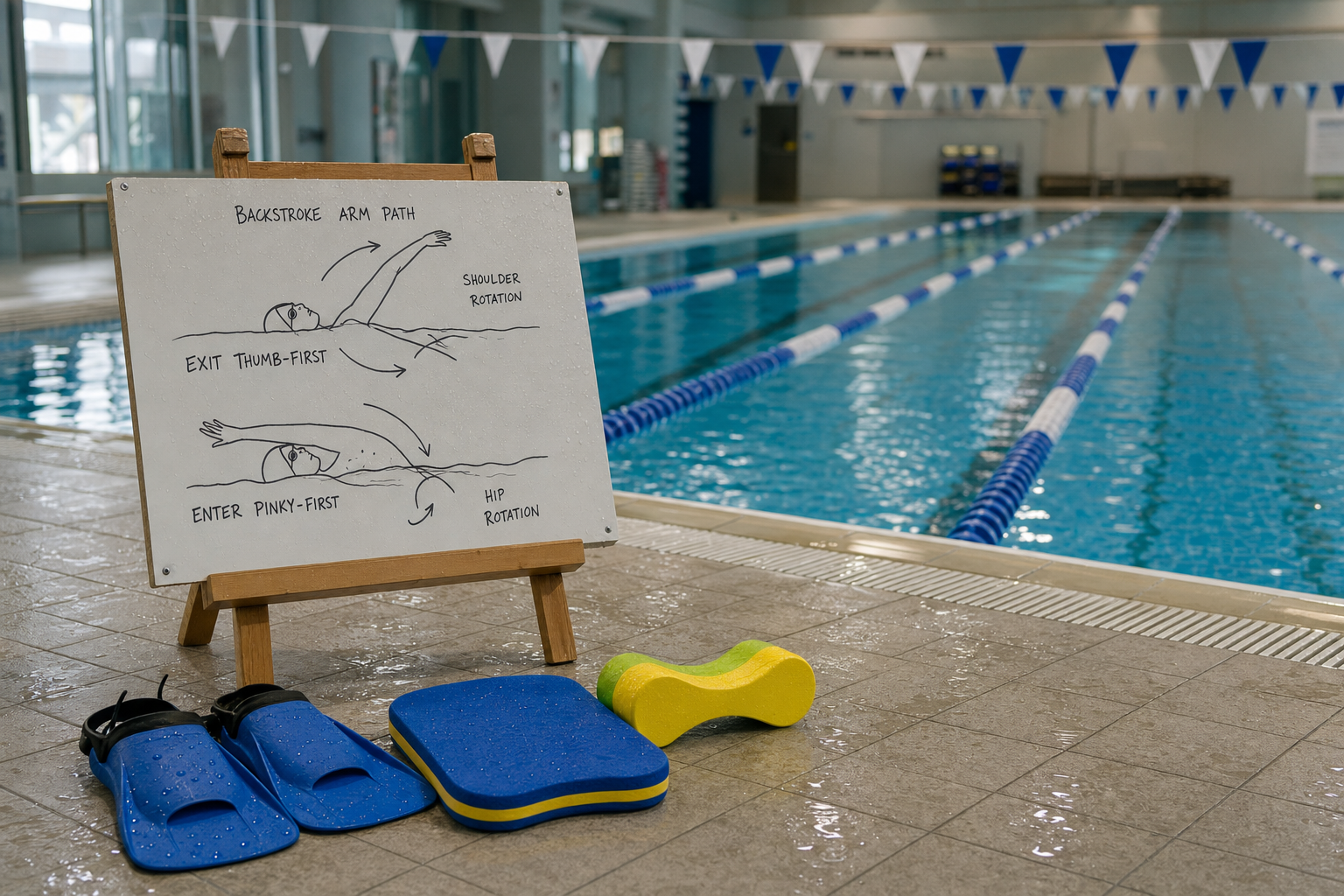
Kids can swim backstroke longer, smoother, and faster when they exit the water with the thumb first and re-enter pinky finger first. This micro-cue encourages proper shoulder rotation, helps children ages 6–12 stay on a straighter path, and delivers cleaner entries. Below you’ll learn exactly how this works, how you—parent or coach—can spot the signs, and two simple drills that help this habit become second nature. Just be careful of over-arching that lower back and always rest with any shoulder discomfort.
Why Thumb Out / Pinky In Backstroke Matters
Backstroke arm recovery begins when the hand exits the water near the hip. If that exit is done with the thumb leading, and the hand re-enters the water pinky first, the entire arm movement encourages the swimmer to rotate the shoulder and hips correctly. This reduces drag, supports straighter paths down the pool, and keeps the stroke efficient. When kids don’t rotate but swim flat, the shoulders stay flat and their path zig-zags. Looking around or lifting their head to see where they’re going causes lower body collapse or hip sinking, increasing drag and tiring muscles fast.(usms.org)
Thumb out / pinky in technique also protects the shoulder. Using the thumb first at exit reduces internal rotation of the shoulder joint, which is a common source of shoulder strain in young swimmers.(coachsci.sdsu.edu)
What Parents Can Spot in the Pool
You don’t need to be an expert to see whether your child is doing this well. Watch for two things: how their arm leaves the water, and how it comes back in.
When the arm exits, it should lift out thumb-first, the elbow relatively straight, shoulder lifting out of water. Then over the top, hand should swing over like a windmill blade, passing near the ear. When it enters, pinky first, hand aligned with the shoulder—entering wide or crossing over causes instability.(swimming.org)
Also watch body rotation. The shoulder on the recovering arm should roll up and out of the water right before the other arm enters. If shoulders stay flat, hips usually follow—and kick or legs will slap the water. Another red flag is the head lifting or turning to see forward: that tilts the body line and lets hips sink.(goswim.tv)
If your child trains regularly, these cues and drills fit into bigger programs. For example, the 10-Week Plan at SwimY (https://www.swimy.org/10-week-plan) includes backstroke recovery drills, rotation work, and body alignment exercises that build up over time. For kids ages 6–12 who are already comfortable on their back and kicking, integrating thumb-out exit, pinky-in entry into each week gets them further than doing it only sometimes.
Two Simple Drills to Make It Stick
[[ctakid]]
These are drills your child can do with your coaching. They embed the thumb-out, pinky-in cue, build muscle memory, and strengthen rotation. Use them in regular practice or at home during pool time.
1. Thumb-Pinky Recovery Hesitation Drill
Have your child swim backstroke for one length focusing on exiting the hand with the thumb first. Then as the hand rises overhead in recovery, pause (hesitate) when their arm is straight above the shoulder. At that moment encourage them to rotate the palm outward, lift the recovering shoulder, then continue so the hand enters pinky first. This slow motion helps reinforce each step in the movement—exit, recovery, and entry. Use this consistently and it becomes natural.(swimmersbest.com)
2. Back-Pat One Arm Swim
Ask your child to swim backstroke using only one arm while the other rests pointing straight up or using it to “pat” their back. The resting arm encourages core rotation without rushing the stroke, helps stabilize shoulder movement, and teaches them how exit and entry should feel. Use fins if possible to help them maintain propulsion while focusing on technique. Once they’re comfortable, swap arms.(usms.org)
Connecting to a Training Plan
Important Caveats & Common Mistakes
Do not let the lower back over-arch. Too much arch leads to strain in the lumbar region and prevents the hips from rotating properly. If you see a strong arch combined with a dropped belly, pause or regress during drills.
If your child complains of shoulder discomfort, especially during recovery or at entry, stop and let them rest. Discomfort may be a sign of overuse or incorrect rotation. Always warm up, stretch gently, and ensure they are not forcing the thumb exit or pinky entry beyond comfortable range.
Avoid letting kids lift their head or turn it to look forward. This causes the body to curve, shoulders to drop, and arms to cross the waterline instead of staying square. Remind them: eyes up, face neutral, look at the ceiling or sky.(nuffieldhealth.com)
Putting It All Together
Once your child can exit thumb first, re-enter pinky first, rotate shoulders and hips properly, and keep their head steady, you’ll likely see straighter lanes, cleaner arms, and more efficient strokes. Encourage them with this simple cue set at every practice: thumb out, pinky in, shoulder roll, eyes up. With regular use of the drills above, plus attention from you as a parent or coach, this micro-cue becomes part of their backstroke rotation for good.
Clean entries, smooth exits, strong rotation—this is what makes backstroke recovery drills transformative for children ages 6-12. Their stroke will look confident, efficient, and powerful all year round.
120+ swimming exercises sorted by age — with video and instructions. Developed by swim instructors, completely free.

120+ swimming exercises sorted by age — with video and instructions. Developed by swim instructors, completely free.