Baby Swim Ads: How to Spot Safety Red Flags
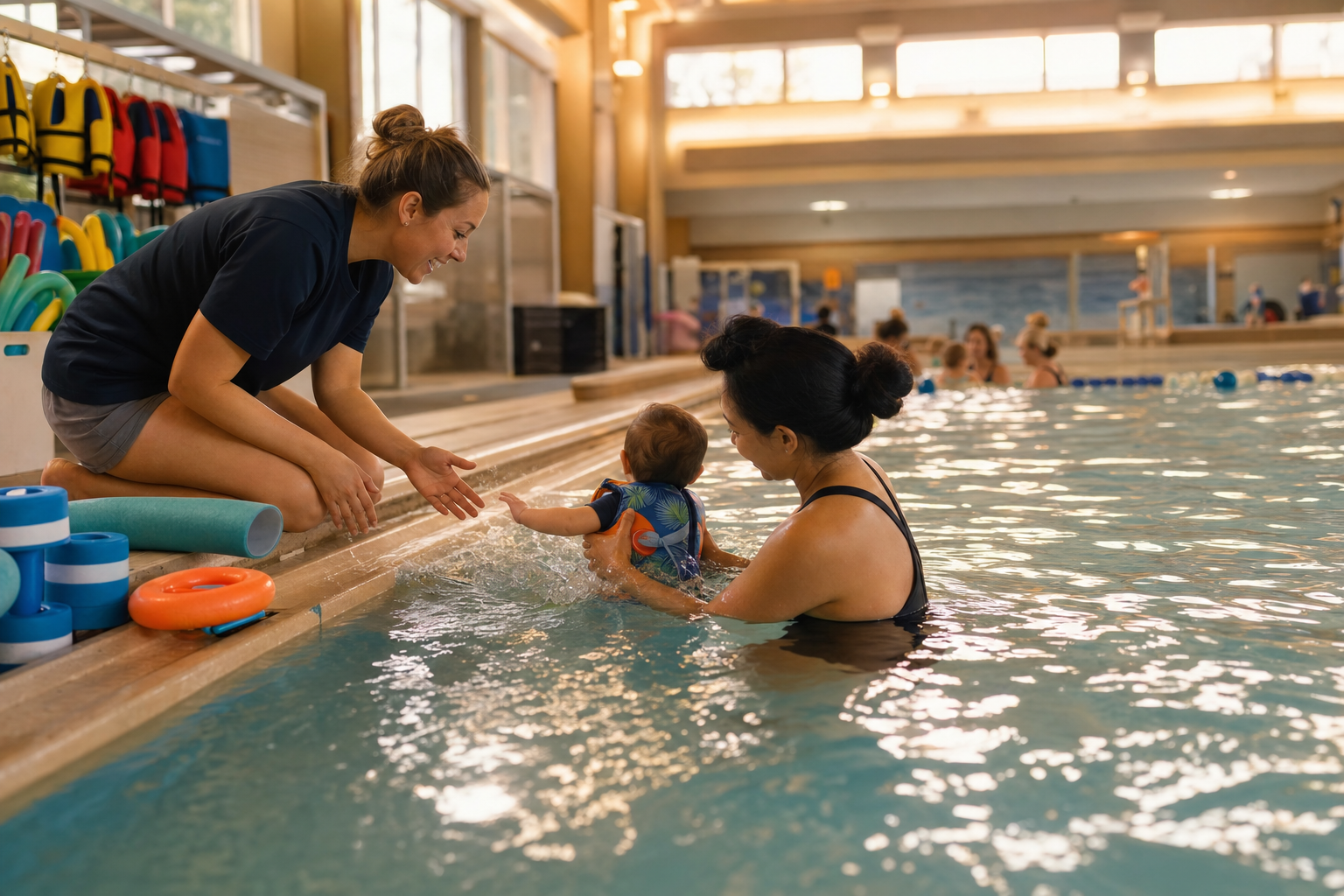
Have you ever seen an ad for a baby swim class claiming your 9-month-old will be “waterproof” by week 10, or that infant swim lessons make babies drown-proof? These kinds of marketing slogans can be dangerous. Parents comparing infant swim schools, ISR-style claims, and parent-and-baby classes need to read the fine print, ask for evidence, and avoid believing anything that implies a baby can be made totally water-safe.
What Experts Actually Say
The American Academy of Pediatrics (AAP) recently clarified what science backs—and what it doesn’t. According to their updated Prevention of Drowning policy, official swim lessons become appropriate for many children after their first birthday, not before. Infants under 1 year old don’t have the motor coordination or developmental ability to execute true survival swimming, and there’s currently no evidence that infant programs under age 1 reduce drowning risk.(publications.aap.org)
Even reflex floats for babies aged 6-12 months (to gently turn face-up after falling into water) are not shown to lower drowning rates. These techniques may “train” presence in water, but false safety claims arise when schools suggest these skills equate with being water-safe.(publications.aap.org)
Recognizing “Waterproof” Marketing
When comparing programs, many parents are drawn to bold claims like “drown-proof,” “survival swim,” or “ISR style” (infant survival response models). These are what you should watch out for:
“No age is too young” or “Any baby can be made water safe”
If a swim school advertises they can fully protect babies under age 1, take that as a red flag. Such statements often gloss over what AAP and peer-reviewed evidence supports—or doesn’t.
Emphasis on reflex floats alone
Programs that dunk babies or emphasize multiple underwater submersions promising reflexive float-back skills should prompt questions. Reflex floats may not be harmful, but they don’t prevent drowning. Suggesting otherwise misleads parents into false confidence.(publications.aap.org)
ISR-style guarantees
The ISR model has become popular because it claims babies can learn “survival swimming” quickly. However, no controlled scientific studies conclusively show its practices reduce drowning among infants under age 1. Marks of ISR-style claims often include promises of fast, dramatic progress, and certificates or “safety tested” imagery. Always ask for independent evidence.(publications.aap.org)
Some swim schools try to do better by being transparent. For example, swimy.org offers a 10-Week Plan that honestly presents what parents, instructors, and babies can expect in evolving comfort, rather than exaggerated promises. If their marketing insists babies will be “safe from drowning,” that’s misleading. Programs like this set achievable milestones instead. (Visit the 10-Week Plan here: https://www.swimy.org/10-week-plan.)
[[ctababy]]
What to Ask Before You Sign Up
You don’t have to accept what the flyers say. Here are real questions that help you evaluate the safety and credibility of a baby swim class:
- What age was the research done on in-water survival skills, and in what settings (pool, home)?
- Has this program been evaluated in peer-reviewed studies showing actual reductions in drowning risk?
- What credentials do instructors have (CPR, water safety certification)? Are there clear measurable and realistic goals for skills development?
- How many submersions are involved, and are they age-appropriate? Are medical risks (like exposure to pool chemicals or respiratory infection) addressed?
- How warm is the water? Is the environment designed for infants (one-on-one, small groups, clean water)?
- Does the program make clear that “water confidence” is not the same as “water safety”?
Programs That Try to Clarify
Parent-and-baby classes can be wonderful for bonding, motor-skill exposure, and water familiarity, as long as the program is honest about what it delivers and doesn’t sell you assurances. These classes should never substitute for crucial layers of safety—as the AAP keeps stressing.(healthychildren.org)
Layered Protection is Essential
A swim lesson (even a great one) is just one part of a safety plan. The AAP’s policy emphasizes multiple layers of drowning prevention. Parents should always maintain:
- Close, constant “touch supervision” of infants and toddlers around any water.(publications.aap.org)
- Physical barriers like 4-sided pool fences and gates.(publications.aap.org)
- Proper use of life jackets for non-swimmers, especially in natural water settings.(healthychildren.org)
- Caregiver training in CPR and rescue procedures.(healthychildren.org)
Key Takeaways
Advertisements for infant swim lessons often blur the line between promoting water confidence and overstating survival. Babies 0-12 months are not developmentally ready for true survival swim skills, and no validated evidence proves infant lessons alone prevent drowning for this age group. For children 1-4 years old, swim lessons may reduce drowning risk—but only as part of a multitiered safety strategy. Be wary of bold guarantees, “drown-proof” promises, and ISR-style ads. Ask questions. Demand evidence. Advocate for safety.
Stay grounded: swim lessons can help build confidence, water skills, and playtime fun—but never presume they make any child completely water-safe.
120+ swimming exercises sorted by age — with video and instructions. Developed by swim instructors, completely free.

120+ swimming exercises sorted by age — with video and instructions. Developed by swim instructors, completely free.