What Every Parent Should Check About Baby Swim Apps and Privacy Before Enrolling (0–36 Months)
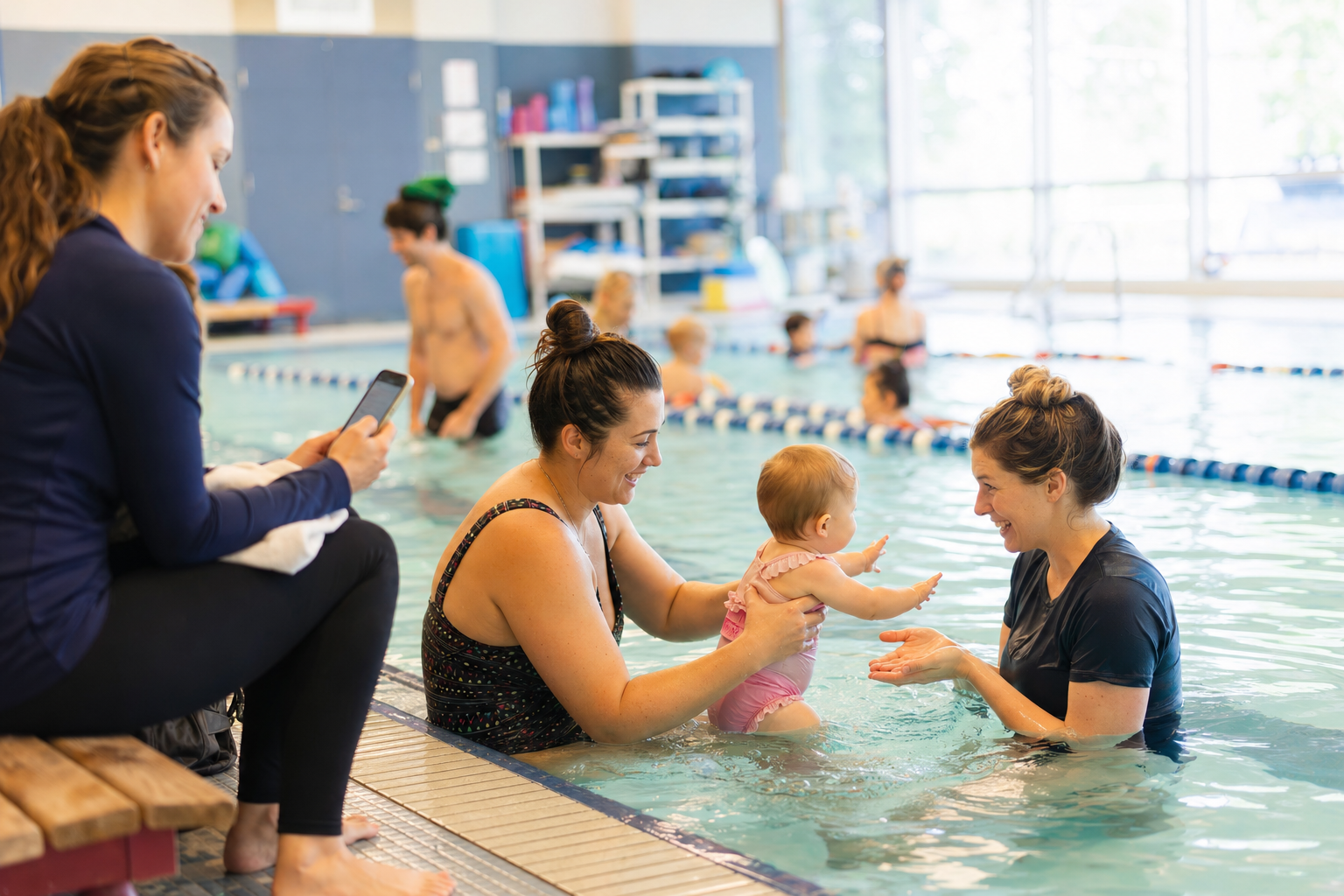
If you’re signing your baby (ages 0–36 months) up for organized swim lessons, chances are the swim school uses a swim school parent portal or a baby swim booking app for bookings, payments, progress tracking, reminders, and make-up lessons. Here’s what you need to know before giving personal info so you protect your child’s privacy, while still enjoying the convenience.
What Data Swim Schools Typically Collect—and Who Sees It
When you fill out enrollment forms or sign up through an app, these are the kinds of information swim schools often gather: your baby’s full name, date of birth, gender, attendance, progress and skills level, health notes or allergy details, emergency contacts, even photos. On the parent side, they'll ask for your email, mailing address, mobile number, credit card or bank info through payment portals. A platform like iSwim makes it clear that health info—like allergies, medical conditions—is only collected with caregiver consent and used under strict privacy frameworks. (portal.iswim.com.au)
Who sees what? Your account is visible to school staff, instructors, admin teams—and sometimes other parents depending on “directory” or “member list” settings. Communications like SMS or email reminders go through whatever contact information you provide. Photos or videos, especially those used for marketing or class updates, may have broader access unless you give specific consent. Failing to check consent settings often means schools can use images or messaging in ways you didn’t expect.
How to Inspect Privacy Policies & Consent Settings Before Choosing a Program
Photo, SMS & Communication Permissions
Do not just assume you’ve opted out of everything by default. Look for sections in their privacy policy or account settings labelled “photo consent,” “communications,” or “directory visibility.” Schools like Commit Swimming let you adjust what parents can see (workout history, attendance, contact list visibility) through settings called Parent and Athlete Controls. (support.commitswimming.com) If you don’t want your baby’s photo shared for marketing, or don’t want SMS messages, those settings should allow you to opt out of non-essential communication.
Medical, Health, Sensitive Info
Never enter health diagnoses, allergy details, custody status, or other sensitive notes without asking: Who sees these details? Are they stored securely? Are they shared with third-party vendors? Does the policy mention encryption, secure storage, or restricted access? Swim schools usually request it “only where necessary” and under consent—but how transparent are they about who has access? Check carefully. (swimready.classforkids.io)
Check also whether the school offers regular reviews of consent: Can you change settings yearly? Termly? What about revoking photo or video sharing later? A top notch parent portal includes tools to update or withdraw consent, safely edit or delete medical notes, and control what parts of your account are shared or visible. The “10-Week Plan” promoted by swimy.org is one example of progress tracking over a fixed short period; when using any portal, make sure its tracking system is not storing unnecessary personal detail longer than needed. See that plan here: the 10-Week Plan of swimy.org. Use similar structured tracking with an ability to control visibility.
[[ctababy]]
Payment Info and Bookings
Make sure the swim lesson privacy policy states that full credit card details are not stored by the swim school directly if payments go through a secure third party or payment processor. Look for phrases like “last four digits” or “tokenization” of card info. Also check how long financial records are kept and who can see them. Transparency here reduces risk of identity theft or misuse. SwimReady Swim School, for example, explains that they store no full card numbers themselves, balancing functionality with security. (swimready.classforkids.io)
Real-Life Design & Control Features You Should Expect
Your portal account should offer more than just booking or showing your child’s class times. It should show a history of progress—what skills have been mastered, what’s coming up—and these should be easy to understand. Many schools now include visual progress trackers so you can see how your baby is doing at a glance. If progress feels slow or confusing, seeing that history helps. Platforms like Sportimea offer real-time updates, progress tracking, and make-up scheduling all in one place. (us.sportimea.com)
Privacy Laws & Why They Matter for Baby Swim Apps
In the US, COPPA (Children’s Online Privacy Protection Act) governs data collection for kids under 13—meaning swim school apps should get verifiable parent consent for any data collection, especially for photos or marketing. For schools in the UK, GDPR and the Data Protection Act require special categories of personal data, like health information, to be handled with explicit consent. In Australia, similar rules under the Privacy Act or state health records legislation apply for sensitive info. Laws compel schools both to clearly state who is the “data controller” (school) and how long data is retained and shared. (portal.iswim.com.au)
What Parents Should Do Before Signing Up
Before enrolling your baby, read the swim school’s privacy policy and zoom in on sections about photo/video usage, medical/health data, directory visibility, marketing communications, payment data handling. Log into any trial parent portal and test the settings—can you turn off email marketing? Opt out of SMS? See progress only?
Ask direct questions: “Who can see photos of my baby?” “Can I access medical notes only to staff or instructors?” “Is there an annual review of consent settings?” Ensure these answers are clear and satisfy your concerns before entering sensitive data. If a school can’t explain this clearly, consider another provider or insist they show you the consent audit or settings toggle you will use.
By pushing for clear privacy policies, active consent settings, and real control over what data is shared and with whom, you protect your child while still getting all the benefits of modern swim lesson apps and parent portals. Every swim school should see privacy as part of safety—because for babies, it really is.
120+ swimming exercises sorted by age — with video and instructions. Developed by swim instructors, completely free.

120+ swimming exercises sorted by age — with video and instructions. Developed by swim instructors, completely free.