Metronome Magic: Tempo Trainers for 8–12-Year-Olds Explained
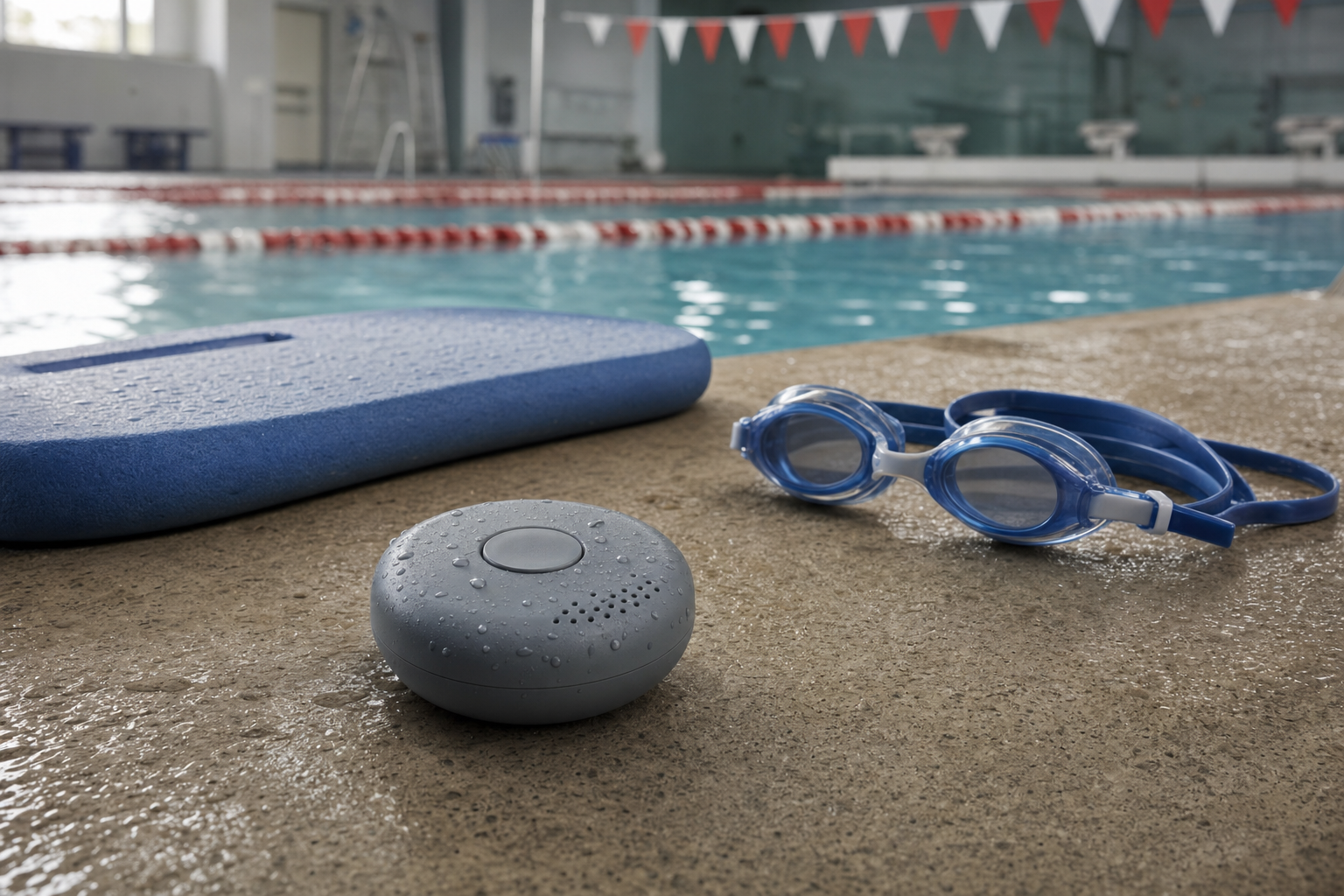
If your 8–12-year-old swimmer already knows the basics and is swimming freestyle or backstroke cleanly, a tempo trainer for kids can be a game-changer. Research shows it helps older beginners lock in steady pacing without obsessing over the stopwatch or feeling like they always fall behind. But like any tool, when used right—and when skipped—makes all the difference.
How tempo trainers help pacing and rhythm
Metronome-guided training has been studied in swimmers to see if it helps learning a steady pace. In a recent trial, swimmers adapted to a metronome-set pace in one session and kept good pacing up to 10 days later—without the device. That means even short, guided use helps kids learn to swim more evenly instead of sprinting then fading. (pmc.ncbi.nlm.nih.gov)
Another study with 8- to 12-year-olds used rhythm training twice weekly for 35 minutes over 12 weeks. Those kids improved both general coordination (think side-stepping, backward walking) and swim-specific coordination in freestyle, especially those with 2–4 years of swim experience. (pmc.ncbi.nlm.nih.gov) These results support using metronomes or beepers to help rhythm, timing, and how smoothly kids swim.
When and how parents can use a swim metronome for children
Introduce a tempo trainer when your child:
— has mastered basic strokes, glides, and bubble breathing without constant help
— can swim a 25 m lap without stopping, with relatively good form
Start with gentle drills: set the beeper to a tempo just a little slower than their natural stroke rhythm. Let them swim 25 m or even 15 m per lap following the beat, with rests in between. Keep sessions short—only a few laps—so rhythm stays fun, not exhausting.
To build value, you’ll want a plan. The 10-Week Plan of swimy.org can help parents structure progress: alternating tempo drills with fun swims, simple games, and technique focus. Hyperlinking this plan helps you see how tempo work slots in without overwhelming. https://www.swimy.org/10-week-plan
Use tempo trainers in two or three practices over a month, not every session. Always combine tempo work with video feedback or coach’s cues so children see and feel what rhythm means in real strokes.
Common pitfalls and when to skip tempo gadgets
Too fast a tempo is a common mistake. If you pick a pace faster than your child’s ability—especially without proper strength—it can throw off coordination, force shallow breathing, and lead to sloppy strokes. The science of stroke‐length vs stroke‐rate shows overdoing rate without strength often reduces quality. (pmc.ncbi.nlm.nih.gov)
Another issue: being gadget-obsessed. If your child tracks gadgets over technique, fun drops and stress rises. Especially for swimmers aged 8–12, motivation depends heavily on variety, playful sessions, effort-based praise, and time to explore in the water without strict rules. (padlie.com)
Skip using a tempo trainer if your child is still just learning to swim (new non-swimmer), struggling with breathing or form, or showing signs of fatigue or frustration. At those early stages, consistency of movement, basic coordination, and confidence matter more.
[[ctakid]]
Expert tips and drills to try
Here are helpful drills and tips drawn from research and practical coaching:
Drill: “Beat-and-Glide”
Have your child push off the wall and glide, then begin stroking in sync with a beeper after a few seconds. The goal is to match arm entry or stroke-count to the beat, reinforcing delayed stroke starts and smooth transitions. Always let them glide first so they feel how tempo starts fresh.
Drill: “Build within Laps”
Set a longer lap (50 m), and divide it mentally (or visually) into quarters. Use the tempo trainer for the first quarter at goal rhythm, let them relax in the middle half, then return to the beat for the final quarter. This builds pacing awareness—learning that swimming isn’t always max effort all the way through.
Drill: “Tempo Tag”
In a fun twist, have two children swim side by side; one follows natural tempo, the other follows a metronome. Before each lap swap roles. Discussion after gives insight: what felt steady, what felt rushed, what arm movement changed.
What science backs this up (and why it matters)
The 2025 study “Metronome-guided training accelerates the adaptation to an aerobic training pace in swimming” had adult and older teen swimmers, but showed large effect even after one training day: tempo errors dropped and consistency rose immediately, and improvements kept for at least 10 days after the metronome was removed. That kind of retention matters for kids too—if they learn a steady rhythm now, they develop muscle memory for pacing. (pmc.ncbi.nlm.nih.gov)
For 8–12-year-olds, the study “Effect of rhythm training on the motor coordination abilities” added rhythm work into normal swim routines. Twice-weekly rhythm sessions improved both general coordination (side step, walking backwards) and swimming specific coordination in freestyle. Those with more years of swimming saw swim technique benefits more strongly. (pmc.ncbi.nlm.nih.gov)
Together, these studies imply: a swim metronome for children isn’t a luxury—it’s a support. It gives feedback and helps children learn rhythm and pacing without always looking at pace clocks or comparing to other swimmers.
Why pacing drills for kids build long-term success
Kids who practise steady rhythm learn to sense when a pace is just right, not too fast, not too slow. They gain control, which boosts confidence in practice and competition. Rather than rushing off the blocks like a sprint and fading, they learn to swim strong, smooth, and controlled. When they become teens, that foundation becomes the speed and endurance build-up.
But it's also about keeping it fun. Tempo work must be just one ingredient among drills, games, technique, and joyful time in the water. Otherwise pacing drills risk becoming a chore, and you lose the spark that made your child love swimming in the first place.
Keep tempo therapy simple. Use the beeper when needed, make sure tempo matches their ability, praise effort not perfection. Skip when it’s too much. If you balance tech with joy, your 8–12-year-old can learn rhythm in a way that sticks.
120+ swimming exercises sorted by age — with video and instructions. Developed by swim instructors, completely free.

120+ swimming exercises sorted by age — with video and instructions. Developed by swim instructors, completely free.