Holiday Swim Clinics: What to Ask Before You Book
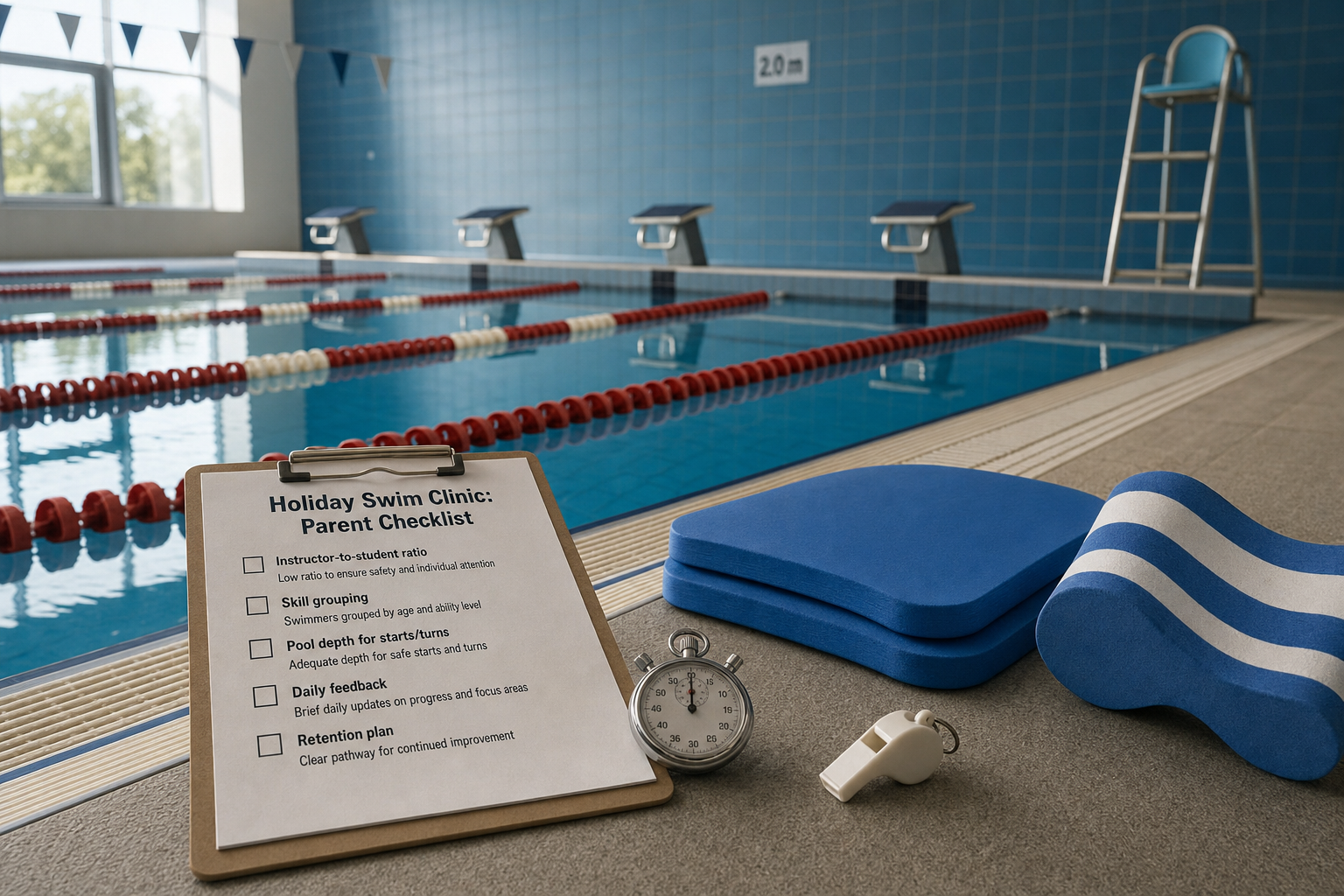
If your child, aged 5–12, is about to dive into a holiday swim clinic, the questions you ask before booking can make all the difference. When the clinic’s structure aligns with your child’s current level and stamina, it boosts progress, confidence, and safety. But mismatch any of those, and you risk burnout, frustration, or even injury. Before you commit, here’s a pre-enrolment checklist to help you pick the right short-block clinic for your child’s goals, blending clinics with weekly lessons for better retention along the way.
Questions on Clinic Structure That Matter Most
First up: ratio and skill focus. Ask the provider, “What is the instructor-to-student ratio for my child’s age and ability?” Experts agree that for young or beginner swimmers, especially those without a caregiver in the water, the ratio should be no more than 1:6, and ideally 1:4 or fewer. That ensures each child gets enough attention and safe supervision. (usswimschools.org)
Next: skill grouping. Talk about how children are grouped based on both age and current swim level, not just age alone. A 7-year-old who’s still mastering float and gentle kicking shouldn't be thrown into a lane with advanced stroke swimmers. Ability‐based groups help children learn at just the right pace. (watersafetyusa.org)
Then dig into the daily schedule and feedback. Find out how long each session is, how many days in the clinic, and how skills build each day. Clinics often condense what might take a month in weekly lessons into just a week of intensive focus. It’s great for fast gains—but only if your child can keep up. Also ask, “Will coaches give daily feedback or just at the end of the week?” Leave no room for vague terms like “skills work” without measurable milestones. (emlerswimschool.com)
As you compare intensive swim lessons holiday programmes, consider the retention plan: what follow-up comes after the clinic to make sure progress sticks. A one-week burst without reinforcement often leads to skill loss. Combining clinic blocks with regular weekly lessons works far better for long-term retention. (waterwisekids.com)
Also, ask about safety in starts, turns, and transitions. These are times when accidents happen. You’ll want to confirm pool depth is sufficient for dive starts and flip turns, ensure supervision is tight during transitions (changing rooms, moving between pool zones), and lifeguards or assistant coaches are present. (lifeguardcertifications.com)
You might also consult structured plans like the “10-Week Plan” on swimy.org for foundational progression. That plan helps you check whether a clinic’s pacing matches what your child needs and how it slots into a longer-term pathway. https://www.swimy.org/10-week-plan
Swim Camp vs Lessons: Which Fits Right Now
Many parents wonder if they should go full-camp mode or stick with regular swim lessons. The two aren’t interchangeable—it all comes down to your child’s readiness and what you aim for. Swim camp (or clinic) delivers volume and intensity in a short time; weekly lessons give spaced practice that enables better long-term retention. Intensive programmes produce quicker visible gains, but weekly classes are more sustainable and less taxing emotionally. (waterwisekids.com)
[[ctakid]]
If your child is already listening well, can swim with some independence, and enjoys structured instruction, a holiday clinic can help accelerate technique or stamina. But if they’re still building basic water confidence, weekly lessons might be more appropriate for now. Also consider family schedules: camps are fixed; lessons offer more flexibility.
Pre-Enrollment Checklist: Ask These Before You Commit
Before booking, run through this mental checklist:
Is there a defined curriculum with clear skill levels and measurable goals? What skill outcomes are expected by the end of the clinic week? Can you see the level chart and daily plan?
Will your child have the same instructor all week? Consistency builds trust and lets the coach tune instruction to your child’s progress.
How much feedback does each child receive each day? Is there time for correction during turns, breathing drills, or posture work? Feedback should be specific, not general praise.
How deep is the pool where starts and turns will be practiced? Shallower water increases risk for flip turns or dive starts.
Who supervises transitions and break times? Changing rooms or moving between lessons are moments when supervision may drop off—make sure there’s a plan.
Can the clinic be blended with weekly lessons you already attend—or plan to start—so that skills are reinforced? If there isn’t a retention plan, the improvements may fade.
Example of a Balanced Approach
For illustration: imagine your 9-year-old wants stronger backstroke and building stamina for longer swim sessions. You book a week-long holiday clinic that focuses on strokes, starts, and turns, with a ratio of 1 instructor per 5 swimmers, daily technical feedback, safe depth, and solid supervision. You follow that clinic with regular weekly lessons through the term so the improved backstroke drills, posture, and breathing work survive beyond the holiday period—not just while swimming every day. This approach combines intensive swim lessons holiday gains and the retention power of weekly classes.
Common Pitfalls to Avoid
Chasing volume over focus is a trap. More hours in the water mean little if stroke mechanics or breathing are rushed or glossed over. Putting a child in a clinic far above their current level can cause anxiety, injury, or long-lasting frustration.
Mismatched groups (too advanced or too mixed) make it hard for any child to feel at home in the pool. Safety risks spike when instructors oversee too many kids or groups that cover a wide range of skill levels.
Also, no retention plan means fast summer gains that fade by autumn. Without follow-up weekly lessons or regular practice, improvement often disappears.
Final Word: Safety and Smart Choices First
Before booking any swim clinic for kids, be sure you ask about ratios, group matching, safety standards—including pool depth and supervision during starts, turns, and transitions—daily feedback, and how the clinic fits with regular lessons for real retention. With holiday swim clinics, what looks like a shortcut to fast skills can either become a jumping-off point or a stumble. Get the structure right, match the goals to your child’s level, and you’ll see steady progress, confidence, and joy in the water.
120+ swimming exercises sorted by age — with video and instructions. Developed by swim instructors, completely free.

120+ swimming exercises sorted by age — with video and instructions. Developed by swim instructors, completely free.